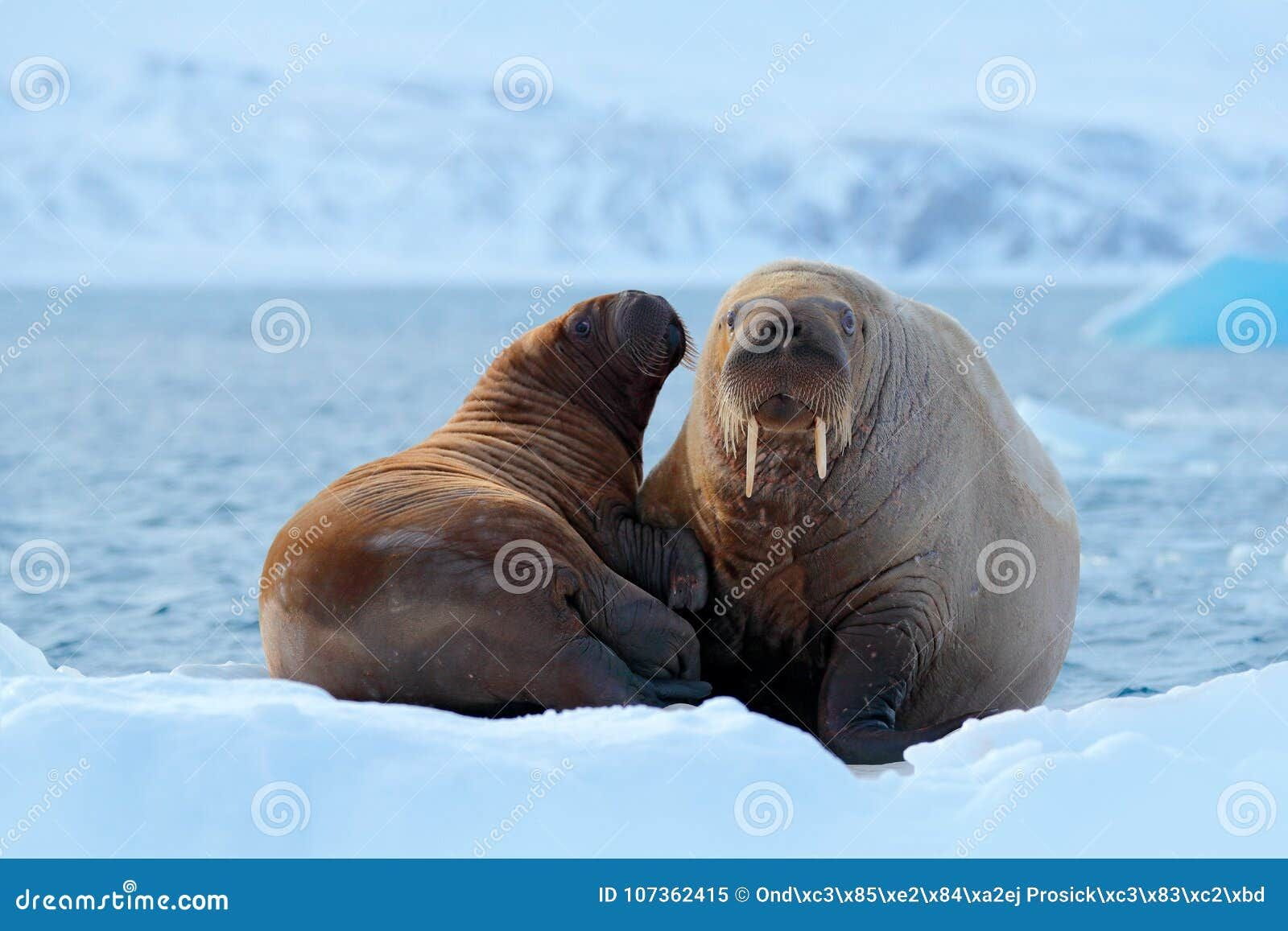
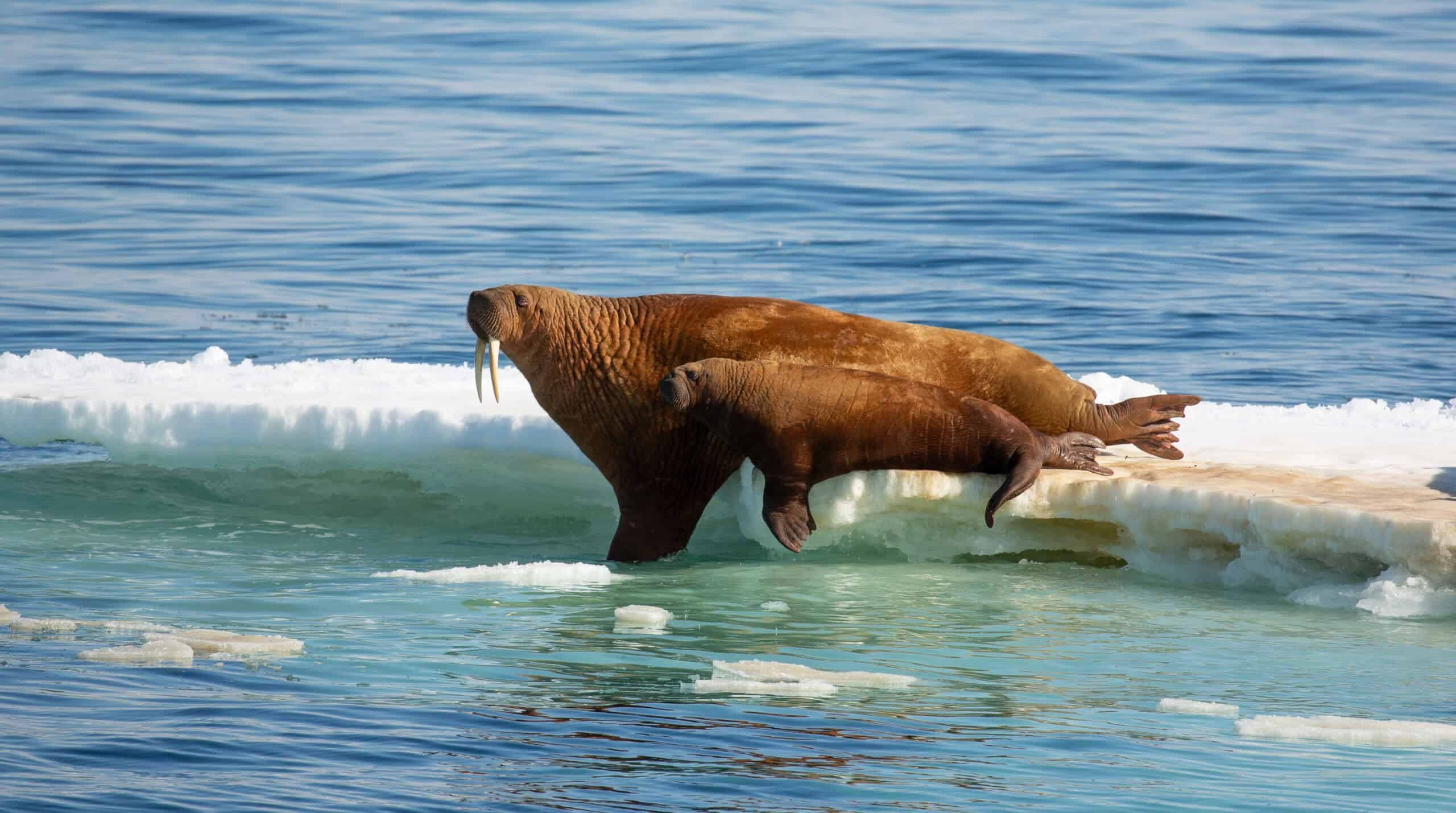
 There's something profoundly human about watching a walrus haul its massive body onto an ice floe, collapsing in what can only be described as exhausted relief. That heavy sigh, the way it seems to say "finally, a moment's rest"—it's oddly relatable.
Walruses don't fit our typical image of ocean grace. They're not sleek dolphins cutting through waves or majestic whales breaching in slow motion. They're lumpy, whiskered, and magnificently awkward on land. And perhaps that's exactly why they capture something true about existence itself.
The Weight of Being
Imagine carrying up to 4,000 pounds everywhere you go. A large male walrus does this daily, and you can see it in the way they move—purposeful but unhurried, conserving energy like someone who knows exactly how much effort the day ahead requires. They don't rush. They can't afford to.
When walruses gather on beaches or ice in their massive haul-outs, they pile together in what looks like chaotic intimacy. Bodies pressed against bodies, finding warmth in proximity. It's not entirely different from how humans crowd into subway cars or huddle together at outdoor winter markets. There's comfort in numbers, in the knowledge that you're not facing the cold alone.
The Tenderness Beneath the Tusks
Those iconic tusks—reaching up to three feet long—seem like weapons. And yes, males do spar with them, establishing dominance in displays that are more ritual than real violence. But watch what walruses actually use their tusks for most often: hauling themselves out of the water, creating breathing holes in ice, and occasionally, helping a fellow walrus in distress.
Mother walruses are fiercely devoted, nursing their calves for up to two years. During this time, the bond is unbreakable. A mother will risk her own life defending her young, but she'll also play with them, nuzzle them, teach them where to find the best clams. She carries the full weight of her calf's survival, and she does it with a patience that seems almost infinite.
The Search for Sustenance
Walruses are bottom feeders in the most literal sense, diving to the ocean floor—sometimes 300 feet down—to search for clams, mussels, and snails. They don't hunt. They forage, using their extremely sensitive whiskers to feel along the murky seafloor, detecting the subtle vibrations of buried prey.
It's painstaking work. A walrus might consume 3,000 to 6,000 clams in a single day, and each one must be found, extracted, and eaten. They use jets of water from their mouths to uncover buried mollusks, then their lips to separate the meat from the shell. No tools, no shortcuts—just persistence and those remarkable whiskers doing work that borders on artistry.
There's something deeply resonant about this daily grind, this constant search for what sustains us.
Communication in the Dark
Beneath the waves, walruses are surprisingly vocal. They click, whistle, and bell—yes, bell—creating sounds that echo through Arctic waters. Males produce elaborate underwater songs during breeding season, complex compositions that can last for hours. They're showing off, certainly, but they're also expressing something: presence, longing, the desire to be chosen.
Even their more mundane communications carry weight. A mother's call to her calf, distinct enough that both can find each other in a haul-out of thousands. The warning barks when danger approaches. The contented grunts when the herd settles in for rest.
They speak to each other constantly, maintaining the social bonds that keep their communities intact.
Adapting to a Changing World
Here's where the walrus story becomes painfully human: they're facing an existential crisis not of their own making.
As Arctic ice disappears, walruses are forced to make impossible choices. They depend on sea ice as platforms for resting between dives, for giving birth, for escaping predators. Without it, they crowd onto beaches in numbers that become dangerous. In recent years, thousands have stampeded in panic, crushing each other, including calves. The images are heartbreaking.
Walruses didn't ask for climate change. They didn't contribute to it. Yet they're adapting as best they can, traveling longer distances, using beaches they historically avoided, changing migration patterns that have existed for millennia.
It's a reminder that the vulnerable often bear the consequences of choices made by the powerful.
What the Walrus Teaches
If there's wisdom to extract from walruses, it might be this: survival isn't always elegant. Sometimes it's about showing up day after day, doing the unglamorous work of finding sustenance. It's about maintaining connections even when—especially when—times are difficult. It's about protecting what's precious to you with everything you have.
Walruses don't perform for us. They don't need to be anthropomorphized to matter. But in their struggle, their persistence, their community bonds, and their tenderness toward their young, we recognize something familiar.
They remind us that beneath all our differences in shape and habitat, the fundamentals remain the same: the search for food and safety, the need for rest and companionship, the fierce love of a parent, the weight of a changing world.
The walrus, in all its whiskered, tusked, magnificent awkwardness, is just trying to make it through—one day, one dive, one clam at a time.
And really, aren't we all?