
Alright everyone, grab a coffee and settle in. This one is long, and it is meant to be. I want to talk to you properly about where DUSK is right now, what has changed recently, and why this phase of the project feels fundamentally different from anything we have seen before. This is not a recap of old talking points and it is not recycled hype. This is a grounded look at what has been built, what is live, and how all these pieces are finally coming together in a way that feels real.
If you have been around for a while, you already know that DUSK has never been about fast narratives or flashy promises. It has always been about building something that could actually survive contact with the real financial world. That takes time. A lot of time. And for a long period, progress happened quietly in the background. Now though, we are at a stage where the work is visible, usable, and increasingly relevant beyond our own circle.
Let us walk through this step by step.
From Vision to Operational Reality
For years, DUSK lived in the category of ambitious infrastructure. The idea was bold. A blockchain designed specifically for financial markets, built with privacy as a core feature but without ignoring regulation or compliance. That alone set it apart from most projects in this space.
Now the key difference is simple but important. The network is live and operational. This is no longer an experiment or a promise on a roadmap. Transactions are settling. Validators are producing blocks. Smart contracts are executing under real conditions.
That shift from potential to reality changes everything. It forces the conversation away from what might be possible someday and toward what is actually happening today. It also exposes weaknesses if they exist. So far, the network has shown stability and consistency, which is exactly what you want when the goal is long term infrastructure.
This is the phase where serious users start paying attention.
A Network Designed for How Finance Actually Works
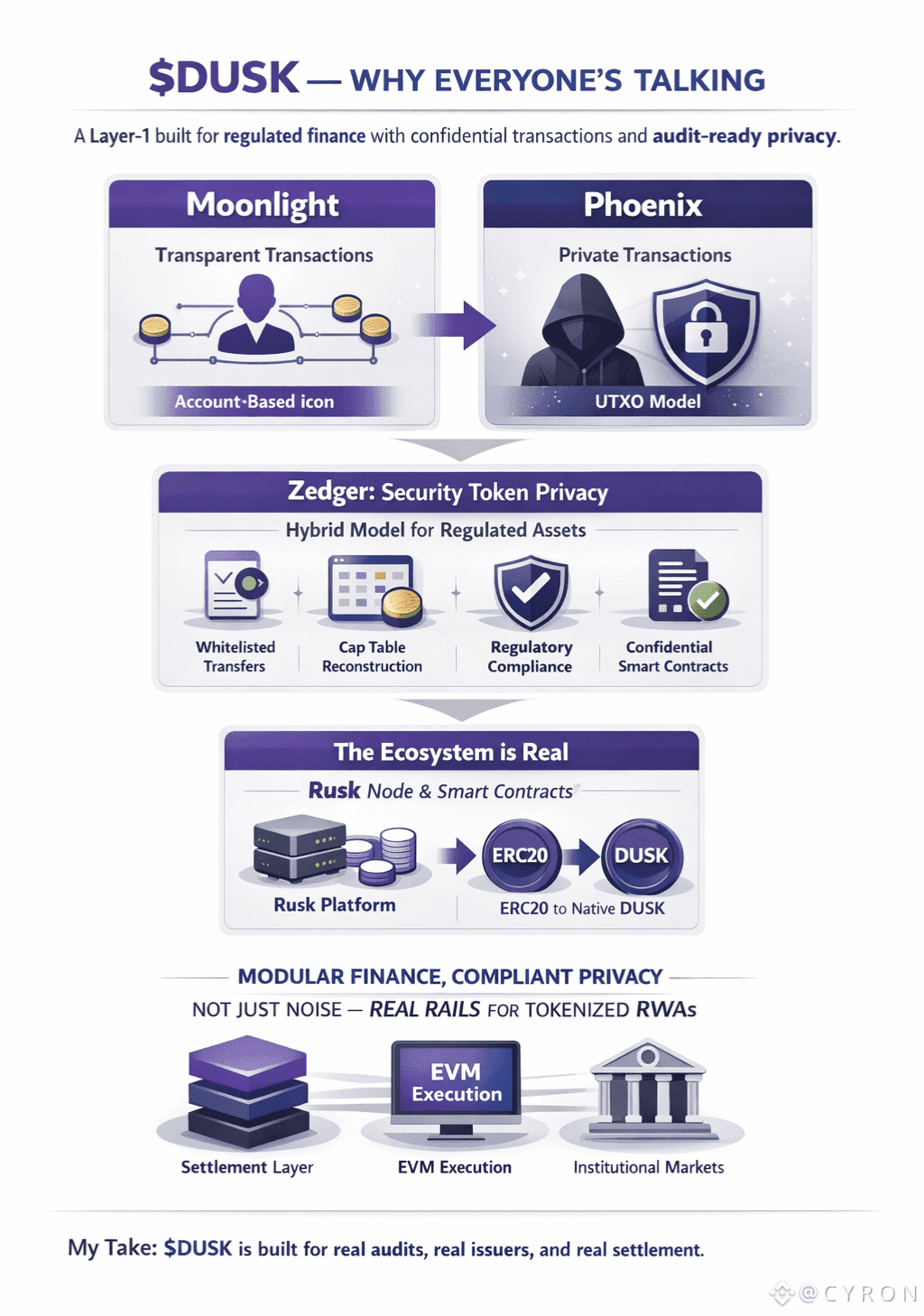
One thing I think still gets misunderstood is what DUSK is really trying to do. It is not trying to replace existing payment chains or compete with high speed trading networks. Its design choices make a lot more sense when you look at them through the lens of real financial systems.
Traditional finance is full of rules. There are reporting requirements, settlement windows, identity checks, and privacy laws. Most blockchains ignore these realities and hope regulation never catches up. DUSK does the opposite. It assumes regulation exists and builds privacy in a way that works alongside it.
This means sensitive transaction data does not need to be exposed to the entire world. At the same time, authorized parties can still verify information when required. This selective visibility is not a compromise. It is a feature designed for professional markets.
That is why DUSK keeps getting framed as a financial infrastructure rather than a general purpose chain. It is meant to be the plumbing behind complex systems, not a toy for speculation.
Smart Contracts Growing Up
Recently, smart contract functionality on DUSK has taken a noticeable step forward. This is not just about adding features. It is about expanding what developers can realistically build on the network.
Contracts can now handle more complex logic and larger data structures. This is critical for financial applications that involve multiple conditions, time based actions, or structured products. Simple token swaps are not the end goal here. The goal is to support real financial instruments that behave predictably and securely.
What excites me is that this progress is not just theoretical. Developers can actually deploy and test these contracts in a live environment. That feedback loop between builders and the network is how ecosystems mature.
It also signals confidence from the core team. You do not open the door to advanced use cases unless you believe the foundation is solid.
Developer Experience Finally Feels Accessible
Another big shift is how approachable the platform has become for developers. In the early days, building on DUSK required deep familiarity with its unique architecture. That limited experimentation to a relatively small group.
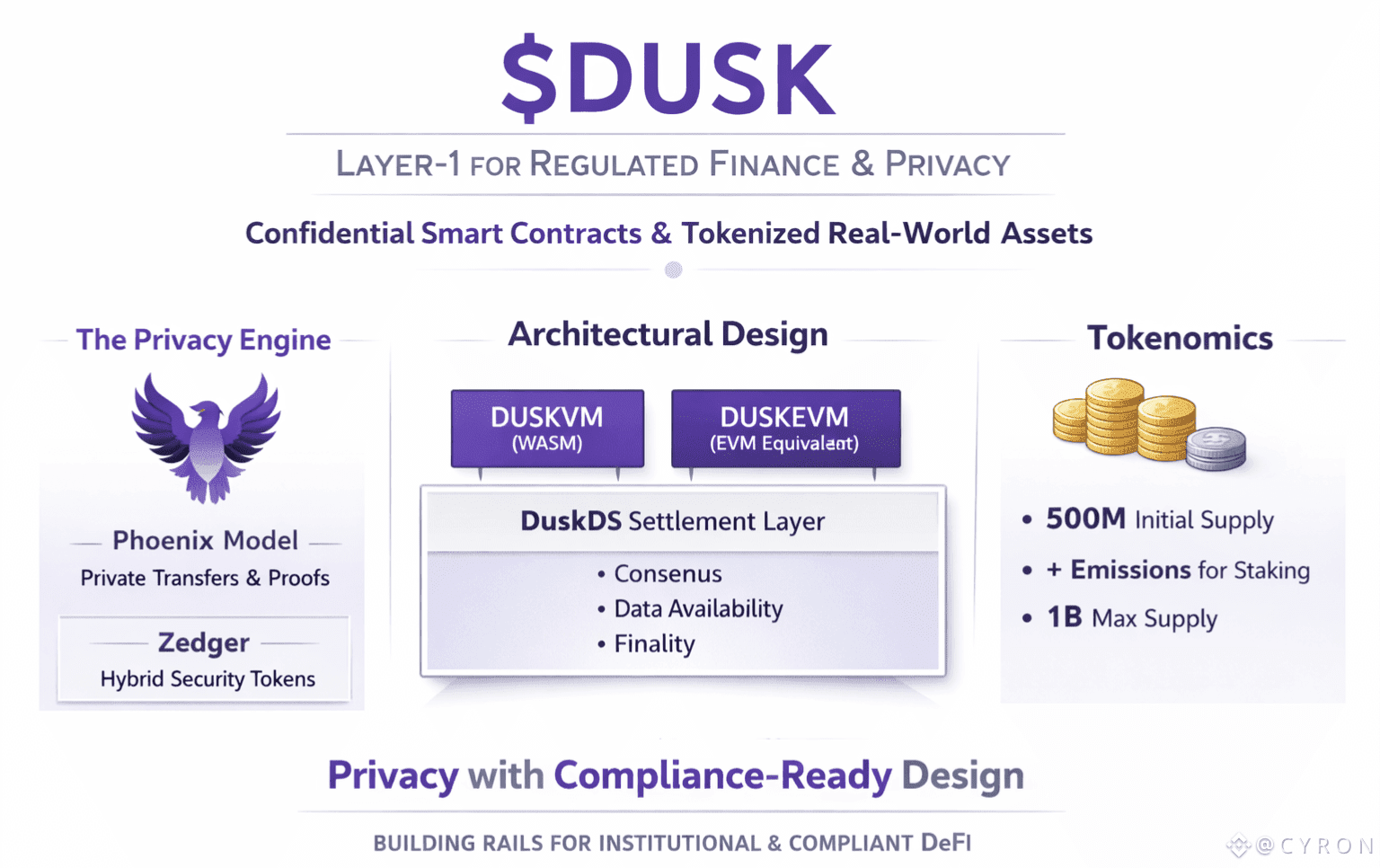
Now, with compatibility layers that support familiar tooling, the barrier to entry is much lower. Developers who already know how to write smart contracts in popular environments can explore DUSK without starting from zero.
This matters more than people realize. Most innovation in this space comes from builders who experiment casually before committing seriously. Lowering friction increases the odds that someone tries something interesting, even if they did not originally plan to build here.
And importantly, this compatibility does not water down the core principles of the network. Privacy and native economics remain intact. It is an extension, not a compromise.
Privacy Reframed as a Market Requirement
Let us talk about privacy, because this is where DUSK really separates itself from the pack.
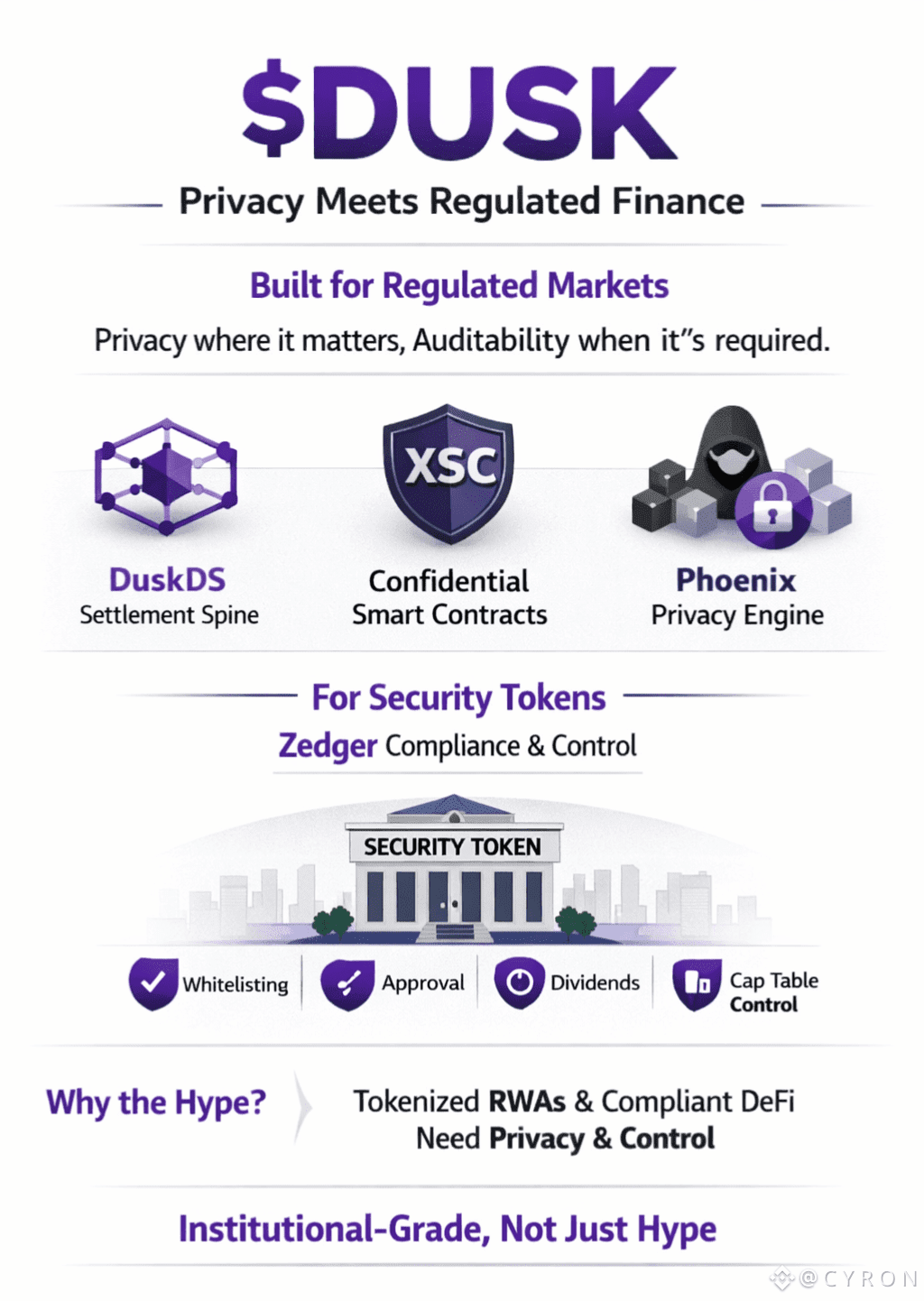
For a long time, privacy in crypto was associated with hiding activity. That narrative created fear and resistance. DUSK takes a very different approach. Privacy is framed as a requirement for fair and compliant markets.
In many jurisdictions, exposing all transaction details publicly is actually illegal. Financial institutions are required to protect client data. DUSK aligns with this reality instead of fighting it.
Participants can transact without broadcasting sensitive details to the world. At the same time, compliance checks and audits can still happen under the right conditions. This balance is incredibly difficult to achieve technically, but it is exactly what the market needs.
As data protection regulations become stricter globally, this approach starts to look less like a niche feature and more like a necessity.
Infrastructure That Institutions Can Actually Use
One of the quiet but significant developments around DUSK is how closely its infrastructure aligns with institutional requirements.
Interoperability standards are being integrated so that data and assets can move between systems reliably. Settlement logic is designed to reflect real financial processes. Identity frameworks allow controlled verification without constant exposure.
This is the kind of groundwork that does not generate viral posts but absolutely determines whether institutions can ever adopt a platform. You cannot bolt these features on later. They have to be part of the foundation.
What we are seeing now is the payoff from years of design decisions that prioritized long term usability over short term attention.
Network Security and Validator Health
Security is another area where DUSK has made steady progress. The consensus mechanism has proven efficient and resilient. Validators are distributed and incentives are structured to encourage honest participation.
Staking has become more accessible, which allows a broader group of community members to contribute to network security. This is important not just for decentralization but for long term trust.
A network that relies on a small group of operators is fragile. A network where participation is open and well incentivized is far more robust. DUSK is clearly moving in the right direction here.
Tooling and User Experience Are Catching Up
Beyond the protocol itself, the surrounding ecosystem tools have improved significantly.
Wallets are more intuitive. Interfaces are cleaner. Interactions feel less intimidating for newcomers. This might sound minor, but usability often determines whether a platform gets adopted or ignored.
Explorers provide better insights into network activity without undermining privacy. Developer tooling is more mature, with clearer documentation and smoother testing environments.
These improvements signal that the project is thinking about real users, not just theoretical use cases.
Market Attention Reflecting Fundamental Progress
It would be dishonest to ignore the renewed market interest around DUSK. Increased development activity, infrastructure launches, and ecosystem expansion naturally attract attention.
What stands out to me is that the discussion has become more substantive. People are talking about architecture, compliance, and long term use cases rather than just short term price moves. That shift usually indicates a project is being evaluated on fundamentals.
Price will always fluctuate. That is not the point. The point is that DUSK is being recognized as something more than a speculative asset. It is being seen as a potential building block for future financial systems.
That perception takes years to earn.
Why This Phase Feels Different
I have followed many projects over the years, and there is a pattern you start to recognize. Early on, everything is about promises. Later, everything is about execution. DUSK has clearly entered the execution phase.
Features are shipping. Infrastructure is live. Developers can build. Institutions can evaluate. The conversation has matured.
This does not mean the work is finished. Far from it. But it does mean the foundation is in place. From here, progress becomes incremental rather than speculative.
That is a good place to be.
What I Am Watching Going Forward
There are a few areas I think will define the next stage of DUSK.
First is application development. Infrastructure only matters if people use it. Seeing real financial products launch on chain will be a major milestone.
Second is regulatory engagement. DUSK is uniquely positioned to work within existing frameworks. How those relationships develop will shape adoption.
Third is community growth. Education, discussion, and thoughtful critique will help keep the project aligned with its original vision.
A Message to the Community
If you have been here from the early days, you have already demonstrated patience. That patience is starting to pay off in the form of tangible progress.
If you are newer, you are joining at a time when the project is becoming easier to understand and easier to use. That is not a coincidence. It is the result of years of groundwork.
DUSK is not chasing trends. It is building infrastructure that fits into the real world as it exists today, not as we wish it were.
That approach is slower. It is quieter. But it is also far more sustainable.
Closing Thoughts
I wanted this article to feel like a conversation, not a pitch. Because at this stage, DUSK does not need hype. It needs understanding.
What we are watching is the gradual emergence of a privacy focused financial network that respects regulation, supports complex markets, and values long term stability over short term noise.
That combination is rare.
Whether you are here as a builder, a validator, a researcher, or simply someone curious about where blockchain is heading, this is a project worth paying attention to.
Let us keep the discussion thoughtful, the expectations realistic, and the focus on building something that lasts.
We are still early in the story, but for the first time in a long while, it feels like the story has a solid foundation beneath it.
