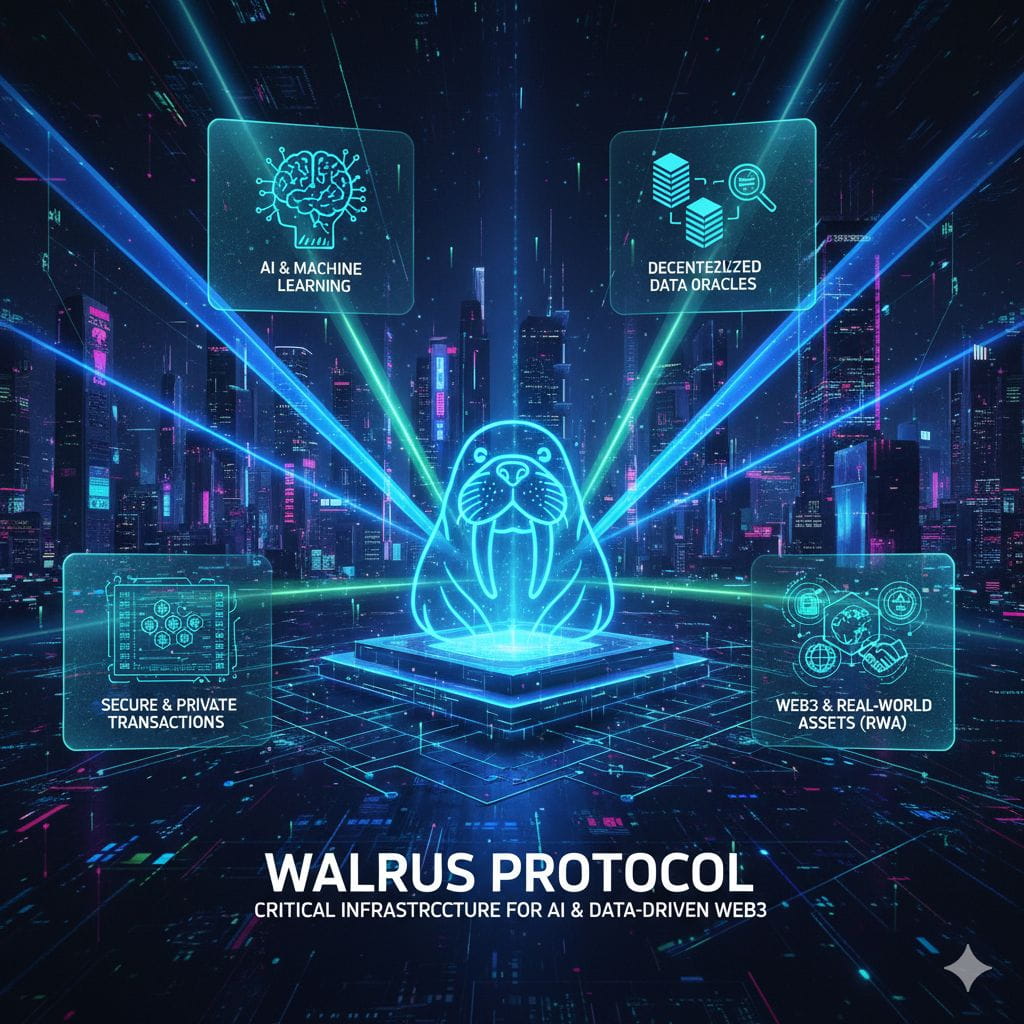
Artificial intelligence is becoming one of the most data-hungry forces in technology. Models don’t just need storage they need fast reliable and continuous access to data. This is where most decentralized storage systems struggle and where Walrus Protocol stands out.
Walrus is designed specifically for hot data environments where information is frequently accessed updated and processed. AI workloads decentralized analytics and real-time applications cannot tolerate slow retrieval or unpredictable availability. Walrus treats data as an active resource rather than a passive archive making it far more compatible with AI-native systems.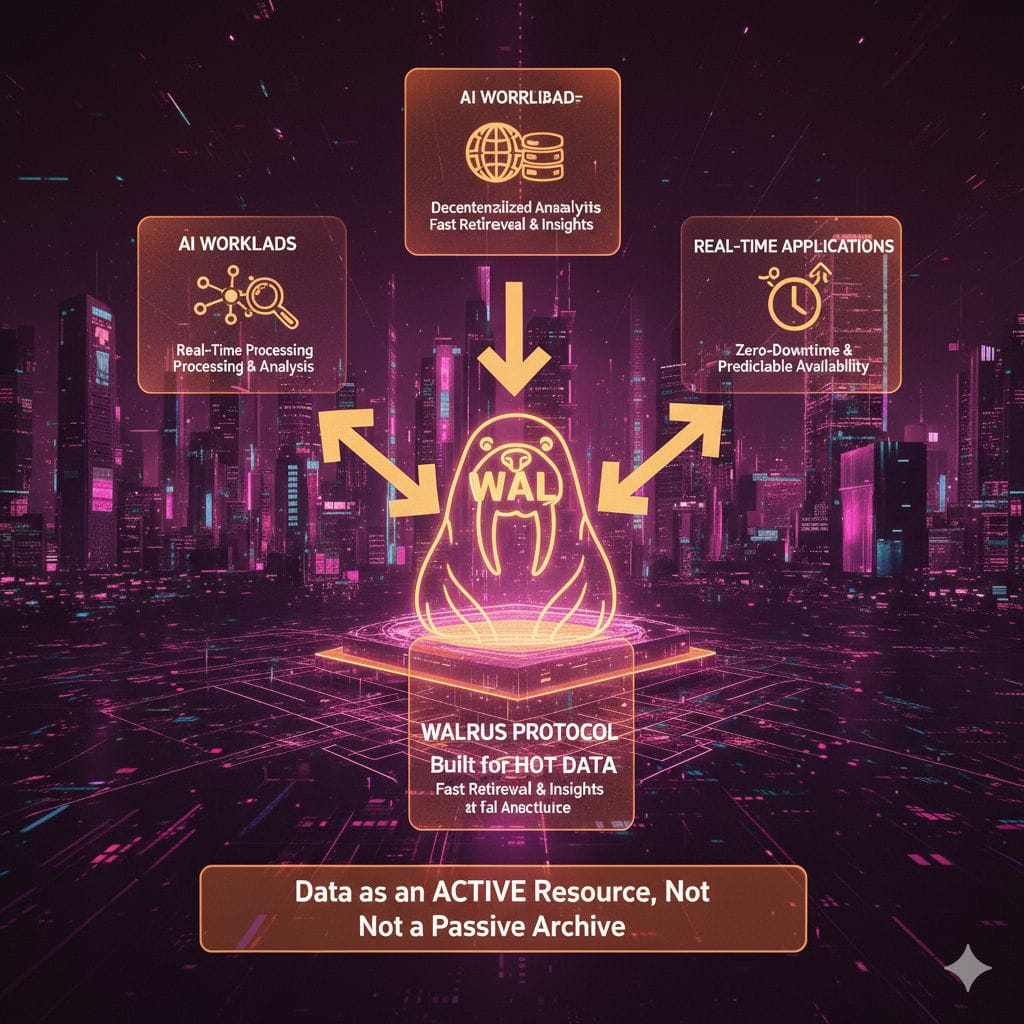
By decentralizing data availability while preserving performance, Walrus allows AI models to operate without depending on centralized cloud providers. This shifts data ownership back to users and developers while maintaining the responsiveness modern applications require.
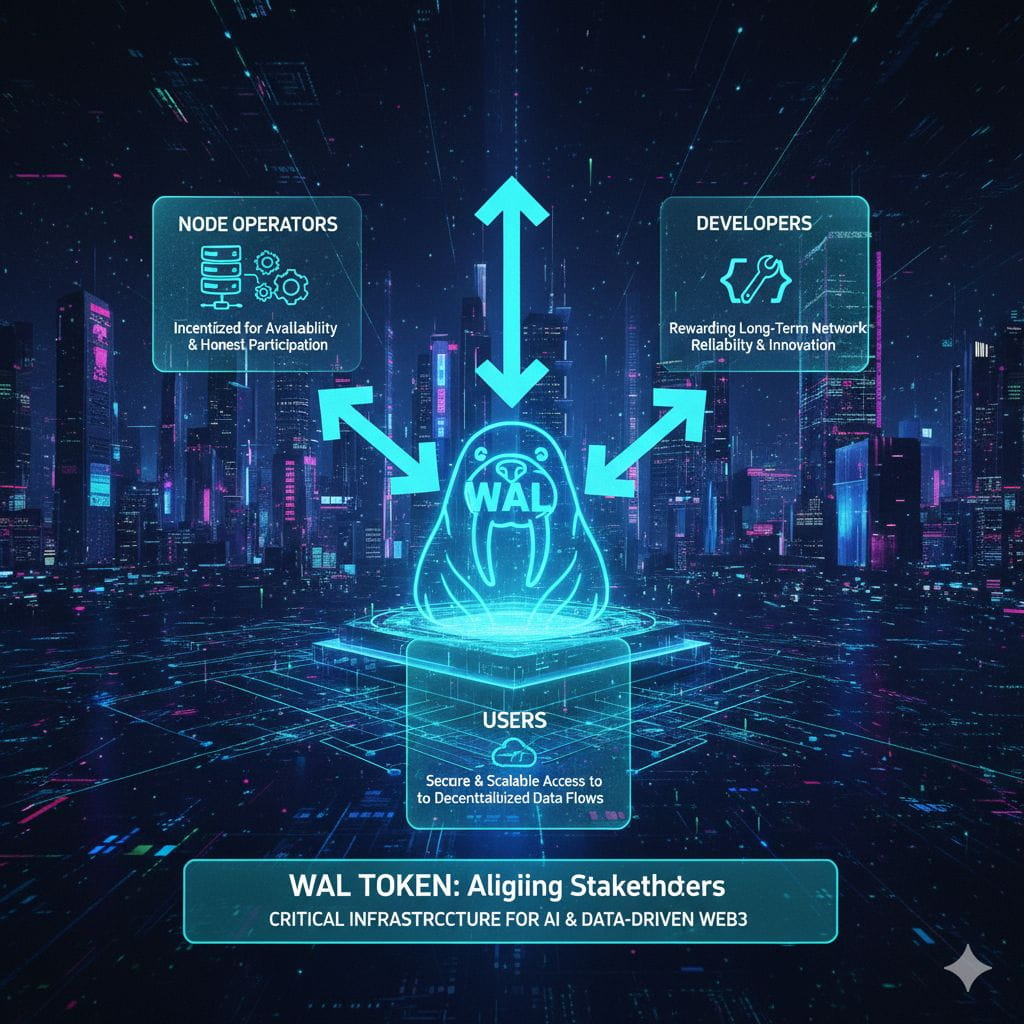
The WAL token plays a central role in sustaining this system. It aligns node operators developers and users by incentivizing availability honest participation and long-term network reliability. As AI adoption accelerates infrastructure that can support decentralized data flows at scale will become increasingly valuable placing Walrus at a critical intersection of AI and Web3.