
Web3 has spent years proving that decentralized execution works. Smart contracts can enforce rules without a central operator, and that’s a real step forward. But when you look at why most Web3 products still struggle to feel “everyday usable,” the limitation usually isn’t the contract. It’s the data that surrounds the contract—the content people actually see and touch. Profiles, images, videos, NFT metadata, game assets, social feeds, datasets, and AI context windows are what make an app feel alive. When those pieces live on centralized servers, the application may be “onchain” in name, but its experience still depends on a traditional control point that can go down, get censored, or quietly change what users are seeing.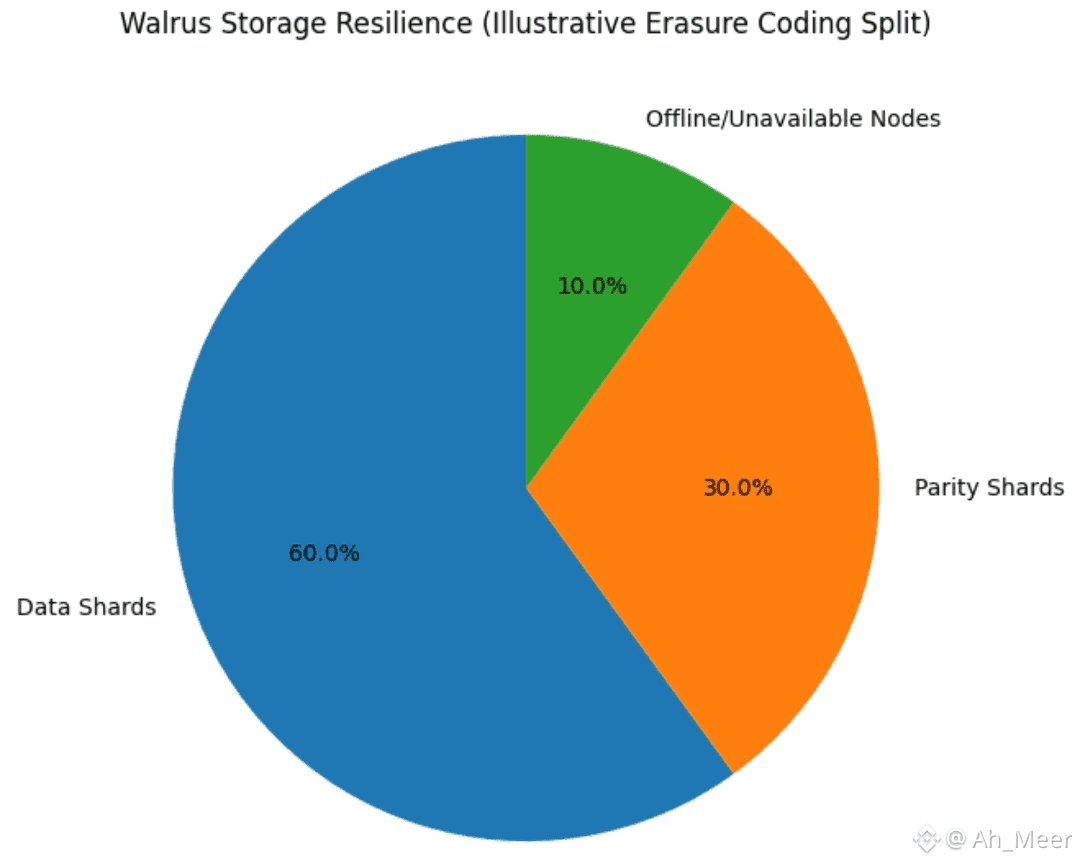
That’s why data-centric infrastructure matters. It addresses the part of the stack that Web3 has often treated as an afterthought: where data lives, how it’s retrieved, and how its integrity can be proven without trusting a single provider. Blockchains were never meant to be warehouses for large files. Their security comes from replication, which is great for preventing history from being rewritten, but it makes large-scale storage expensive and inefficient. So developers do what makes sense short-term: keep logic onchain and push everything heavy offchain. The problem is that as soon as you do that, you reintroduce the very dependencies Web3 was meant to reduce. A decentralized contract that relies on a centralized data pipeline still inherits the weaknesses of that pipeline.
Once you see Web3 through that lens, growth looks less like a race for faster block times and more like a race for better data foundations. A lot of activity in the ecosystem—rollups, modular architectures, and specialized layers—comes down to this simple truth: the next wave of adoption is data-heavy. Onchain social is mostly content delivery. Gaming is mostly asset distribution. AI-driven applications are mostly context management and dataset access. Even finance is drifting toward richer experiences that require reliable metadata, analytics, and histories. If the data layer stays centralized, the user experience remains fragile and the decentralization story remains incomplete.
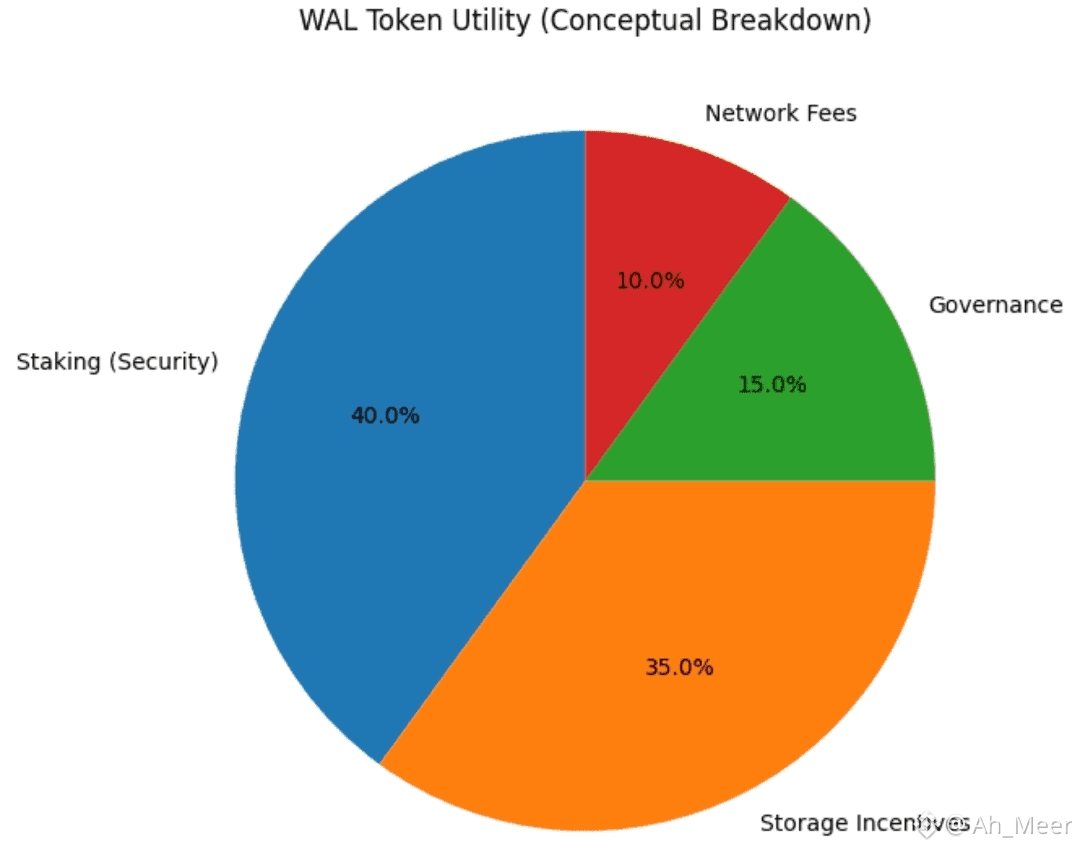
Walrus steps into this gap as a decentralized blob storage network designed to hold large, unstructured data and keep it retrievable even when some participants fail or behave maliciously. Instead of treating storage as an optional add-on, it treats data availability and retrieval as a first-class requirement for applications. That focus matters because “good enough storage” is often what blocks teams from building richer products on Web3. If storing media, datasets, or application state snapshots becomes cheaper and more dependable, developers stop designing around limitations and start building experiences that feel closer to what users expect from modern apps.
A major part of Walrus’s efficiency story is its emphasis on erasure coding rather than brute replication. Replication is simple: store multiple full copies of the same file across different nodes. It works, but the cost grows quickly and becomes a tax on every application that wants to scale. Erasure coding takes a different approach. It breaks data into fragments and distributes them in a way that lets the system recover the original object from a threshold of fragments, even if some are missing. The appeal here is straightforward: you can gain resilience without paying for endless redundant copies. If that balance holds under real-world conditions—network churn, adversarial nodes, unpredictable demand—it can lower the cost floor for decentralized applications in a way that actually changes what teams are willing to build.
Walrus also matters because storage networks don’t succeed on cryptography alone. They need coordination: payments, guarantees, repair mechanisms, upgrades, and incentives that keep operators honest over time. Walrus uses Sui for that coordination and governance layer, which is an important architectural choice. The data plane is distributed, but the control plane—who pays, what’s promised, what rules apply—can be expressed transparently onchain. In practice, that makes the system easier to reason about as part of an application stack, because storage becomes something developers can integrate with predictable behavior rather than an external service they have to trust and babysit.
The bigger point is that data-centric infrastructure changes the shape of what “Web3 adoption” looks like. It pushes the ecosystem away from being primarily a transaction engine and toward being a full application platform. When content, metadata, and user-generated data can be stored and retrieved in a verifiable, decentralized way, the app doesn’t just decentralize ownership—it decentralizes delivery. That is the difference between an app that can be rugged by a single server outage and an app that behaves like an autonomous system people can rely on. It also opens the door to more sophisticated data rights, where access control and encryption become programmable primitives instead of informal agreements or centralized gatekeeping.
Of course, none of this is automatic. The toughest challenges for any decentralized storage network are the ones users notice instantly: cost and performance. If the economics don’t sustainably reward node operators, availability becomes a promise that fades over time. If retrieval is slow or inconsistent, the app feels broken no matter how elegant the protocol is. And if upgrades and governance aren’t carefully designed, the system can drift toward capture or unpredictability, which is exactly what builders don’t want to bet their product on. The protocols that win here will be the ones that make their guarantees clear, their integration simple, and their performance reliable enough that developers stop reaching for centralized fallbacks.
In that sense, Walrus is less about competing with every existing storage approach and more about filling a specific missing layer: a practical, resilient place for large blobs of application data that can be served reliably in a decentralized environment. As Web3 grows into social, gaming, media, and AI-native experiences, that kind of infrastructure becomes less of a “nice to have” and more of a prerequisite. The next phase of Web3 growth won’t come only from better execution. It will come from making the whole product stack trustworthy and durable—and that starts with treating data as a first-class citizen.


