

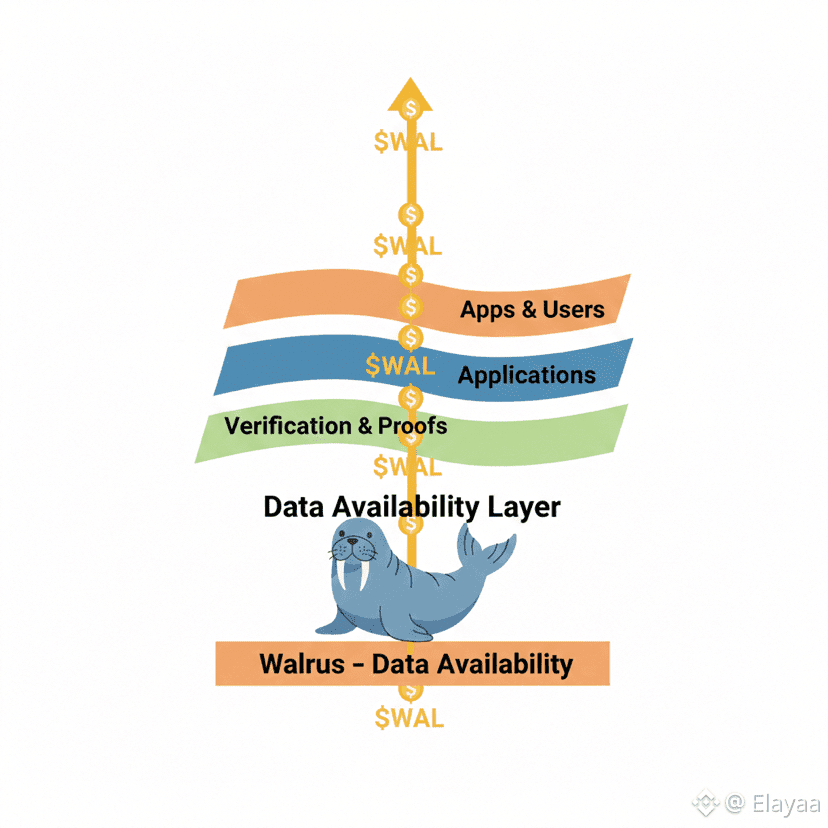
Verification depends on access to data. Without data, proofs cannot be checked and history cannot be confirmed. Walrus was designed with this reality in mind.
Many systems focus on execution first. They move fast, add features, and optimize for speed. Storage is often treated as a background detail. As long as things work today, the assumption is that data will still be there tomorrow.
Walrus does not rely on that assumption.
Once data is published, it becomes part of shared history. Walrus makes sure this history remains accessible even when conditions are not ideal. It does this by spreading responsibility across many nodes instead of concentrating it in a few hands.
Because Walrus avoids execution and growing state, it does not build hidden storage debt. The system stays focused and predictable. This makes long-term verification possible without centralization.
$WAL aligns incentives so nodes continue doing this work quietly. They are paid for reliability, not for noise. If they fail to keep data available, they lose rewards.
Walrus supports everything built above it by keeping verification possible. Without it, trust slowly replaces proof.

