

The thing that makes DUSK special is its transfer contract—it's kind of like the heart of the whole system. It makes sure that when DUSK coins move around, it's safe, follows the rules, and keeps things private when needed.
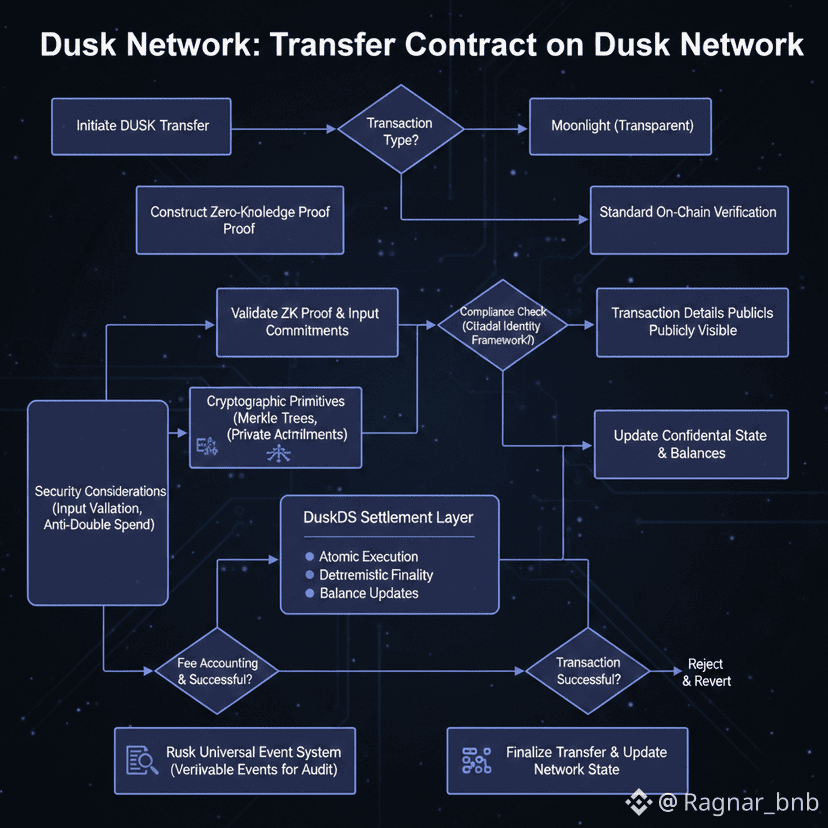
Think of it this way: this contract is the rulebook for DUSK tokens—how they're made, moved, and counted. It keeps track of how many tokens there are, checks that every transaction is legit, and updates everyone's balance. It's all locked in with another layer called DuskDS, so every transaction is final and super consistent across the network.
Now, here's where it gets interesting. DUSK has two ways to move tokens: Phoenix for private moves and Moonlight for when things need to be out in the open. Phoenix uses some pretty cool math tricks to hide the details of a transaction—how much money is sent, who sent it, who got it. The transfer contract checks that everything adds up without seeing any of the private stuff. Moonlight, on the other hand, is like a regular transaction where everyone can see the details.
Under the hood, the transfer contract uses some serious tech—think zero-knowledge proofs and Merkle trees. For those secret Phoenix transactions, it double-checks that the proofs are correct and that no one's trying to spend the same money twice.
It also works with something called the Citadel identity thing. In some cases, who you are matters. Maybe you need special permission to send money based on where you live or what kind of investor you are. The transfer contract can check all that without peeking at your personal info.
DuskDS makes sure that every transfer is all-or-nothing. Either the whole thing goes through, or it doesn't happen at all. This keeps anyone from messing with the system.
Even though Phoenix transactions are private, there's still a way to check that they happened correctly. The system lets out little signals that say, Yep, a transfer happened, without giving away any secrets. And for Moonlight transactions? Everything's on display for anyone who needs to see it.
The transfer contract also handles fees. It makes sure everyone pays their dues and that the money goes where it's supposed to, which helps keep the network running.
And security? It's baked into everything from start to finish. The contract is built to stop all kinds of attacks so your money stays safe.
The transfer contract is the base for all sorts of things built on top of DUSK like tokenized securities, real estate, staking, and those fancy DeFi apps. Because it can handle both private and public transactions, it makes DUSK a solid place to do all kinds of financial stuff.
Basically, the transfer contract isn't just moving tokens from A to B. It's the thing that makes DUSK a safe, rule-following, and private way to move value around. It's set up to handle the demands of the finance world.
