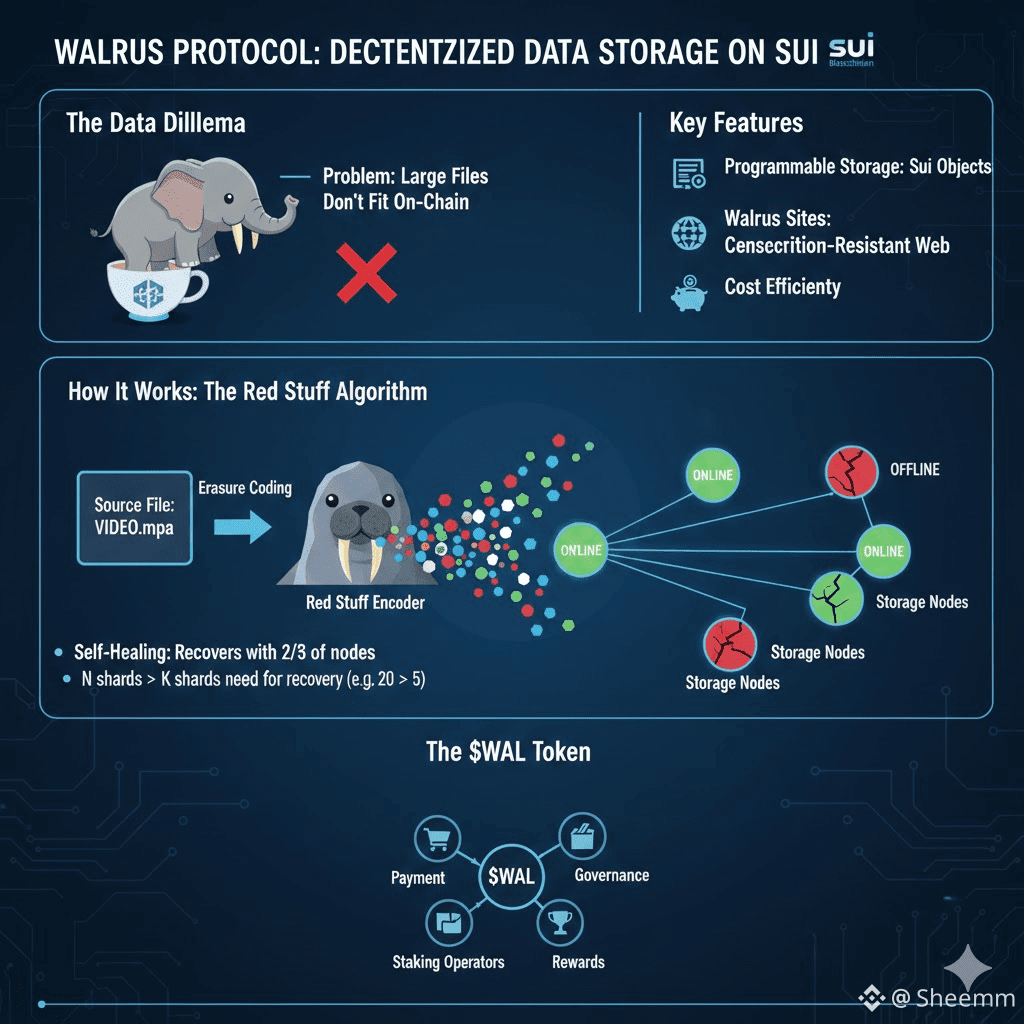
In the vast and ever-expanding ocean of decentralized technology, one creature is carving out a new path for data: the Walrus Protocol. Built on the lightning-fast Sui blockchain, Walrus isn't just another storage solution; it's a fundamental shift in how we manage, access, and secure the colossal amounts of data shaping our digital future from the latest viral video to the foundational datasets training the next generation of AI.
1 THE DATA DILEMMA: WHY WALRUS IS ESSENTIAL
Imagine trying to fit an elephant into a teacup. That's essentially what traditional blockchains attempt when faced with large files. They are excellent at recording small, immutable transactions, but notoriously inefficient and expensive for storing massive "blobs" of data like high-definition videos, intricate NFTs, or vast AI model checkpoints. This creates a bottleneck, pushing large-scale applications back into the waiting arms of centralized cloud providers.
The Walrus Protocol steps in as the elegant solution, offering a decentralized, cost-effective, and robust network for storing and retrieving these data behemoths.
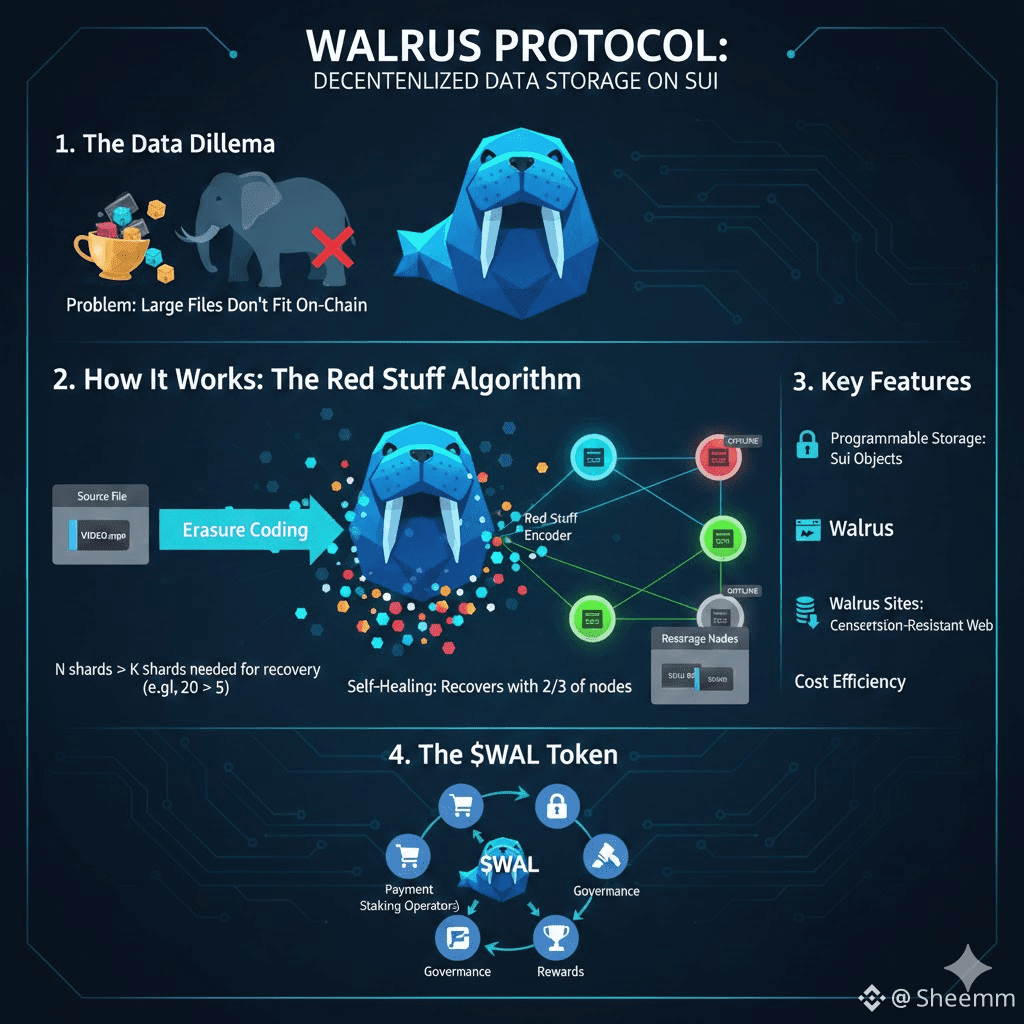
2 HOW IT WORKS: THE "RED STUFF" ALGORITHM DATA'S SELF-HEALING SHIELD
At the heart of Walrus's innovation lies its proprietary encoding algorithm: Red Stuff. This isn't just about making copies; it's about intelligent data distribution and resilience.
1 Slivering Your Data: When you upload a file to Walrus, Red Stuff first breaks it down into numerous small, manageable pieces called "slivers
2. Erasure Coding Magic: Instead of making redundant full copies, Red Stuff applies a sophisticated erasure coding technique. This creates additional "parity" slivers. The magic here is that you don't need all slivers to reconstruct the original file, only a sufficient number.
3 Decentralized Distribution: These slivers are then distributed across a network of independent storage nodes.
4 Self-Healing & Resilience: This is where Red Stuff truly shines. Even if a significant portion of the storage nodes (up to two-thirds!) go offline or become corrupted, the remaining slivers can still reconstruct your entire file. This makes Walrus incredibly robust and censorship-resistant.
This approach offers a sweet spot: dramatically higher resilience than traditional centralized storage with far less overhead than simply replicating files dozens of times across a blockchain.