
Most blockchain projects feel rushed. Dusk never has.
From the outside, that can look like hesitation. But the longer I follow the project, the more it feels like a deliberate choice. Dusk was built around a question many networks avoid: how can decentralized finance operate inside a regulated world without sacrificing privacy?
Rather than pretending regulation doesn’t exist, Dusk treats it as a design constraint. Capital already moves through systems shaped by rules and accountability, and Dusk works within that reality instead of fighting it. Its modular architecture reflects this mindset—allowing parts of the network to evolve without destabilizing the whole.
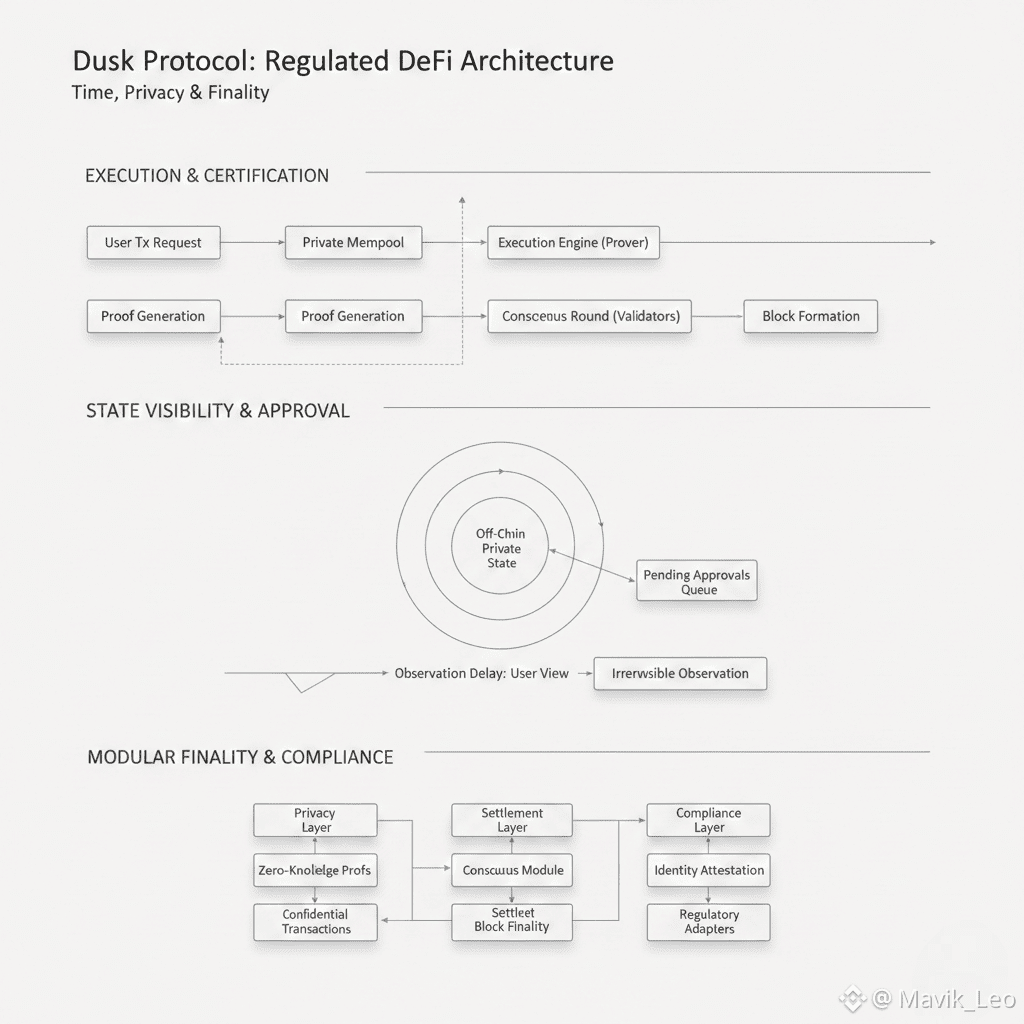
Privacy on Dusk isn’t ideological. It’s practical. Information is protected by default, but disclosure is possible when required. That balance matters in finance, where confidentiality and oversight are not enemies, but simultaneous obligations.
Participation in the network feels closer to stewardship than speculation. Validators are rewarded for reliability. Builders are encouraged to think about durability. Over time, that shapes who stays and what gets built.
There’s no hype-driven growth here, just steady progress tooling improvements, thoughtful partnershis, and a community that increasingly talks about governance and architecture instead of price. That may not be exciting, but it’s how trust is built.
Dusk isn’t trying to win attention. It’s trying to stay relevant when regulated assets and privacy-preserving finance become expectations rather than experiments. In an industry obsessed with speed, choosing to build slowly may be its most strategic decision.
