
The moment that made me pause wasn’t during a launch announcement or a performance benchmark. It happened quietly, while moving through something that felt familiar enough that I stopped thinking about what chain I was on.
That’s usually where things go wrong.
Most Web3 systems expect you to arrive prepared. Wallet ready. Terminology loaded. Patience stocked. They reward people who already know the rules. When something doesn’t work immediately, you assume it’s your fault for not reading closely enough.
This time, I caught myself waiting for that friction to appear.
It didn’t
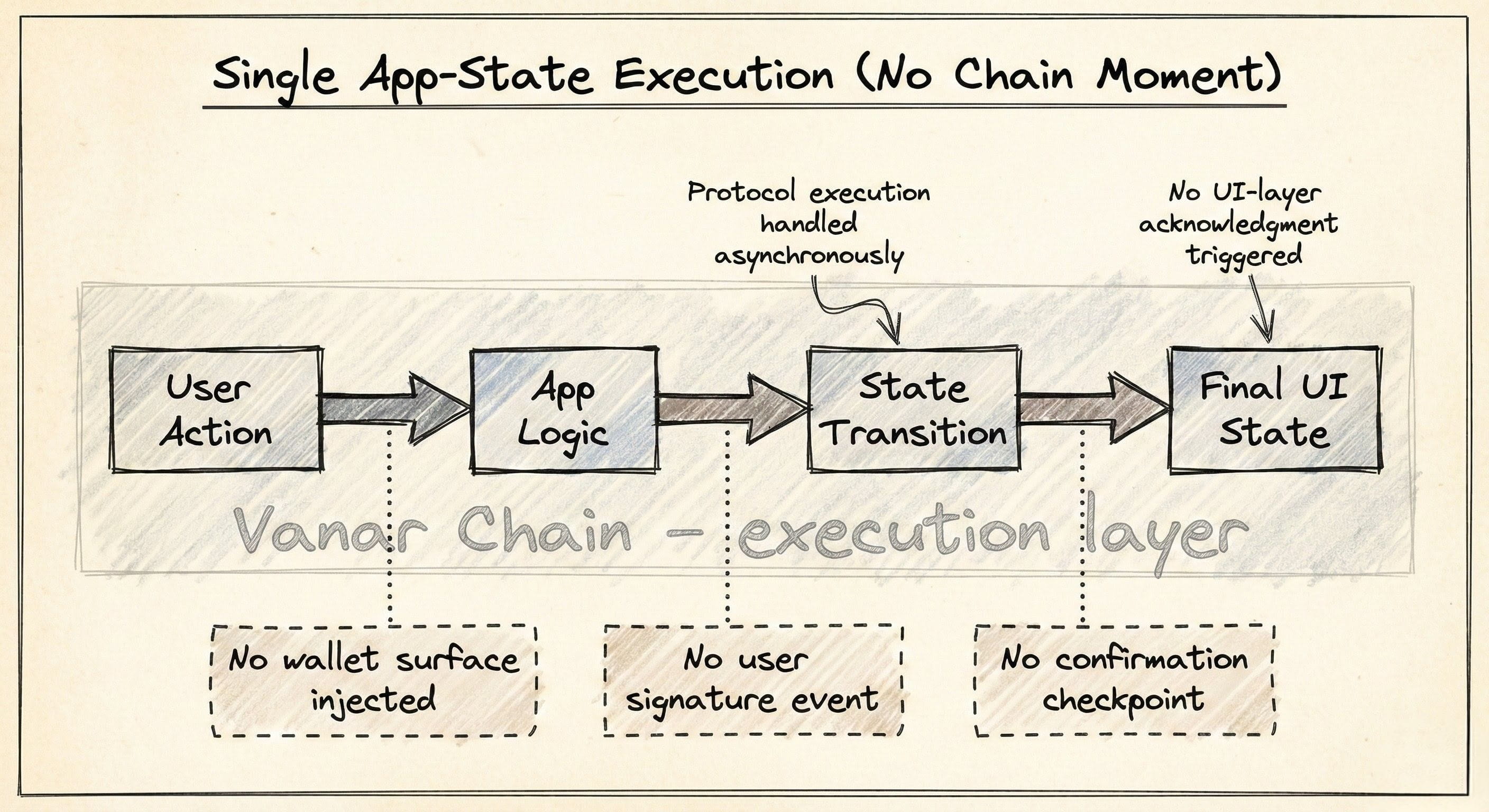
Not because it was erased, but because it felt anticipated. Like the system had already accounted for the fact that most people don’t arrive curious about blockchains they arrive curious about experiences.
That’s when Vanar started to feel different.
Nothing announced itself as “L1.” Nothing asked me to care about infrastructure. The interaction didn’t teach me anything. It just moved forward. And the absence of instruction felt intentional, not accidental.
I’ve seen this pattern before, but not often in crypto. It shows up in consumer environments, games, entertainment platforms, brand experiences, places where users don’t tolerate pauses or explanations. They don’t wait to be educated. They leave.
Vanar seems built with that assumption baked in: that most people won’t slow down for ideology.
What stood out wasn’t speed. It was restraint. The system didn’t rush to prove anything. It didn’t surface complexity to earn credibility. It let familiarity do the work.
There was a moment where I expected the usual cognitive tax. A choice that would require context. A step that would expose the machinery underneath. Instead, the flow stayed intact. I moved through it without having to switch mental modes.
That’s rare.
Underneath that smoothness, you can feel pressure being managed, not eliminated. Experiences like gaming and immersive environments don’t forgive hesitation. They surface delays immediately. If coordination breaks, users don’t file bug reports, they disengage. Vanar seems designed to absorb that pressure quietly, without making it the user’s problem.
You notice this more clearly when you think about where the team comes from. Systems shaped by games and brands learn quickly that “almost seamless” is still broken. They learn that people don’t care what layer they’re on, they care whether the moment holds.
That perspective shows up in the ecosystem choices too. Projects like Virtua Metaverse and the VGN games network don’t wait for users to appreciate the tech. They assume the opposite: that interaction comes first, understanding later — if ever.
At some point, I realized I hadn’t asked myself the usual Web3 questions.
I wasn’t thinking about gas.
I wasn’t thinking about architecture.
I wasn’t thinking about whether this was “mainstream ready.”
I was already past that question.
That’s the quiet shift Vanar seems to aim for. Not convincing people to adopt Web3 but refusing to frame the experience as adoption in the first place. Just arrival.
This is where $VANRY starts to feel less like a symbol of speculation and more like a signal of alignment. Not a reward for belief, but a reflection of a system that expects scale to come from familiarity, not evangelism.
There’s a cost to designing this way. It means you don’t get credit upfront. You don’t get applause for complexity. You don’t get to hide rough edges behind jargon. If something feels off, users feel it immediately.
Vanar doesn’t seem interested in shielding itself from that exposure.
What lingers isn’t a feature set or a roadmap. It’s the sense that the chain assumes most of its future users will never know or care that they’re using a blockchain at all.
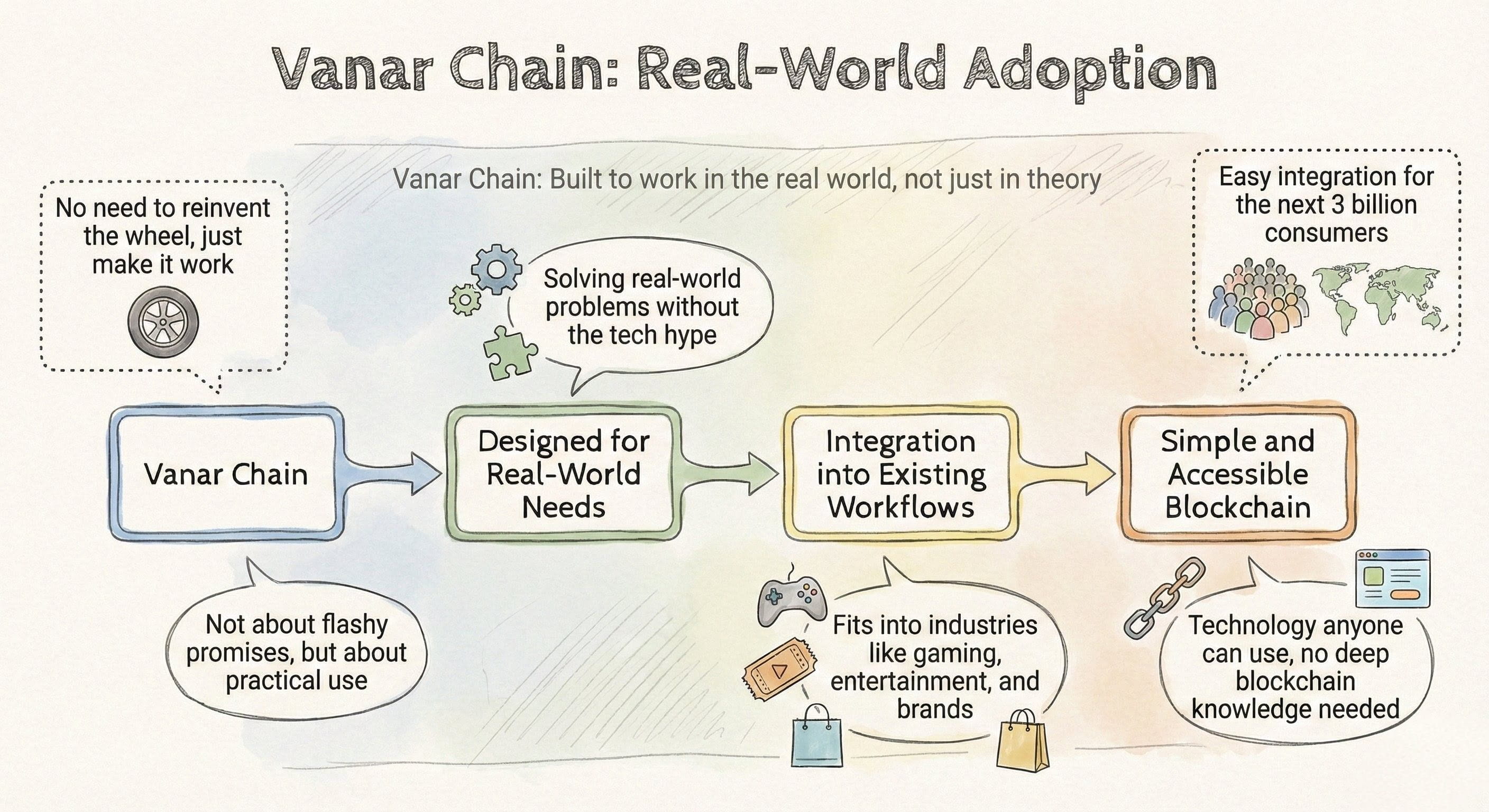
And instead of fighting that reality, it’s built around it.
That’s a different kind of confidence. Not loud. Not persuasive. Just patient enough to let people arrive without asking them to change who they are first.