
The assumption was simple: if the data exists, it’s usable.
Nothing about speed or scale suggested otherwise. A Walrus blob sat where it should, intact, accounted for. When a Sui contract reached for it, there was no alarm, no warning, no refusal. Just a pause long enough to notice and short enough to doubt whether it mattered.
It did
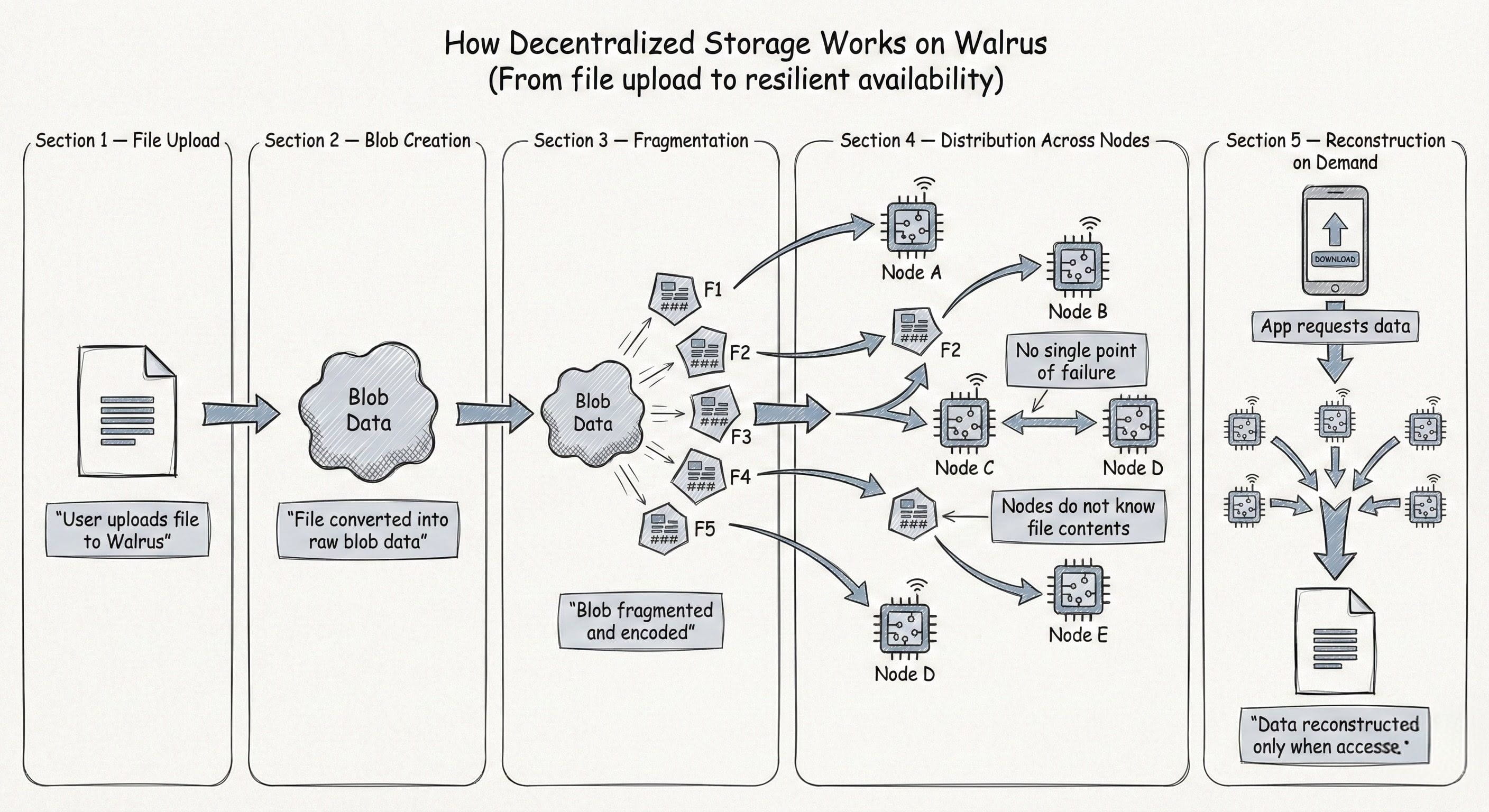
Nothing broke. Nothing disappeared. Availability held. Yet readiness thinned in a way software rarely admits. The data was present on Walrus, but not prepared in the moment the contract expected it to be. The difference was quiet, almost polite. And that was the problem.
A Walrus blob registered through Walrus doesn’t announce itself. It doesn’t claim urgency. It lives as fragments, reconstructible by design, moving under rules that don’t care how confident you feel. Proof of availability keeps doing its work. Reconstruction guarantees remain true. But time slips into the foreground, where certainty used to sit.
You feel it when waiting replaces assumption.
The contract doesn’t fail. It waits. Availability checks continue without commentary. The Walrus system stays calm while responsiveness stretches, not enough to justify concern enough to register friction. The data is there. The question shifts to whether it’s there on time.
There’s an uncomfortable duality here. Data can exist and still be unready on Walrus. Present and yet not aligned with the moment it’s called upon. Fragmented data doesn’t argue with this. It just obeys the conditions set for reconstruction. Erasure coding keeps its promise. Latency under load reveals itself without asking permission.
This is where people enter the frame.
Teams assume storage is passive. Someone says the delay is harmless. Another decides it can wait until later. A reassuring sentence lands with confidence and leaves without consequence. No one is wrong. Nothing has failed. The system absorbs the indecision and keeps time.
“The data is there,” someone says.
The contract remains patient.
Responsibility doesn’t arrive as an error. It arrives as waiting.Walrus Smart contracts on Sui don’t negotiate with comfort; they align with conditions. When those conditions include time, readiness becomes something you have to manage, not something you can assume away. The system doesn’t punish neglect. It records it.
Under load, this becomes harder to ignore. Multiple interactions reach for Walrus blobs at once. Reads stack. Reconstruction continues. Availability remains true. And latency becomes perceptible not as collapse, but as accumulation. Walrus doesn’t drop data to make things feel fast. It lets timing surface as a cost.
This is where verification stops being abstract. Proof of availability doesn’t guarantee convenience. It guarantees presence under rules. When readiness lags, the system doesn’t explain why. It just keeps checking. Fragmented data moves. Availability checks repeat. The clock keeps ticking.
There’s a discipline hiding in that repetition. Responsibility isn’t enforced through alerts or dashboards. It emerges because waiting has weight. Because postponement doesn’t erase obligation. Because the system remembers even when people prefer not to.
At some point, the question changes. Not whether the blob exists. Not whether it can be reconstructed. Something quieter replaces it.
Is this ready when it needs to be?
That question isn’t answered by more availability. It isn’t resolved by reassurance. Walrus doesn’t step in to clarify intent. It doesn’t translate delay into instruction. It verifies what can be verified and leaves the rest to time.
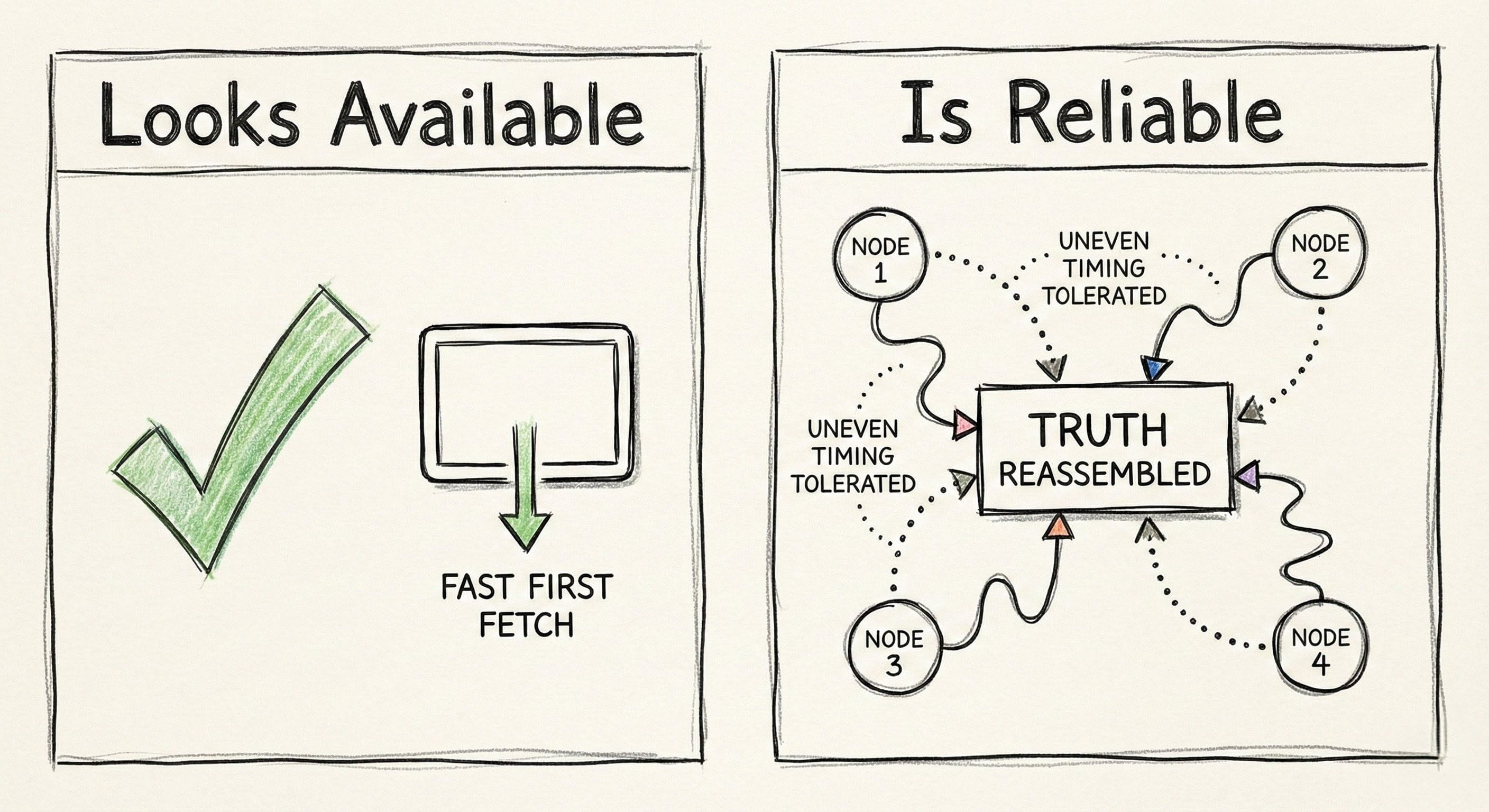
WAL sits there, less like a reward and more like a metronome, marking moments when assumptions meet reality. The system doesn’t judge. It doesn’t hurry. It keeps checking, again and again, as contracts wait and readiness either arrives or doesn’t.
Nothing breaks.
The check will happen again.