
Silence usually reads as stability.
No alerts. No warnings. No interruptions. The kind of quiet that suggests everything is holding together without supervision. In systems like this, silence feels earned. It invites trust. It makes it easy to look away.
Walrus is good at that kind of quiet.
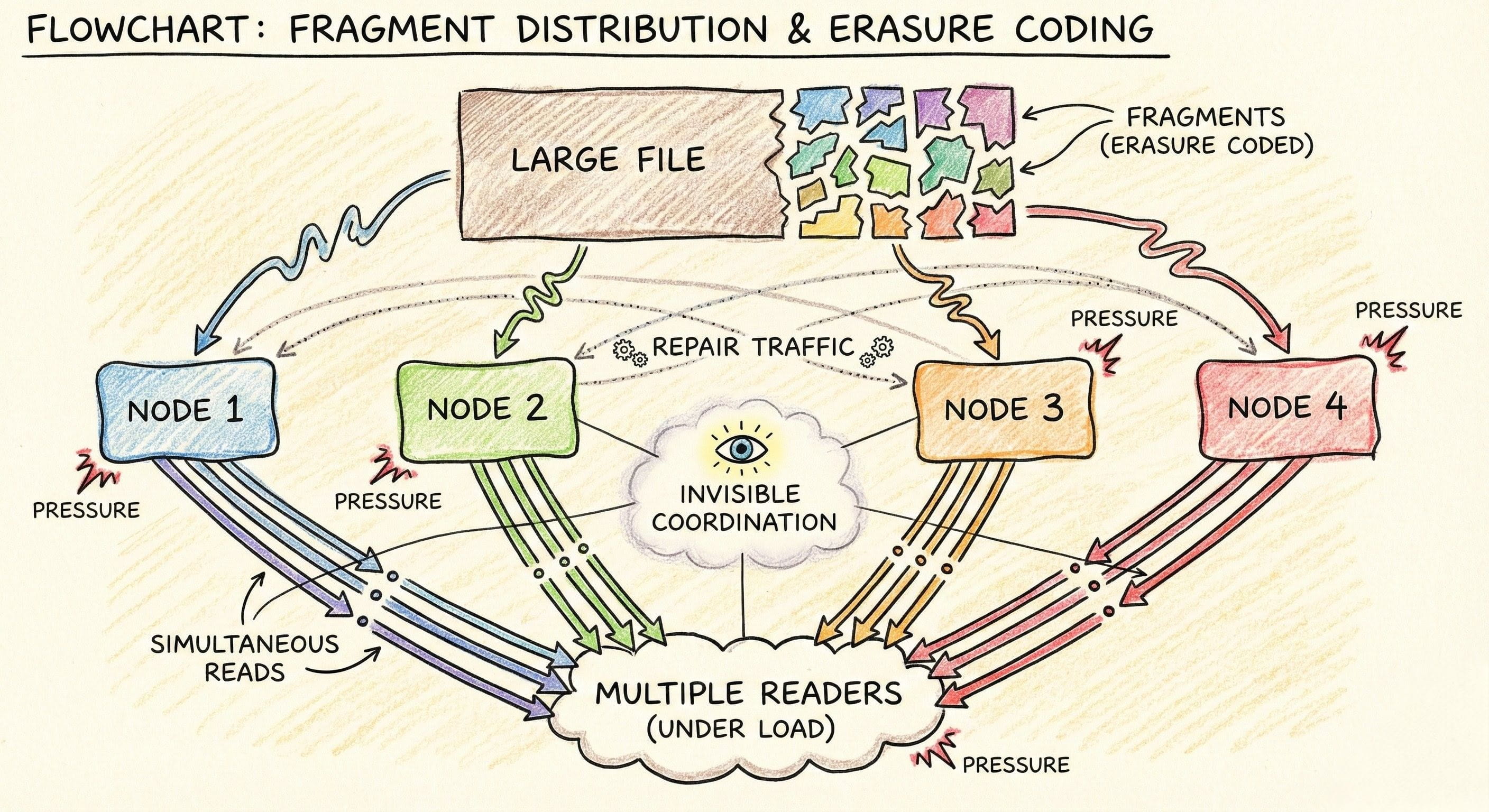
Nothing announces itself. Walrus Decentralized storage keeps moving without asking for attention. Storage nodes exchange fragments, epochs roll forward, coordination happens somewhere out of view. There’s no banner to acknowledge the work. No signal that says something important just happened. The system stays calm enough to ignore.
At first, that calm feels like proof.
Fault tolerance holds. Walrus Verifiable storage does exactly what it’s supposed to do. Availability remains true. And yet the silence stretches slightly beyond what feels comfortable. Long enough to register, easy enough to wave off. A pause that doesn’t demand action, but also doesn’t fully release you.
Silence can do that. It hangs around.
Teams read quiet as permission. If nothing is complaining, nothing must be wrong. Decisions slide forward. “We’ll deal with it later” starts to sound reasonable. Not careless just efficient. The system isn’t asking for anything. So attention goes elsewhere.
“We’ve got time,” someone says.
Silence offers no objection.
Responsibility doesn’t vanish in the absence of noise on Walrus. It waits without signaling its presence. Distributed network coordination continues whether anyone is watching or not. Walrus Decentralized data distribution doesn’t adjust itself to human attention. State accumulates. Availability is preserved. What hasn’t been resolved stays remembered.
Silence delays the moment responsibility becomes visible. It never removes it.
Walrus Under load, that delay starts to feel different. More interactions depend on the same quiet coordination. Availability checks repeat. The system keeps confirming that data is present, intact, accounted for. Latency isn’t announced. It’s felt. Not as an error, not as an alert just as a weight that wasn’t noticeable before.
Silence stops feeling free.
Nothing collapses. No alerts appear to demand better behavior. Coordination isn’t interrupted to make a point. Demand is absorbed, and timing begins to assert itself indirectly. Fault tolerance remains intact. Availability remains true. The cost shows up somewhere else.
This is when WAL becomes noticeable not as an incentive or a reward, but as a record of persistence. A trace of how long coordination has been running without acknowledgment. Not loud. Not corrective. Just present.
Silence, at this point, loses its neutrality.
What once felt like calm starts to carry weight. Not because anything went wrong, but because too much is happening without being accounted for. Coordination begins to ask for recognition, not through messages or metrics, but through the simple fact that it never paused.
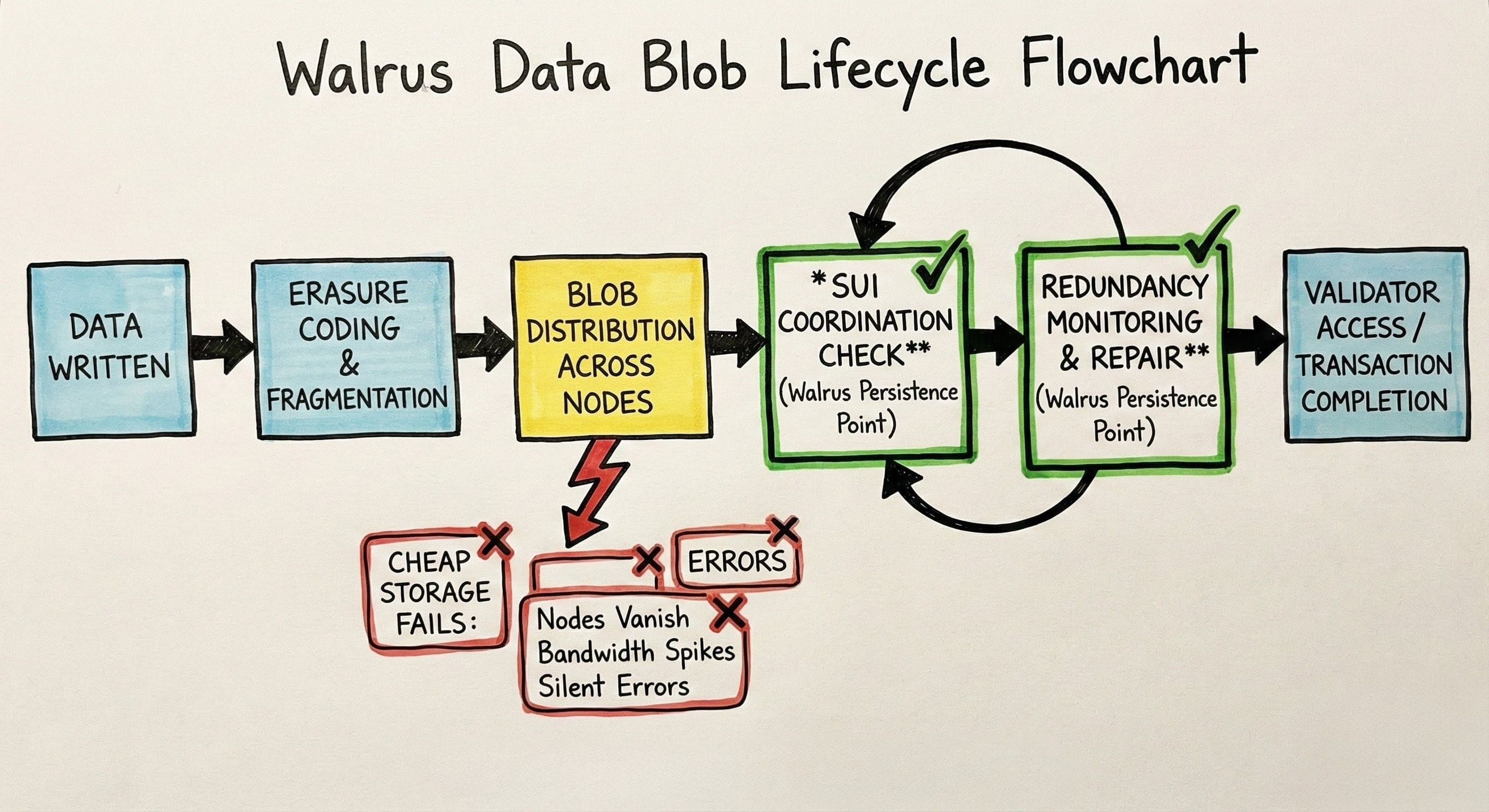
Walrus doesn’t adjust its posture when this realization arrives. Coordination continues. Storage nodes keep exchanging fragments. Epochs keep advancing. Availability keeps being verified.
Silence keeps doing its work.
Responsibility keeps accumulating.
Eventually, someone notices that waiting has left a shape.
And whatever was set in motion hasn’t stopped.