
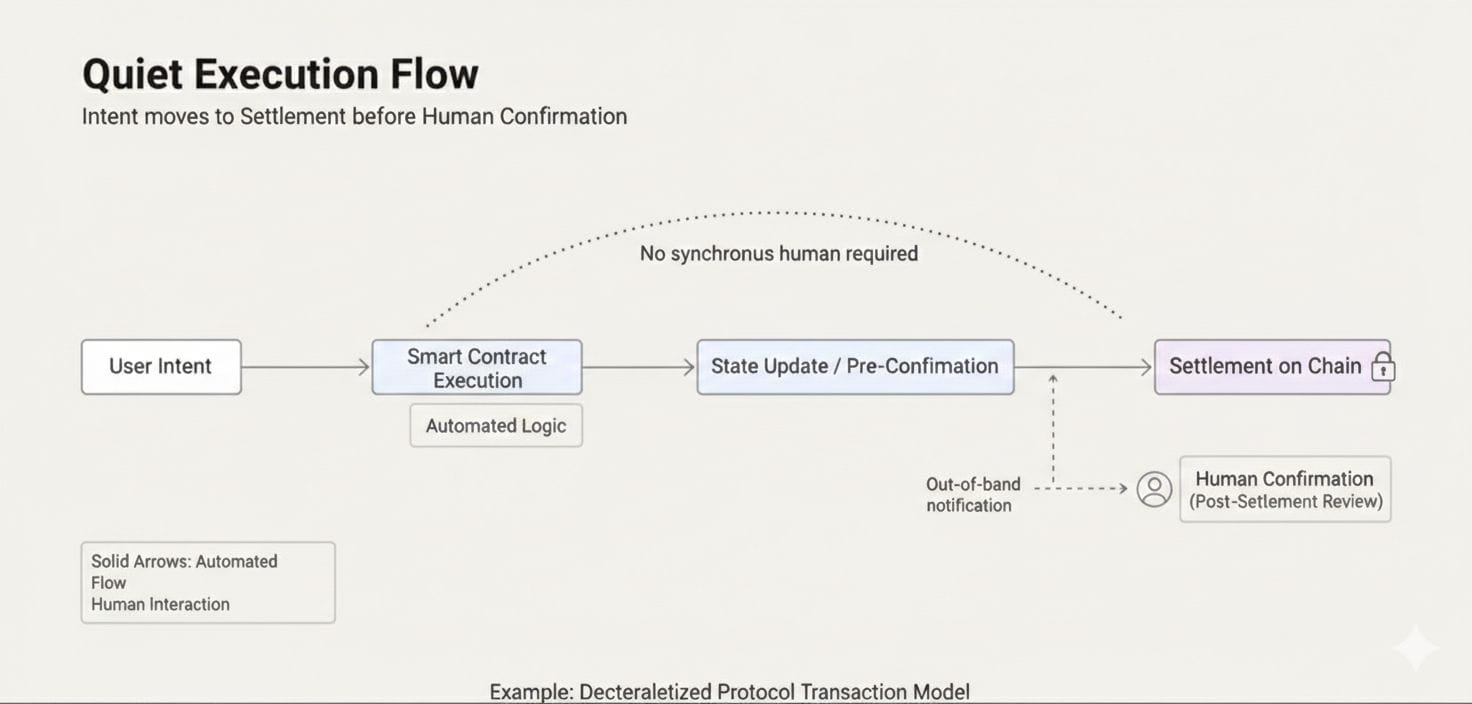
I thought intent was something you could soften later. You say yes loosely. You try something small. You leave room to revise. That’s how most systems behave. They wait. They buffer. They give you time to feel certain.
This one didn’t.
The action cleared before the hesitation finished forming.
Nothing dramatic happened. No spike. No lag. The system took the instruction exactly as it was given and moved on. By the time the conversation circled back to “are we comfortable with this,” the state had already moved past the question.
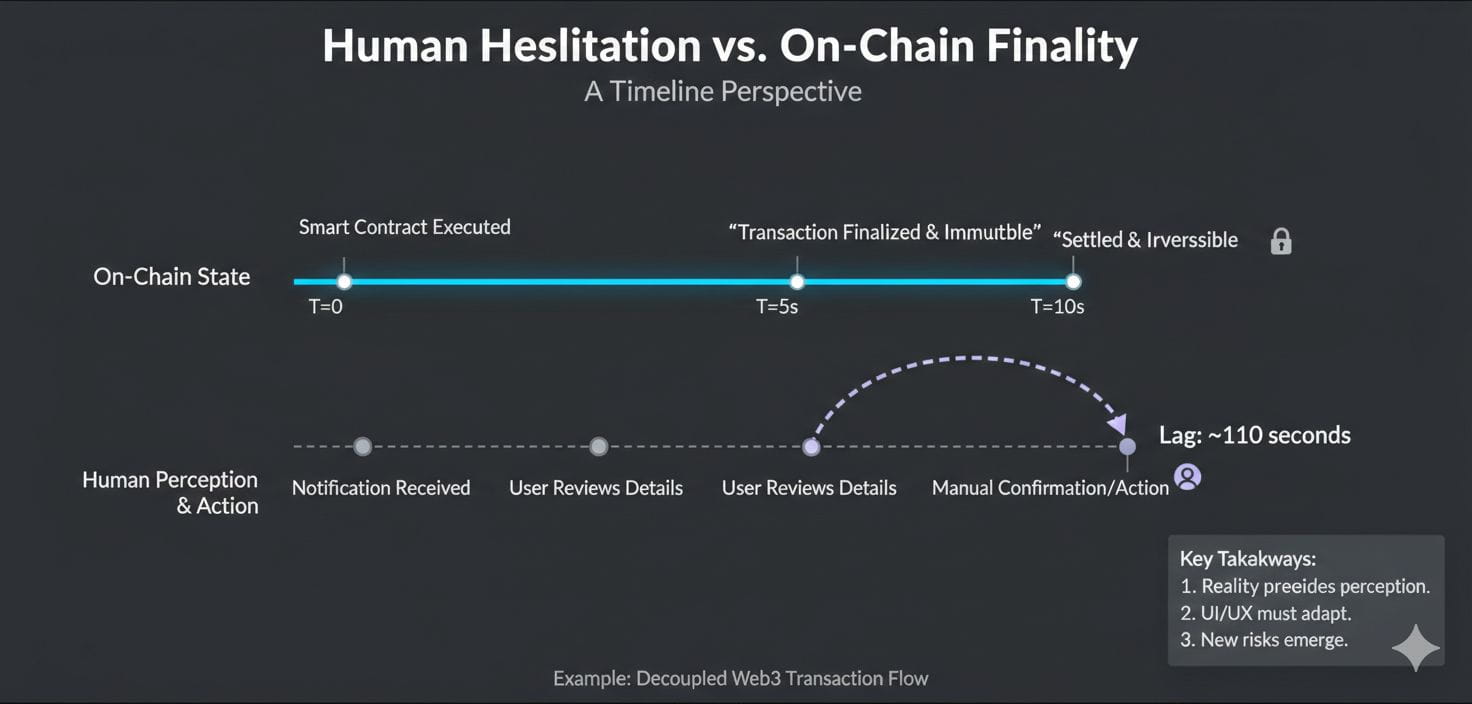
That gap doesn’t show up where teams expect. There’s no error to investigate. No rollback to debate. Just a quiet realization later that something provisional was treated as complete. Not because anyone rushed. Because the infrastructure assumes intent is real the moment it’s expressed.
A few cycles in, the weight surfaced. Not as a problem. As permanence. AI context carried forward. Automation reused what had already been settled. What felt like exploration turned into precedent. The system remembered what the room had emotionally downgraded.
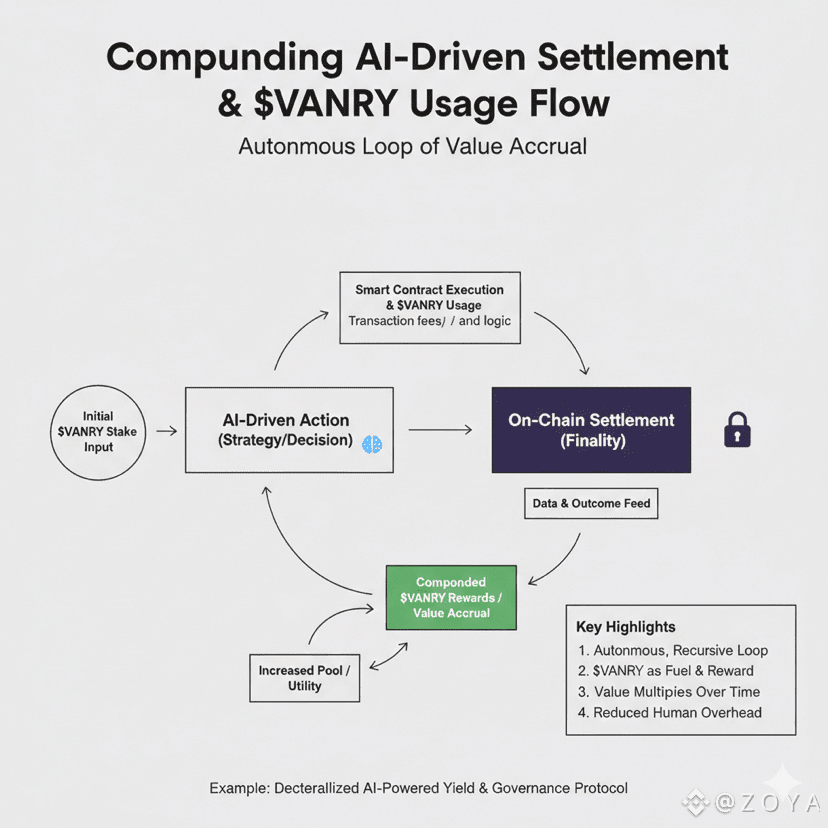
That’s when $VANRY appears. Not as a warning. As math. A reflection of how often intent was expressed without discipline. The chain didn’t misinterpret anything. It just didn’t leave space for indecision to masquerade as safety.
Vanar doesn’t ask if you meant it.
It assumes you did.
Nothing went wrong.
Nothing rushed.
But intent, once spoken, didn’t get a second chance to become lighter.
#Vanar $VANRY @Vanarchain