
If you’ve ever struggled with maintaining privacy while participating in decentralized finance, you know how difficult it can be to protect sensitive data on traditional blockchains. Most public networks record transactions transparently, exposing user balances, asset transfers, and even metadata that can be traced back to individuals. Developers building decentralized applications often have to choose between privacy and decentralization, while enterprises face challenges integrating blockchain solutions with compliance requirements. In addition, storing large datasets securely on-chain is often inefficient or costly, leading to reliance on centralized storage solutions that undermine decentralization. Users and organizations seeking confidentiality, secure storage, and verifiable on-chain activity face a gap in current blockchain offerings. This persistent pain point highlights the need for a platform that combines privacy, efficiency, and decentralized governance while supporting real-world use cases.
Walrus (WAL) addresses these challenges by providing a decentralized protocol designed to enable private transactions, secure data storage, and confidential interaction with smart contracts. Unlike many blockchains that implement privacy as an optional layer, Walrus integrates confidentiality into its core architecture. Its system leverages encrypted decentralized storage, zero-knowledge proofs for transaction validation, and modular governance mechanisms, allowing users to verify network activity without exposing sensitive information. Walrus also supports developers and institutions in building decentralized applications with inherent privacy, offering programmable compliance options to align with regulatory frameworks. By focusing on privacy-first functionality without sacrificing decentralization, Walrus creates a platform where sensitive financial or personal data can be stored, processed, and shared securely. Its hybrid design allows users to enjoy both transparency for auditability and privacy for sensitive operations, bridging a gap that many blockchains currently leave unaddressed.
Walrus’ architecture relies on three primary features that work together to deliver privacy, security, and efficiency. First, the encrypted storage protocol divides data into encrypted chunks distributed across multiple nodes using advanced erasure coding. This ensures that no single node can access complete data while maintaining redundancy for fault tolerance. Second, zero-knowledge proof (ZKP) transaction validation allows participants to confirm transaction validity without revealing amounts, addresses, or other sensitive information, combining privacy with verifiability. Third, decentralized governance and smart contract execution ensure protocol changes, upgrades, and ecosystem decisions are managed collaboratively. Validators and token holders participate in governance, voting on proposals and network improvements, maintaining decentralization while supporting scalability. Together, these components form a coherent privacy-focused ecosystem where storage, transaction validation, and governance reinforce each other to achieve secure, verifiable, and efficient operations. [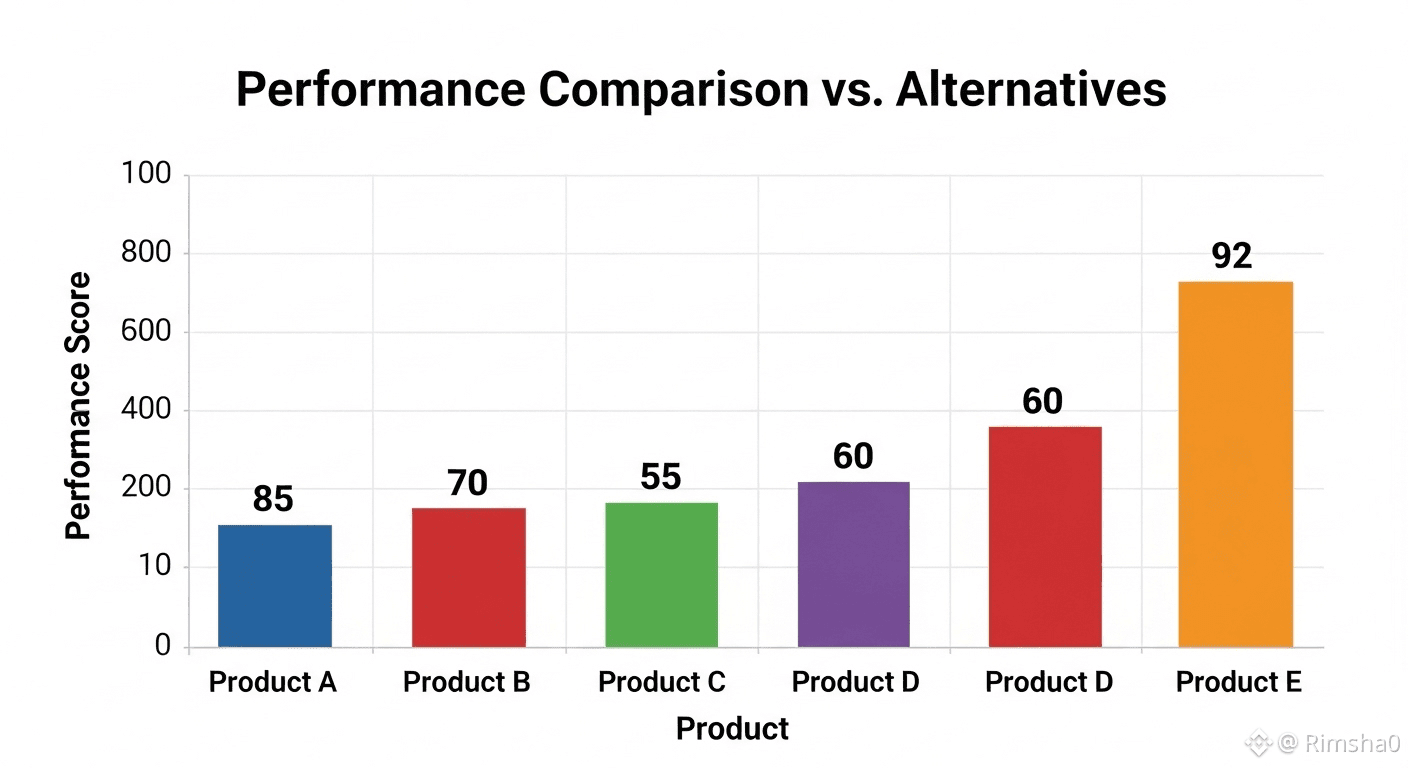 ] Performance metrics such as encrypted data access latency, transaction throughput, and ZKP verification time demonstrate Walrus’ competitive efficiency compared to traditional public blockchains and centralized storage alternatives.
WAL tokenomics are designed to support the network’s operational and governance mechanisms. Tokens are used for staking, allowing holders to delegate to validators who secure the network and participate in consensus. WAL also enables on-chain governance, giving holders the ability to vote on protocol upgrades, parameter changes, and ecosystem grants. In addition, WAL is used to pay transaction and execution fees within the network, linking token utility directly to network activity. A portion of tokens is allocated for ecosystem development and grants, incentivizing developers to build applications, tools, and integrations on the platform. [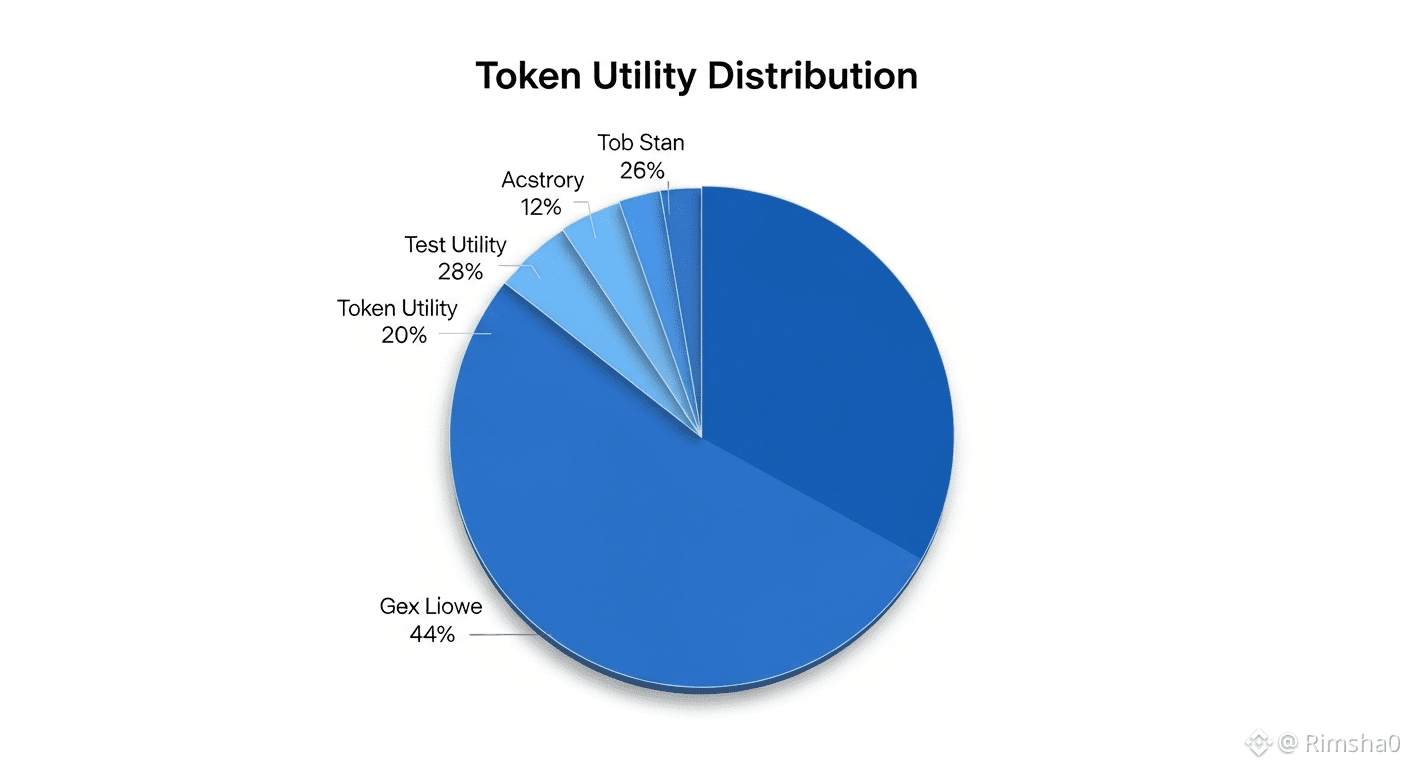 ] Distribution emphasizes node incentives, community engagement, ecosystem growth, and strategic partnerships, providing a framework for sustainable development without promising guaranteed financial returns. Token utility is designed to encourage meaningful participation and long-term network health, rather than speculative investment behavior.
Consider a small enterprise seeking to deploy a decentralized supply chain tracking system while maintaining confidentiality of supplier and client data. Traditional public blockchains would expose transaction histories and sensitive operational details. Using Walrus, the enterprise can store supply chain records in encrypted decentralized storage while using zero-knowledge proofs to verify transactions without revealing the underlying data. Compliance metadata can be cryptographically anchored to demonstrate regulatory adherence without exposing private information. This approach reduces operational risk, prevents data leaks, and maintains the benefits of decentralized verification and immutable record-keeping. It illustrates how Walrus mitigates real-world failure points by combining secure storage, private transaction validation, and auditable compliance, making privacy-conscious enterprise adoption feasible and reliable.
Evaluating Walrus involves tracking usage and network health metrics rather than price movements. Total Value Locked (TVL) in decentralized applications using Walrus indicates adoption and ecosystem engagement. Validator participation and node distribution, including uptime and geographic diversity, reflect decentralization and operational resilience. Transaction throughput and latency, particularly for encrypted or ZKP-based transactions, reveal network efficiency and capacity. Ecosystem adoption, measured by active dApps, partnerships, and integrations, shows real-world utilization. Governance participation, including proposal submissions and voter turnout, demonstrates community involvement and engagement in protocol evolution. Monitoring these indicators provides a comprehensive assessment of the network’s functional adoption, scalability, and security without relying on speculative price indicators, aligning with a risk-aware approach for analysts and participants.
Walrus offers a privacy-first, decentralized solution for secure storage, confidential transactions, and governance. Network observers should focus on adoption, usage, and validator activity instead of short-term market movements or price predictions. Cryptocurrencies carry inherent risks, and this article is for informational purposes only. Risk warning: digital assets are volatile and may result in financial loss. @YourHandle #WAL

