
As blockchain technology matures, the collaboration between academic research and practical development has become essential to solving complex problems like privacy, security, and regulatory compliance. One project where this synergy is deeply embedded is Dusk Network — a Layer‑1 blockchain built specifically for regulated finance and privacy‑preserving applications. At Dusk, research isn’t an afterthought; it’s an ongoing mission that shapes the core of the technology.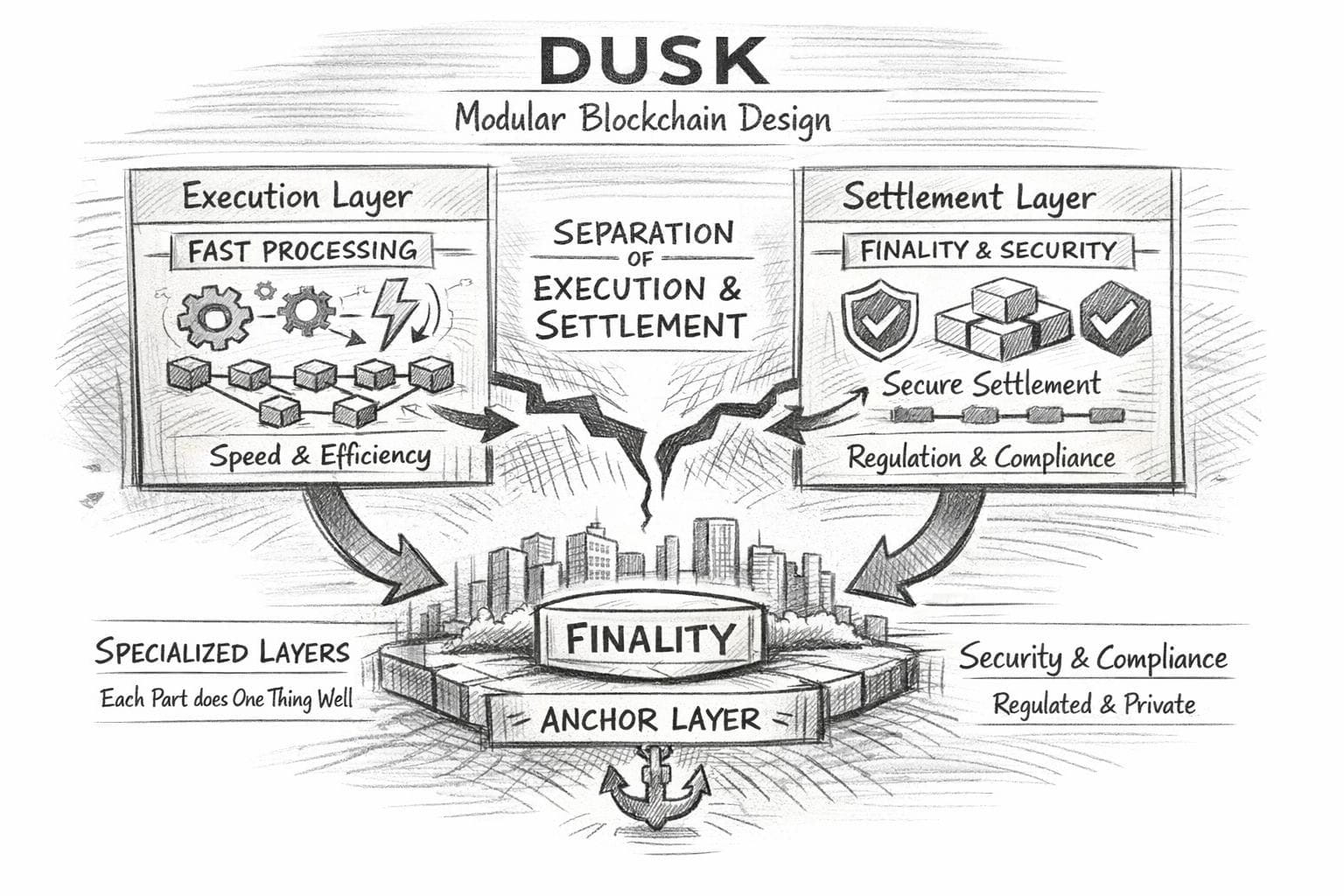
Why Academia Matters for Blockchain
Blockchain systems rely heavily on advanced mathematics and cryptographic theory — fields rooted in centuries of academic study. However, real‑world financial applications demand novel research to address unique challenges such as anonymity with auditability, secure identity verification, and confidential transactions that can coexist with compliance. Collaborations between researchers and developers help ensure that blockchain solutions are both theoretically sound and practically viable in real deployments.
In academic environments, researchers often focus on theoretical correctness and proofs. They explore cutting‑edge cryptographic primitives, consensus mechanisms, and security models. Developers, on the other hand, prioritize efficiency, implementation feasibility, and user requirements. Bringing these two paradigms together allows projects to advance rapidly while maintaining mathematical rigor and real‑world reliability.
Research at the Heart of Dusk Network
At Dusk Network, a dedicated research team composed of subject matter experts and Ph.D. holders drives the exploration of new cryptographic approaches and protocols. This team works on foundational elements such as zero‑knowledge proofs (ZKPs) — a cornerstone for privacy in blockchains — as well as other primitives that secure the network and enable confidential transactions.
Zero‑knowledge proofs are pivotal because they allow one party to prove the truth of a statement without revealing the underlying data. At Dusk, these cryptographic tools are not only used for privacy but also for compliance‑aware transactions that can reveal necessary information to authorized entities without exposing details broadly.
Working Across Disciplines
Research at Dusk is deeply collaborative. Researchers act as architects: they design the mathematical frameworks and security assumptions that underpin the network’s features, and then work closely with developers who implement these designs in code. This partnership ensures proposals are validated both in theory and practice.
For instance, Dusk’s Citadel project — a privacy‑preserving identity protocol — started from theoretical research and is now moving toward integration on Dusk’s testnet. Additionally, concepts like Zedger, a hybrid transaction model for tokenized real‑world assets, emerge from vigorous collaboration between cryptographers and engineers to align functionality with industry requirements.
Today’s blockchain landscape continually evolves with new cryptographic breakthroughs. Dusk’s research team not only stays abreast of these developments but also contributes to them — publishing work on novel primitive implementations like PlonKup and the Reinforced Concrete hash function that enhance zero‑knowledge systems and blockchain efficiency.
Real‑World Impact and Academic Exchange
Dusk’s research initiatives don’t exist in isolation. They influence the wider blockchain community; significant projects have forked Dusk’s cryptographic libraries, illustrating academic resonance beyond the project itself. This reflects how research contributions can become building blocks for broader innovation.
Additionally, new hires like mathematicians and cryptography specialists with academic backgrounds reinforce the importance of scholarly expertise in the team, illustrating how Dusk actively bridges the gap between theoretical research and practical blockchain development.
The Future of Blockchain Innovation
The intersection of academia and blockchain — embodied by Dusk Network — is more than trend; it is foundational to advancing secure, private, and compliant decentralized systems. By grounding engineering in solid research and continuously engaging with academic breakthroughs, Dusk is well poised to tackle the most challenging problems facing blockchain in regulated finance and beyond. This collaboration ensures that blockchain systems are not only innovative but resilient, verifiable, and ready for real‑world adoption.
