
Vanar Chain introduces something most blockchains never truly solved: native reasoning that lives fully on chain. Kayon is the system that makes this possible. It allows applications, smart contracts, and autonomous agents to interpret data, apply rules, and make decisions without depending on external services. When I look at how Kayon works, it feels less like an add on feature and more like a new operating layer for how blockchains behave.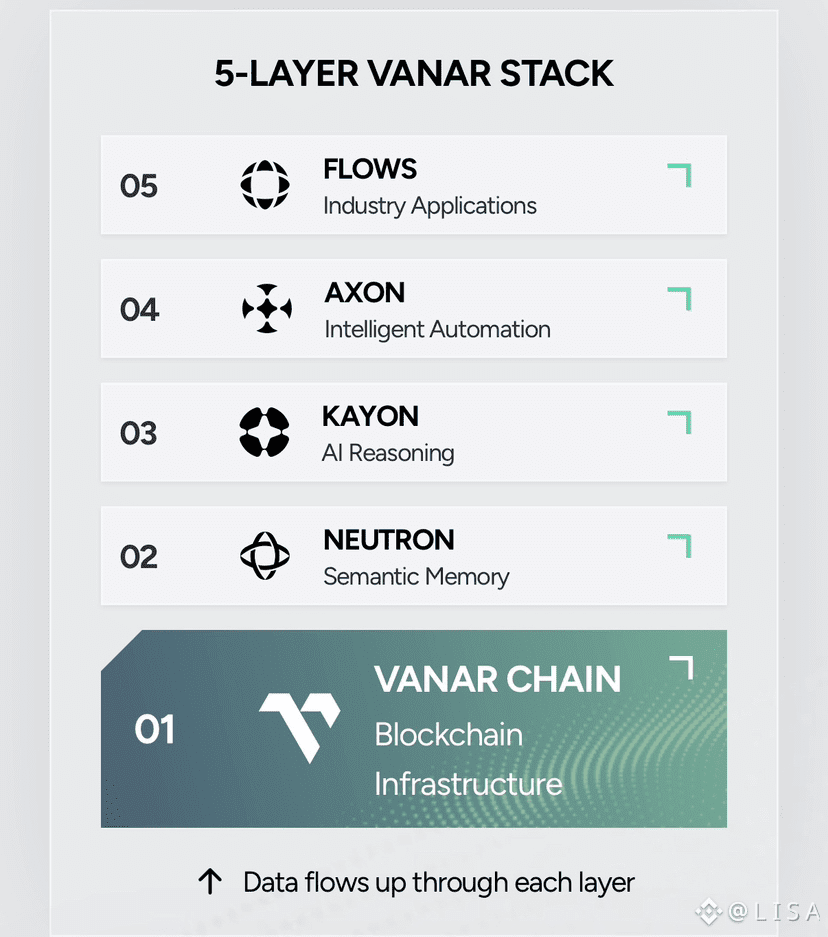
What Kayon Actually Does on Chain
At its core, Kayon reads and understands information that already lives on Vanar Chain. This information is stored inside Neutron Seeds, which are highly compressed semantic versions of real documents such as invoices, contracts, images, or transaction records. These Seeds can shrink raw files by up to five hundred times while keeping their meaning intact.
Developers interact with Kayon using plain language instructions. A prompt might ask it to check whether a payment follows regional regulations or confirm that a document meets compliance standards before releasing funds. Kayon then pulls relevant Seeds, historical chain data, and approved external inputs through controlled enterprise connectors. Everything happens directly on Vanar Chain, and results come back almost instantly.
What stands out to me is that Kayon does not just give an answer. It shows how it arrived there. Each step creates verifiable proofs so anyone can audit the reasoning later. There is no hidden logic or unexplained output.
How Kayon Fits Into the Vanar Architecture
Neutron and Kayon work as a pair. Neutron acts like long term memory by converting raw files into structured on chain data. Kayon acts like active intelligence by reading that data and applying logic to it. Together they remove the need for external storage networks or oracle based decision systems.
Once Kayon finishes its reasoning, smart contracts can respond automatically. For example a payment application can halt a transfer until Kayon confirms that a receipt matches compliance rules. Validators secure this entire process using Vanar consensus while transactions stay extremely cheap.
From my point of view this is where Vanar changes the definition of smart contracts. Logic no longer stops at simple conditions. Contracts can now react to context, patterns, and verified reasoning without sacrificing trust.
How Developers and Users Actually Use It
In gaming environments, Kayon can study player behavior stored in Seeds and adjust in game economies dynamically. A game might ask Kayon to rebalance rewards during market volatility or flag unusual trading behavior in real time. This makes virtual worlds feel alive instead of scripted.
Enterprises use Kayon differently. Finance teams connect their systems and ask for summaries of high value payments or risk signals based on transaction history. Results can be sent to dashboards or messaging tools automatically. I can see how this removes hours of manual review.
Governance is another area where Kayon shines. DAOs can ask it to analyze voting patterns, staking behavior, or proposal outcomes. That kind of insight used to require off chain analytics. Here it happens natively and transparently.
Why This Is Different From Traditional AI and Oracles
Most blockchains that claim intelligence still depend on oracles or off chain services to make decisions. That introduces delays and trust assumptions. Kayon avoids this by keeping reasoning inside the chain itself.
This design matters a lot for regulated environments. Financial institutions and real world asset platforms need decisions that can be explained and audited. Kayon produces structured reasoning that regulators can verify without exposing sensitive data. That makes it suitable for tokenized assets and compliant finance workflows.
I also notice how this enables autonomous agents that can act independently yet responsibly. Agents do not just execute code. They justify their actions with proofs that anyone can check later.
What Kayon Means for Vanar Going Forward
As more applications adopt Neutron and Kayon together, Vanar Chain starts to look less like a ledger and more like a decision layer. Data lives on chain. Intelligence runs on chain. Outcomes settle on chain.
From where I stand, this is a quiet but major shift. Instead of blockchains reacting to external instructions, they begin to understand context and respond intelligently. If this model scales the way it is designed to, Kayon could be the reason Vanar becomes a foundation for applications that think, explain themselves, and operate at global scale without breaking trust.
