
When I started thinking about staking on Walrus from the network's perspective, I realized it's designed to build collective reliability rather than individual gains. Staking $WAL is the foundation that secures data availability across the decentralized storage layer on Sui.
Nodes stake WAL to join storage committees. The amount staked determines how many slivers a node can handle, with higher stake allowing more workload and higher potential rewards. This ties network capacity directly to committed capital.2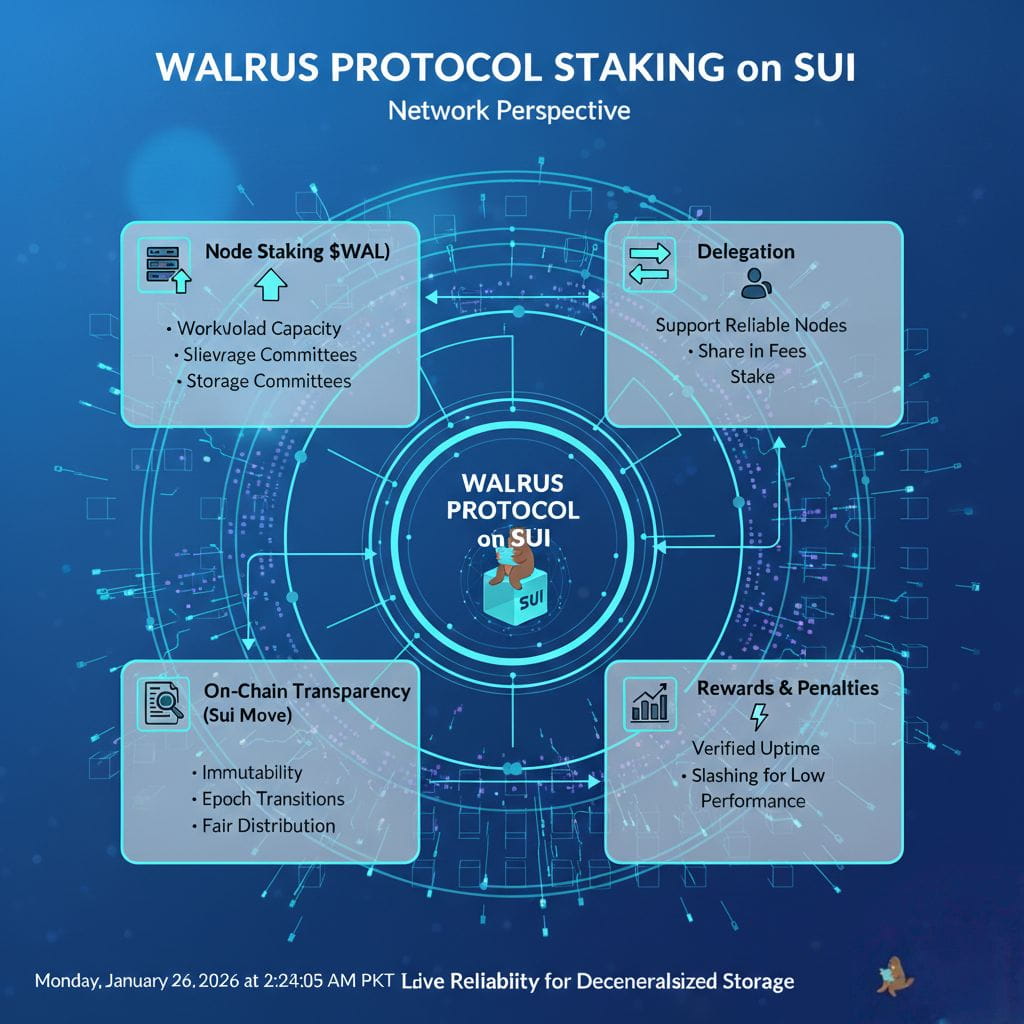
Delegation lets WAL holders participate without running nodes. They delegate to operators, earning a share of storage fees. The network benefits as delegation flows to reliable nodes, concentrating stake where performance is proven and improving overall security.
Rewards come from user paid storage fees in $WAL, distributed over epochs based on verified uptime and availability proofs. The more data stored on Walrus, the larger the reward pool, creating a growth flywheel for the network.
Penalties ensure commitment. Failed challenges or low performance reduce epoch rewards. Slashing deducts staked WAL for severe issues, with portions burnt or redistributed. This discourages neglect and protects the network from bad actors.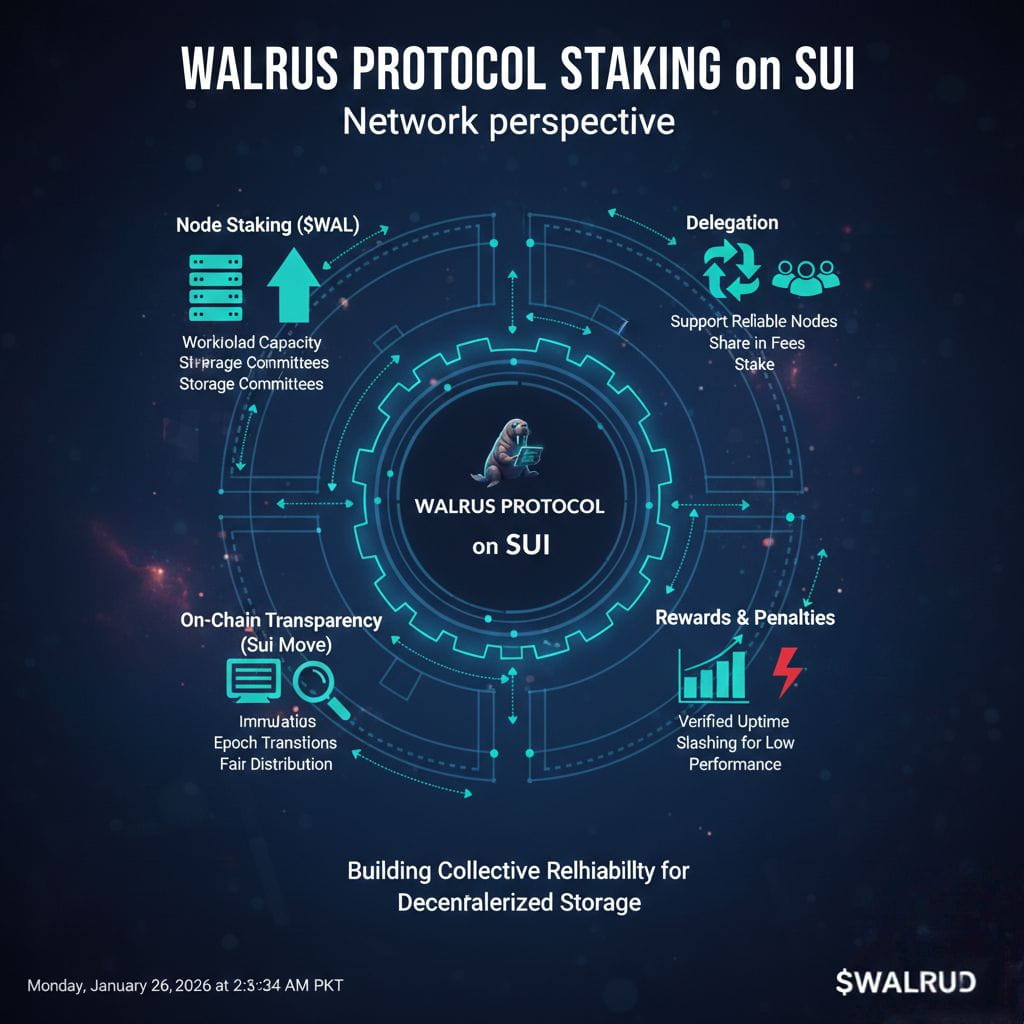
Sui records all staking, delegation, and penalties as Move objects, providing a transparent, consistent global view. Epoch transitions on Sui reconfigure committees based on updated stake, balancing load without disruption.
From the network angle, approach staking by supporting nodes with strong track records on uptime and challenge success. This strengthens the ecosystem, making Walrus more resilient for long term data needs.


