
Think of old-school banking like a public bulletin board. Everyone can see who deposited what, who borrowed money, and even guess your next move just by looking at the board. Nothing stays truly private. You hand over control to the bank, and they watch everything.
Decentralized finance (DeFi) tried to fix that by removing the middleman. But most DeFi still acts like an open notebook—your wallet balance, trades, and positions are visible to anyone on the blockchain. People can track you, copy your strategy, or even target you if they see you're holding a lot.
Walrus Protocol changes this picture. Built by Mysten Labs on the fast Sui blockchain, Walrus launched its mainnet in March 2025. It started as a smart way to store big files—like videos, photos, AI models, or important documents—cheaply and safely across many computers instead of one company's servers. But it quickly grew into something bigger: a tool that makes private DeFi actually work in real life.
The key upgrade came in September 2025 with a feature called Seal. Seal adds strong privacy controls right into Walrus. It lets you encrypt data so only the right people can read it. You store sensitive information on the decentralized network, but it stays hidden from everyone else. This is perfect for finance because money matters need secrecy.
For example, in regular DeFi lending apps, when you put up collateral (like crypto or an NFT) to borrow money, the whole world sees how much you deposited and how healthy your loan is. If prices drop and you're close to liquidation, others might jump in and profit from your trouble. With Walrus and Seal, you can store proof of your collateral privately. The lending app checks that proof exists and is valid without revealing the exact details. Only when needed—say, during a real liquidation—does just enough information get unlocked. Your financial life stays your own.
This privacy helps everyday people, especially in places like Karachi where financial privacy protects against local risks, unwanted attention, or even family pressures. A small trader can join yield farming or lend out assets without broadcasting their holdings. Someone earning freelance money can receive payments quietly. No more worrying that strangers on the internet know exactly how much you have.
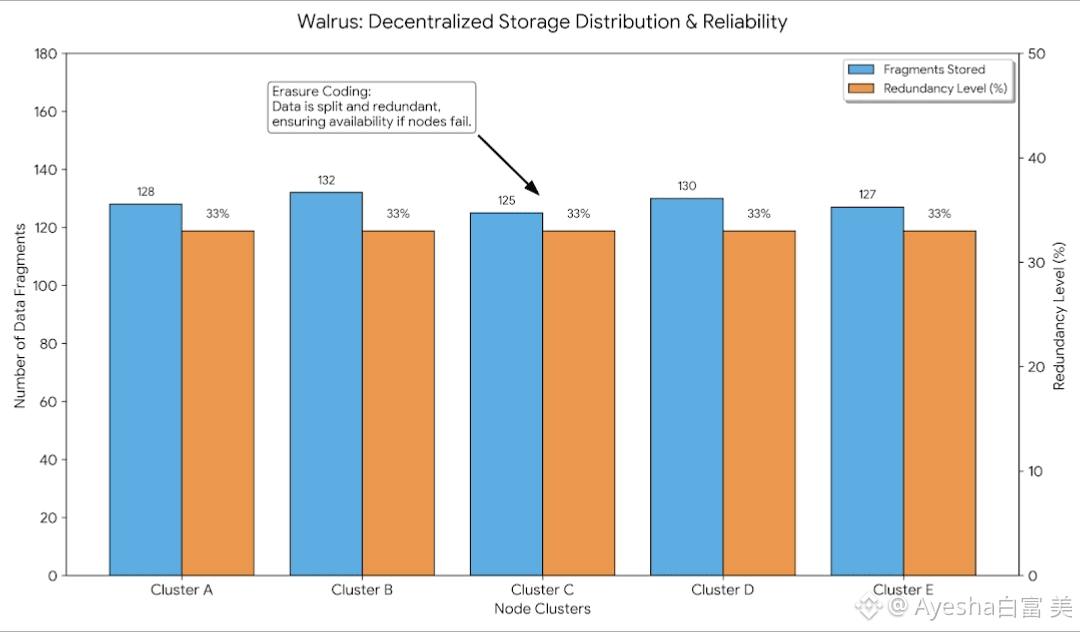
Walrus works so well because of how it handles storage. It breaks big files into small coded pieces and spreads them across hundreds of independent computers (called nodes). Special math (erasure coding) makes sure even if some nodes go offline, your data is still safe and can be rebuilt. Nodes prove they are keeping the data honestly without showing what the data is. This keeps costs low—often much cheaper than older decentralized storage like Filecoin—and retrieval fast enough for real apps.
Payments use the WAL token, but in a user-friendly way. You pay for storage in WAL, yet the system adjusts prices so your costs stay stable in dollars, not jumping around with crypto prices. This makes it easier for normal people and businesses to use without fear of sudden expensive surprises.
Sui's speed helps everything run smoothly. Sui handles thousands of transactions per second with quick finality, so uploading or fetching private data doesn't feel slow. Walrus uses Sui to coordinate everything while doing the heavy storage work off to the side. Together, they create a foundation where DeFi can be private, fast, and cheap.
By early 2026, Walrus has already stored huge amounts of data and powers real projects. For instance, Humanity Protocol moved millions of private identity records to Walrus. These records prove you're a real person without showing extra personal details—great for fair DeFi lending or preventing fake accounts. AI tools and agents now store their data privately on Walrus, so they can make smart financial decisions without leaking strategies.
Governance stays community-driven. WAL holders vote on important changes—like adjusting rewards for nodes, updating fees, or adding new privacy tools. This keeps the protocol improving based on what users actually need.
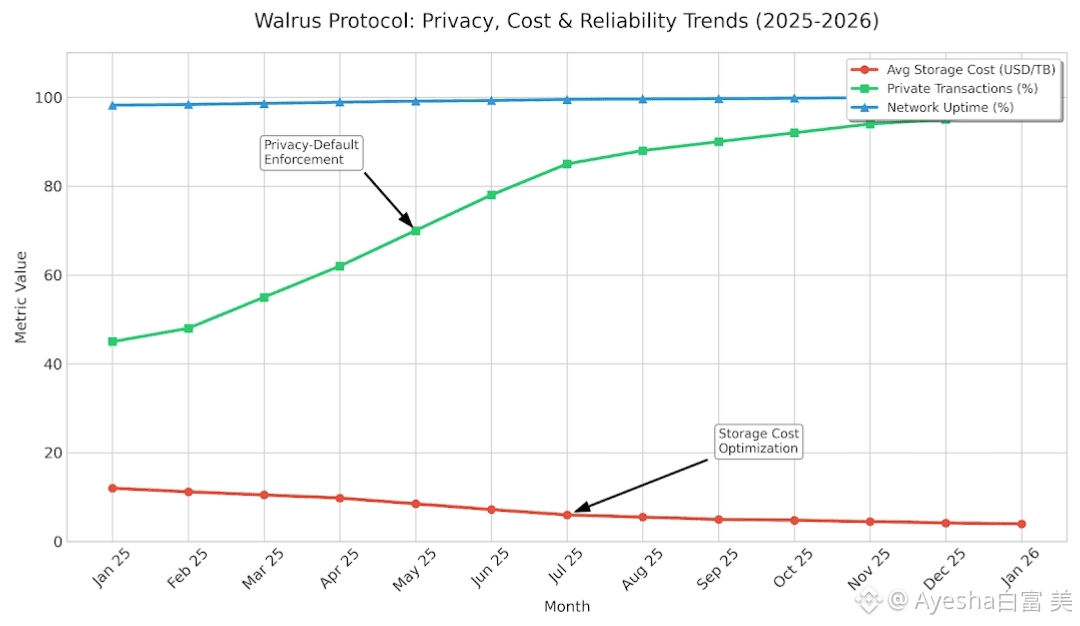
Privacy in finance isn't a luxury anymore. As rules get stricter and data leaks happen more often, people want control over their information. Walrus gives that control back. It doesn't force you to reveal everything just to use DeFi. Instead, you decide what to share and with whom.
Picture it like a personal safe in a shared community vault. The community vault (the decentralized network) keeps everything secure and available. But your safe only opens with your key—or keys you choose to give to trusted partners. No bank manager peeks inside. No public list shows what's stored. Yet everything is still provable and trustworthy when it matters.
This setup unlocks new possibilities. Private credit checks where you prove "I'm reliable" without showing your full history. Hidden investment pools where group members see the total but not each person's share. Large trades that settle without tipping off others who could front-run you.
Walrus isn't perfect—learning to use privacy tools takes some effort, and adding encryption can make things a bit slower than fully public options. But the team keeps improving. Seal made access controls easy for developers. More updates in 2026 focus on even better speed and simpler tools so anyone can benefit.
In a world moving toward AI, big data, and global finance, Walrus sets a clear new standard. It shows decentralized finance can be private by design—not as an extra complicated layer, but as built-in protection. It makes DeFi safer and more welcoming for regular people everywhere.
Whether you're protecting your savings, building the next app, or just wanting financial freedom without surveillance, Walrus provides the solid base. It turns the promise of private, decentralized money into working reality—one secure, hidden piece of data at a time.

