Privacy is often misunderstood in decentralized systems. Many people assume that decentralization automatically guarantees privacy but that is rarely true. From my perspective, Walrus Coin takes a more honest and realistic approach by focusing on data protection through architecture, not assumptions.
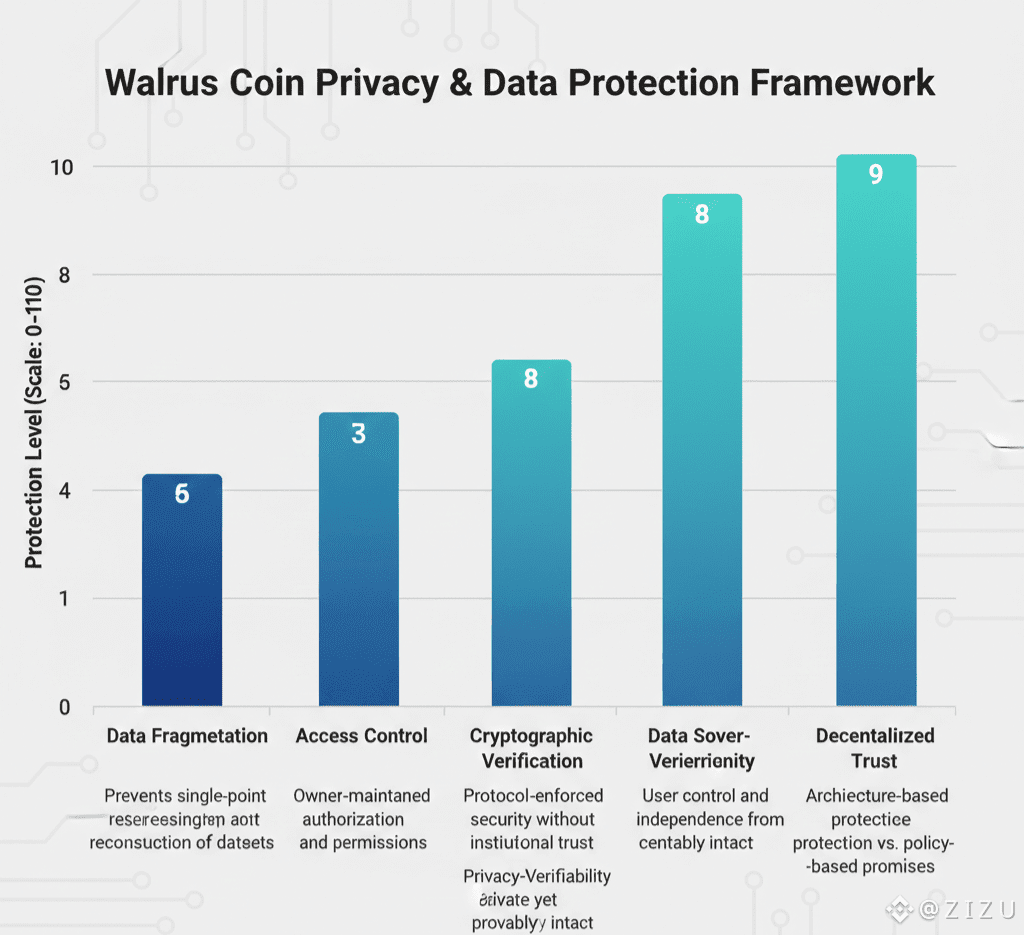
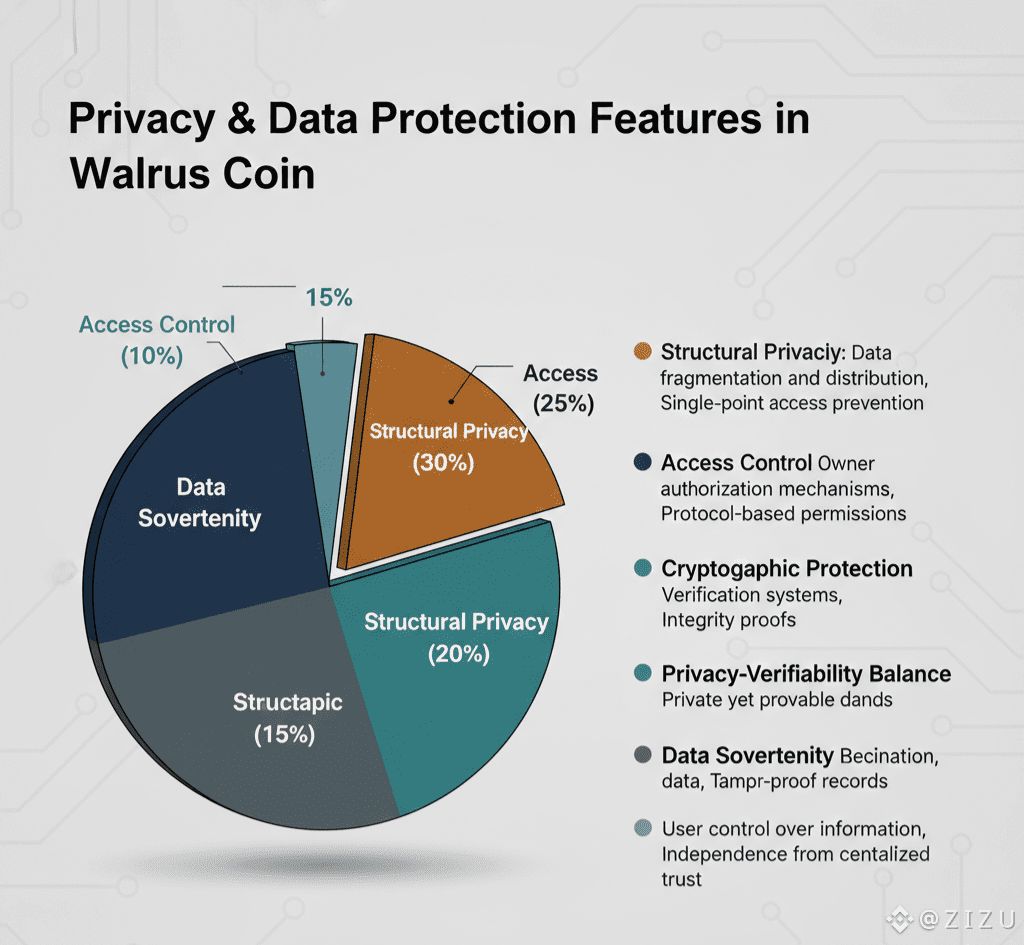
Walrus does not expose data unnecessarily. Information is fragmented and distributed in a way that prevents any single participant from reconstructing entire datasets without authorization. This structural separation is one of the most effective privacy-preserving techniques in decentralized storage and it’s something I deeply respect.
What stands out to me is that Walrus treats privacy as control, not invisibility. Data owners maintain authority over access, while the network ensures availability without needing to understand or interpret the content. This distinction matters because it avoids false promises while delivering real protection.
From my point of view, this design is far superior to centralized systems where privacy depends on corporate policies or legal agreements. In Walrus, privacy is enforced by protocol rules and cryptographic verification rather than trust in institutions.
Another element I appreciate is how Walrus balances privacy with verifiability. Data can remain private while still being provably intact and unchanged. This is critical for sensitive information such as personal records, research data or confidential agreements. Personally, I believe this balance is one of the hardest challenges in decentralized systems, and Walrus handles it elegantly.
As digital surveillance increases globally, the need for systems that respect data sovereignty becomes more urgent. Walrus Coin offers a model where privacy is not optional or superficial, it is structurally embedded. From my perspective, this makes it especially relevant in a future where data protection will define digital trust.