
There is an evasive lesser way of going in the noisy arena of blockchain, where projects are likely to scream their absolutes absolute anonymity, absolute decentralization, absolute defiance, and so on. It is the road less traveled as it is an infinitely harder one to follow. It does not need the zeal of a revolutionist, it needs the evenness of a constructionist who comprehends that to be really integrated into the very warp and woof of our world systems, technology must have the language of not only freedom, but also responsibility. This is the direction taken by the Dusk Foundation, and its trip since 2018 provides an interesting story on how purposeful, subtle balancing power can work.
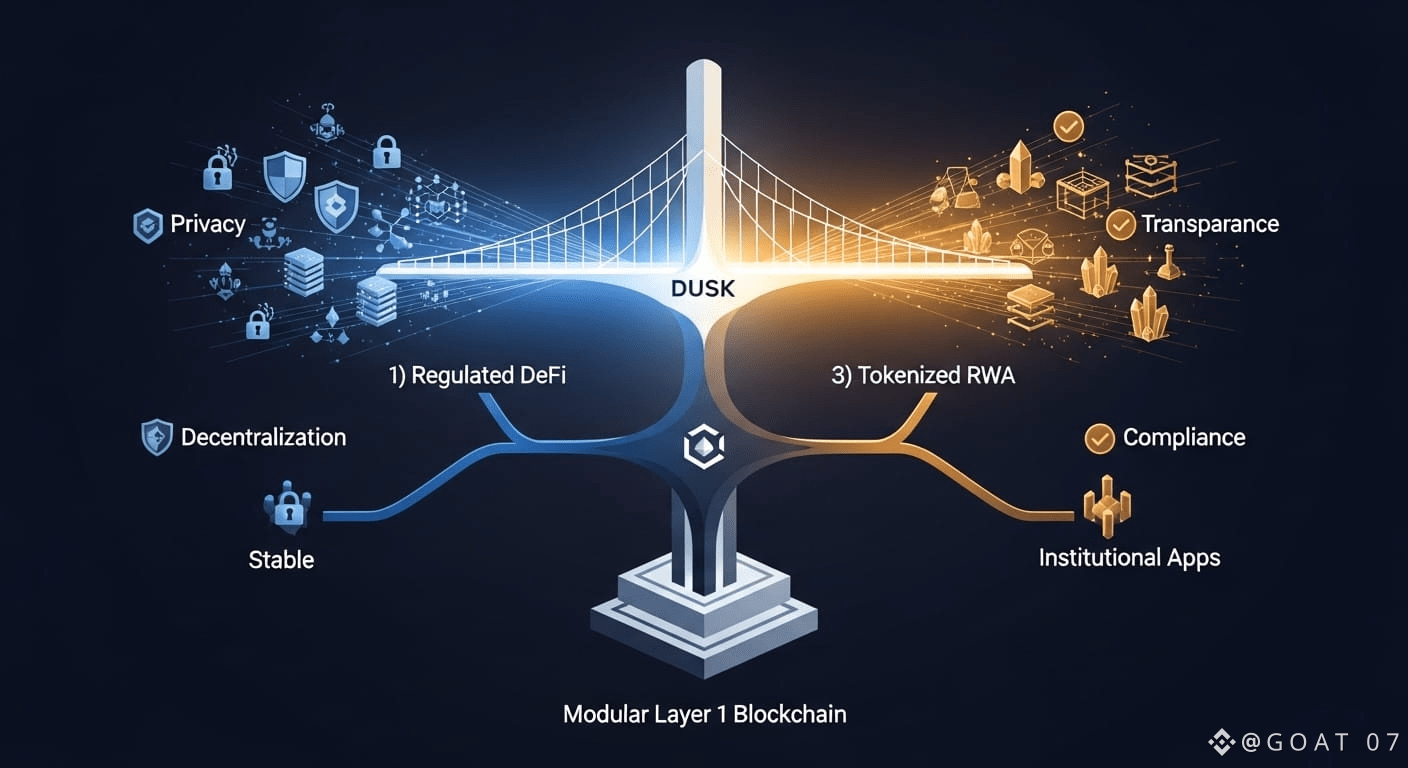
Suppose, a bit, of the emotional comfort of a vault. It is internal, it is safe and it guards what is valuable within. Suppose, however, that a wall of that same vault is crystalline, and can be seen by a trusted auditor, who has the key. This is the dainty duality that Dusk aims to achieve. Striking a truly human balance between privacy which has come to symbolize secrecy and transparency which has become a harsh disclosure, the architecture of Dusk aims at providing a human level of intimacy and openness. It recognizes a human need to have financial privacy, and it is also aware of the reasonable need to regulate the world in a society that is fighting fraud and upholding integrity. It is not a strategy that has been born out of a lack of strength, but a principle of design that is born out of wisdom. It realizes that in order to make institutions and ordinary people entrust their real-world assets to a blockchain, such as a deed of a house, a corporate bond, years of savings are in place, they must understand that the system honors confidentiality and is not a blindfold.
This philosophy is carried over to the everlasting debate of decentralization versus regulation. There have been camps dug on both sides of the crypto space, one looking at any regulatory look as a poison to the ecosystem, the other happy to trade core principles to charm easy passage. Dusk, though, is between, in the difficult and fruitful intermediate. They do not give in to old systems by creating a regulated financial infrastructure on a ground level. They are instead actively building a new one in which the rules are represented in the logic of the protocol. Imagine that you are creating a city with intelligent zoning regulations and fire codes permanently embedded into its fabric, and not attempting to add them in as an afterthought to a jumbled and sprawling favela. This is a very sympathetic method. It listens to the fears of regulators concerned about the unexplored wild west, and it believes too in the power of decentralization to spread control. This is not so as to serve the regulator, but to assure the millions who will be living under the regulatory frameworks that this new world is safe, sound and legitimate that they can venture into it.
After all, this subtle direction is regarding the gap between the glittering innovation and the concrete impact. It is between creating a magnificent, no-purpose sculpture and creating a working, beautiful bridge, which links two banks. The bridge between the tokenized real-life assets and compliant DeFi is what Dusk is concerned with. It is an acknowledgement that the greatest innovation is not the one that screams the loudest on a deserted island, but is a type of innovation that silently enters into the world, enhances, and brings efficiency to the intricate, sometimes exasperating financial realities that people and businesses operate in day after day. This is a muted kind of heroism. It sacrifices the ready approval of the purists to the more difficult, more satisfying task of popular adoption.
Dusk is not a novel that is written in the assertive, naked lines of a manifesto. It rewriting is comprised in the authored, technical writing of modular architecture, zero-knowledge proofs, and compliance on chain. Yet its human story is that of manhood. It is an indication of the cognizance that the future of finance is not a revolution that destroys the past, but an evolution that changes it in a thoughtful way. By taking the subtle course of action, which is the and, rather than the or, Dusk Foundation is not merely creating a blockchain. It is carefully building a blue print of a future when technology puts the full range of human need into practice: to privacy and trust, to freedom and security, to radical innovation and meaningful belonging.
@Dusk #dusk $DUSK
