
What happens to DUSK’s value proposition the day governments mandate selective transparency instead of full privacy — does DUSK adapt or become obsolete?
@Dusk
The core promise of Dusk Network was born in a very specific regulatory moment. Privacy was framed as a binary: either you were transparent enough for regulators or private enough for users, and trying to do both felt like a contradiction. Dusk positioned itself as the reconciliation layer, a blockchain designed for regulated financial assets where privacy was not a bug but a requirement. It leaned heavily into zero-knowledge proofs, confidential smart contracts, and compliance-friendly narratives. But the world does not stand still. Regulators are no longer debating whether privacy should exist. They are now designing systems that demand selective transparency by default. This shift fundamentally stress-tests Dusk’s value proposition, not in theory, but in practice.
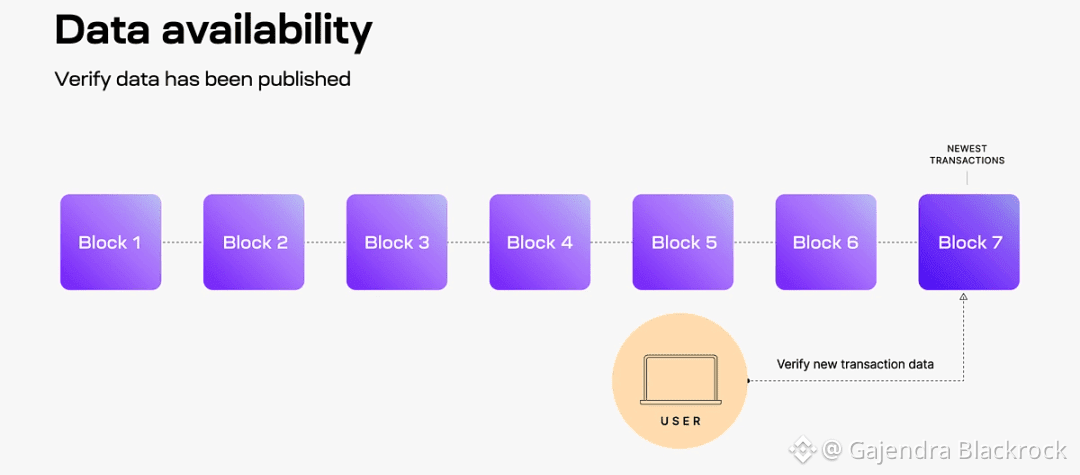
Selective transparency changes the game because it reframes privacy as conditional rather than absolute. Governments are increasingly comfortable with cryptography, as long as it bends toward auditability on demand. The Financial Action Task Force, the EU’s MiCA framework, and even pilot CBDC programs all converge on the same idea: privacy for peers, visibility for authorities when thresholds are crossed. In that world, a chain that markets itself primarily as “private” risks sounding outdated. The real question is whether Dusk’s architecture naturally evolves into this middle ground or whether it was built for a battle that regulators have already moved past.
Dusk’s technical stack does not actually insist on full anonymity in the way early privacy coins did. Its use of zero-knowledge proofs allows for data minimization rather than data erasure. That distinction matters. A transaction can be valid without revealing every attribute, yet still be provable to an authorized party under specific conditions. On paper, this aligns perfectly with selective transparency. The problem is not the math. The problem is the narrative and the execution. Dusk has spent years speaking the language of privacy maximalism while regulators are now asking for controllable disclosure, audit hooks, and governance guarantees.
To understand the risk, it helps to look at a real-world parallel outside crypto. The Swiss banking system built its global brand on secrecy. For decades, that secrecy attracted capital and justified a premium. When international pressure forced Switzerland to adopt automatic exchange of information, Swiss banks that adapted survived by repositioning themselves as compliance-grade wealth managers. Those that clung to secrecy as an identity lost relevance. Privacy did not disappear, but it stopped being the headline. Compliance competence replaced it. Dusk is facing the same fork, just faster and in a harsher technological environment.
If governments mandate selective transparency tomorrow, Dusk’s value proposition cannot remain “privacy-first blockchain for institutions.” Institutions will not buy privacy as an ideology. They buy risk reduction. They buy regulatory clarity. They buy systems that make audits cheaper and reputational blowups less likely. In that scenario, Dusk’s zero-knowledge tooling only matters if it can be framed as a compliance accelerator rather than a privacy shield. This requires a pivot from ideological positioning to operational utility.
Comparing Dusk to Ethereum-based competitors makes the challenge clearer. Ethereum itself is not private, yet it dominates institutional experimentation because of its composability and regulatory familiarity. Projects like Aztec and Polygon zkEVM approach privacy as a modular feature layered onto a broadly accepted base. They are not selling secrecy; they are selling optional confidentiality. If selective transparency becomes law, optionality beats absolutism every time. Dusk’s differentiation shrinks unless it can prove that its native design reduces friction compared to bolted-on solutions.
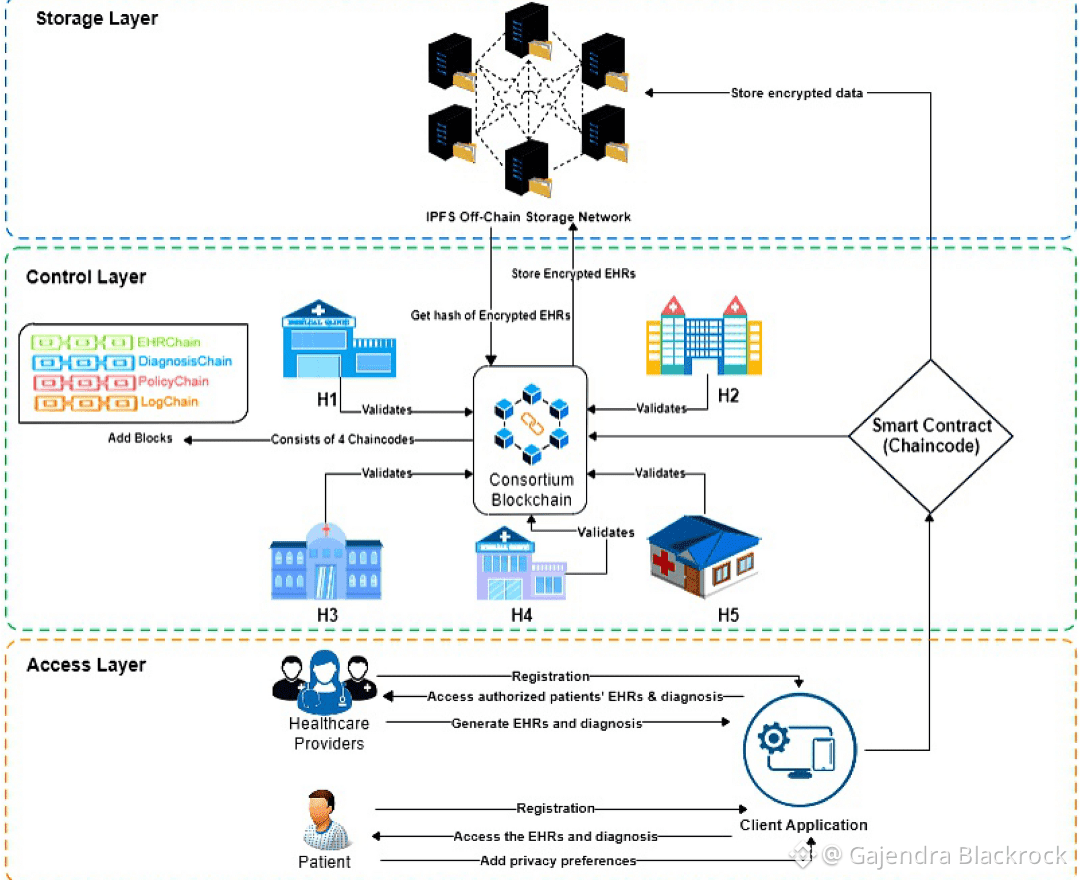
Another comparison worth making is with enterprise blockchain platforms like Hyperledger Fabric. Fabric never promised privacy as freedom from oversight. It promised privacy as controlled access. Nodes know what they are allowed to know, and nothing more. Regulators understand this model instinctively. Dusk’s challenge is that it sits uncomfortably between public chains and permissioned systems. If selective transparency is mandated, regulators may prefer systems that already embed governance at the infrastructure level rather than cryptographic guarantees that require trust in protocol design.
The market signal already reflects this ambiguity. DUSK’s token does not trade like an institutional infrastructure asset. It trades like a retail speculation on a narrative. That should worry anyone who believes the project’s future depends on governments and compliance teams. Institutions do not ape tokens. They sign contracts, run pilots, and quietly integrate systems. The gap between Dusk’s stated target audience and its actual user base suggests that its messaging has not landed where it matters most.
This is where selective transparency could either kill Dusk or force it to grow up. If regulators mandate standardized disclosure frameworks, Dusk can no longer rely on abstract privacy guarantees. It would need explicit features for regulatory access, standardized audit proofs, and governance processes that regulators can reason about without reading cryptography papers. This is not a technical impossibility, but it is a cultural shift. It requires Dusk to stop selling to retail imaginations and start selling to compliance departments.
There is also a token economics angle that cannot be ignored. If Dusk becomes a compliance layer rather than a privacy haven, the demand drivers for the token change. Fees driven by regulated asset issuance and settlement are stable but slow-growing. They do not produce hype cycles. If DUSK’s valuation is currently propped up by speculative expectations of a privacy narrative, a regulatory pivot could compress that premium. Long-term value might increase, but short-term price action would likely disappoint anyone expecting explosive upside.
A real-world case study that mirrors this dynamic can be seen in the evolution of cloud encryption services. Early providers marketed “zero-knowledge” storage as a way to keep data hidden even from service providers. As governments pushed for lawful access mechanisms, the winners were not the loudest privacy brands but the ones that integrated key escrow, audit logs, and jurisdiction-aware access controls. They did not abandon encryption. They reframed it as a compliance feature. Dusk has to decide whether it wants to follow that path or remain ideologically rigid.
If Dusk adapts properly, selective transparency could actually strengthen its relevance. Zero-knowledge proofs are uniquely suited for proving compliance without overexposure. A system where firms can prove solvency, transaction validity, or rule adherence without leaking sensitive business data is genuinely valuable. But that value only materializes if Dusk builds concrete compliance primitives instead of abstract privacy promises. Otherwise, competitors will eat its lunch with simpler, more regulator-friendly designs.
The risk of obsolescence is not technological; it is strategic. Dusk’s current branding still attracts users who romanticize privacy as resistance. Governments mandating selective transparency would instantly alienate that crowd. If Dusk depends on them for liquidity and attention, it becomes trapped. Institutional relevance requires abandoning the comfort of ideological applause and embracing boring, explicit compliance narratives.
In the end, selective transparency does not automatically kill privacy chains. It kills chains that mistake privacy for a marketing slogan instead of a tool. Dusk’s cryptographic foundation is flexible enough to survive the transition, but only if the project is willing to redefine itself. The day governments mandate selective transparency is the day Dusk must stop asking whether privacy should exist and start proving how privacy can coexist with authority at scale. If it does that, it adapts. If it doesn’t, it fades into the long list of protocols that were right too early and wrong for the world that actually arrived.
