
DUSK: The Blockchain That Lets Wall Street Step Into Web3 Without Losing Its Privacy
Dusk is no longer just another experimental blockchain project. In early 2026, it officially stepped into the spotlight with the launch of its mainnet, marking a major shift from years of research and testing into a fully working, real-world network. What makes Dusk different from most blockchains is its clear focus on one powerful idea: bringing traditional finance, real-world assets, and regulatory systems onto the blockchain without sacrificing privacy.
At its core, Dusk is built for institutions, governments, and regulated markets that need transparency for auditors and regulators, while still protecting sensitive financial data from the public. Instead of forcing users to choose between full privacy or full exposure, Dusk introduces selective disclosure. This means transactions and asset details can stay confidential, but authorized parties like regulators can still verify what’s happening on-chain when required. It’s a bridge between the open world of crypto and the strict world of financial compliance.
The technical design behind Dusk reflects this vision. The network is split into two main layers that work together. One layer handles settlement, data availability, and consensus, making sure transactions are finalized securely and fairly. The other layer is fully compatible with Ethereum’s virtual machine, allowing developers to build and deploy smart contracts using familiar tools. This setup makes it easier for builders to move projects into the Dusk ecosystem while benefiting from its privacy and compliance features.
In 2025, before the mainnet went live, Dusk opened its doors to developers and early users through public testnets. These test environments allowed smart contracts to be deployed, tokens to be bridged, and privacy features to be tested in real-world scenarios. This phase helped shape the final version of the network that launched in January 2026, now supporting privacy-focused smart contracts and the issuance of tokenized securities under legal frameworks.
One of the strongest signals that Dusk is serious about real adoption is its partnership with regulated financial players. The collaboration with NPEX, a licensed Dutch exchange, shows how traditional securities can move onto the blockchain in a compliant way. Instead of treating regulations as an obstacle, Dusk builds them directly into its protocol. This makes it possible to create digital assets that follow European financial laws such as MiCA and MiFID II, opening the door for banks, funds, and institutional investors to participate safely.
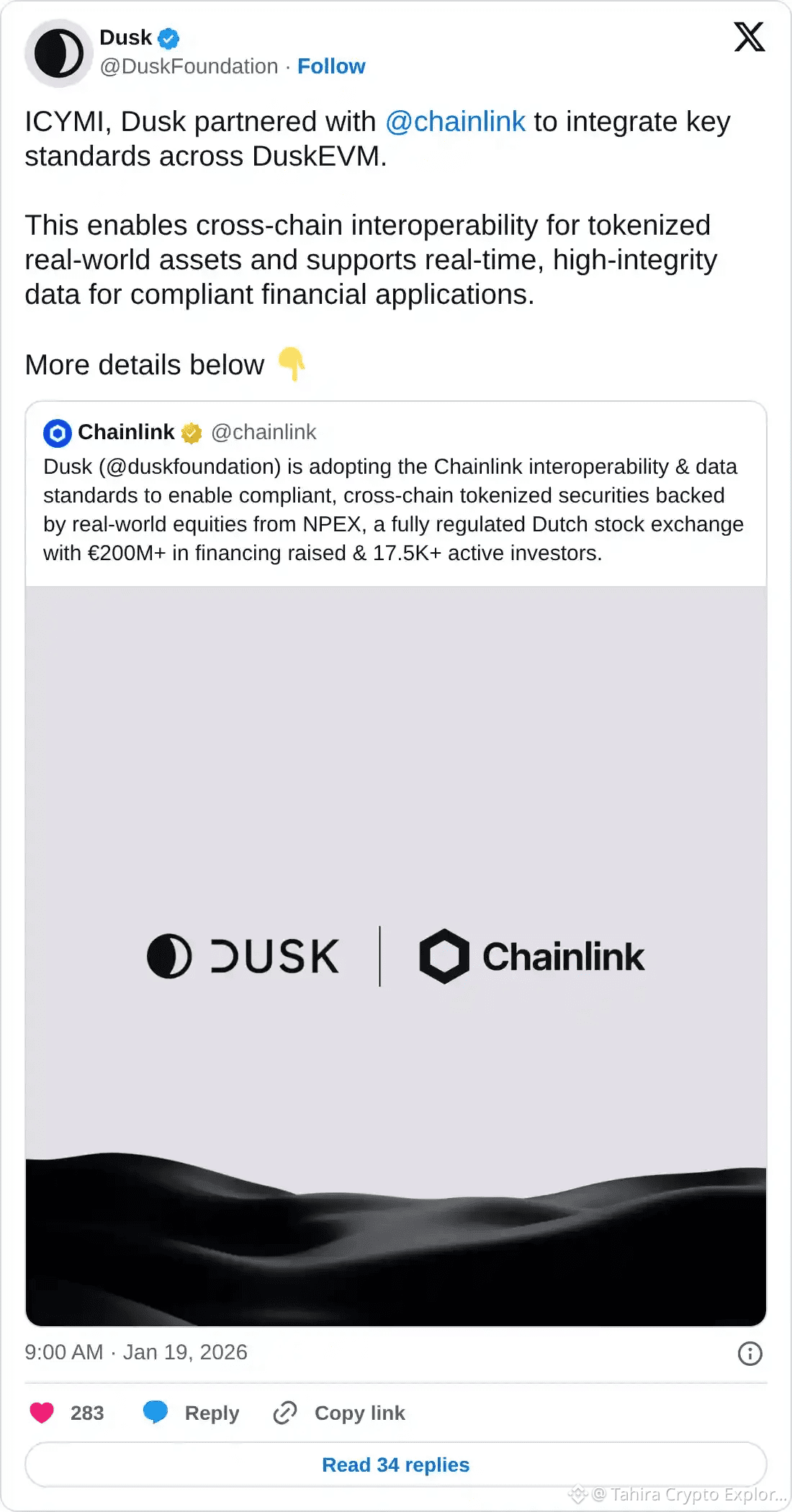
Dusk is also expanding beyond a single blockchain ecosystem. Through its strategic collaboration with Chainlink, it integrates secure data feeds and cross-chain communication tools. This allows real-world information like asset prices and settlement data to move safely between different blockchains and traditional systems. For tokenized assets, this is a major step, because accurate and trusted data is essential for real financial use cases.
The network’s vision goes beyond just infrastructure. Dusk aims to become a full marketplace for regulated digital assets. One of the most anticipated products is Dusk Trade, a platform being developed with NPEX that will allow users to trade tokenized securities and real-world assets in a legally compliant environment. This could turn Dusk into a meeting point where blockchain users and traditional investors operate on the same digital rails.
Market activity in early 2026 reflects growing interest in this approach. DUSK has seen strong price movements, driven by attention from traders looking for privacy-focused projects that don’t clash with regulators. Instead of being labeled as a “privacy coin” in the traditional sense, Dusk positions itself as a “compliant privacy” network. This narrative has attracted users who believe the future of crypto lies in cooperation with financial authorities rather than confrontation.
Another example of Dusk’s real-world focus is the launch of regulated digital currencies within its ecosystem. Projects like the EURQ stablecoin show how a digital euro can exist on-chain while still following European legal standards. These developments point toward a future where national currencies, bonds, and company shares can all exist as programmable assets on the same blockchain.
Looking ahead, Dusk’s roadmap is about growth, performance, and deeper integration with traditional finance. Staking features, expanded real-world asset markets, and ongoing work toward securing an official EU trading license are all part of the next phase. Each step brings the network closer to its goal of becoming a full financial layer for the digital economy.
In a space often dominated by hype and short-term trends, Dusk stands out by focusing on long-term adoption. Its blend of privacy, regulation, and real-world utility positions it as a serious contender in the race to bring blockchain technology into the heart of global finance. As institutions, developers, and traders continue to explore its ecosystem, Dusk is shaping a future where Web3 doesn’t replace traditional systems, but transforms them from the inside out.

