


Most blockchains fail not because they do not have features but because they cannot gain the trust needed for people to form habits around using them Users try them out teams experiment and excitement fades when things do not behave consistently Fees may rise transactions slow tools may malfunction Nothing is catastrophic but nothing sticks and over time people stop returning This slow loss of engagement is something most crypto analysts do not focus on
Vanar looks at adoption through a different lens It does not try to be the most flashy or innovative chain at first Instead it aims to be predictable predictable enough that both developers and users can rely on it without constantly reconsidering their choices Adoption is not about excitement it is about repetition
Many crypto systems assume that if users leave it is because they do not understand the technology But the reality is different People leave because systems are inconsistent Unforeseen fees delays and edge cases create friction Friction changes behavior Users do not complain loudly they just stop interacting
Vanar addresses this problem through predictability Predictability is not just a nice feature it shapes how people plan and behave Developers know what to expect tomorrow so they can commit today Users know that what worked before will work again and can build habits around it This makes the chain familiar and reliable in a way that encourages repeated use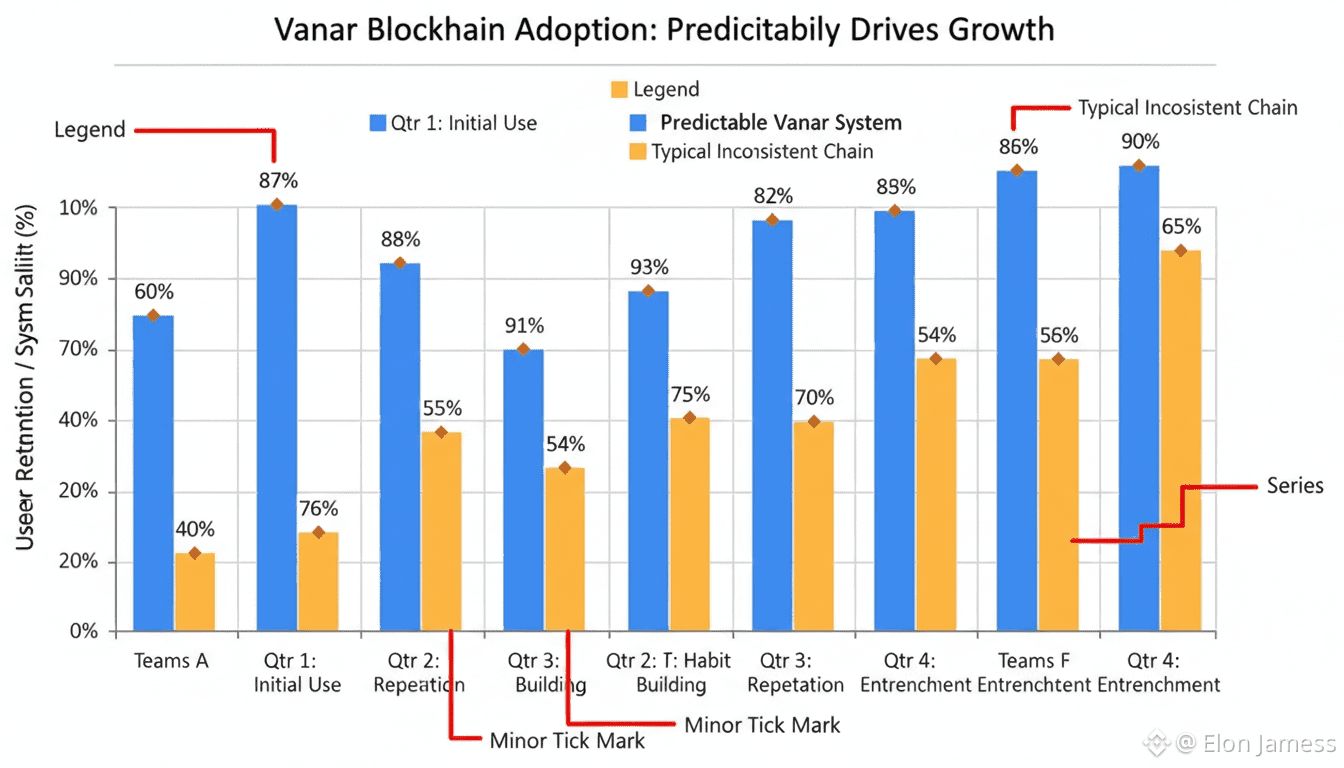
Predictability matters at the organizational level too Teams are not single users they are groups that operate on roadmaps budgets and schedules On many blockchains congestion cost surges and ecosystem instability constantly break these plans Even if the chain is fast uncertainty creates stress Vanar reduces the range of possible outcomes This means fewer emergency fixes fewer internal debates and more long-term thinking
For investors the question is not whether Vanar is more attractive than other chains It is whether it reduces friction that leads to ecosystem degradation Retention is not just about users It is about creators continuing to build collaborators continuing to integrate and products remaining online during market changes
This logic is reflected in Vanar tokens VANRY is designed to sustain activity not encourage hoarding By focusing on use rather than speculation the ecosystem avoids boom and bust cycles that undermine trust Incentives are aligned with consumption and engagement which makes activity more stable This is intentional and not an accident
Vanar’s approach may seem boring to those who chase hype Chains focused on coordination and reliability do not make headlines like experimental projects If Vanar fails to deliver consistent performance the strategy would collapse Infrastructure that promises reliability but acts unpredictably loses traction quickly Mistakes must be minimal
If Vanar succeeds it will not be through dramatic news stories but through quiet entrenchment Systems that teams trust become almost irreplaceable There is no need to constantly onboard new users because existing users return naturally Over time retention accumulates in a way that hype cannot replicate
Signals of Vanar’s success are not price spikes or short-term campaigns but real usage recurrent integrations and products that stay online even when the market shifts Teams continue their work without restarting Predictable systems allow this to happen Reliability is rare in crypto attention is cheap
The design of Vanar emphasizes reliability across the network It aims to reduce surprises at all levels so both builders and users can operate confidently This increases adoption because people can plan their work and habits around predictable behavior Once reliability is established adoption grows quietly but steadily
Vanar’s bet is that solving the hardest problem of adoption will allow growth without hype The predictable environment allows users to return regularly developers to continue building and products to remain stable over time In crypto attention is easy to buy reliability is not
