
In every wave of technological innovation, the most important progress happens at the infrastructure level. For Web3, this progress is no longer limited to faster blockchains or cheaper transactions. It is increasingly about data availability, data integrity, and decentralized storage. As decentralized applications become more advanced and data-heavy, the need for a scalable and specialized data layer becomes critical. This is where @Walrus 🦭/acc is positioning itself.
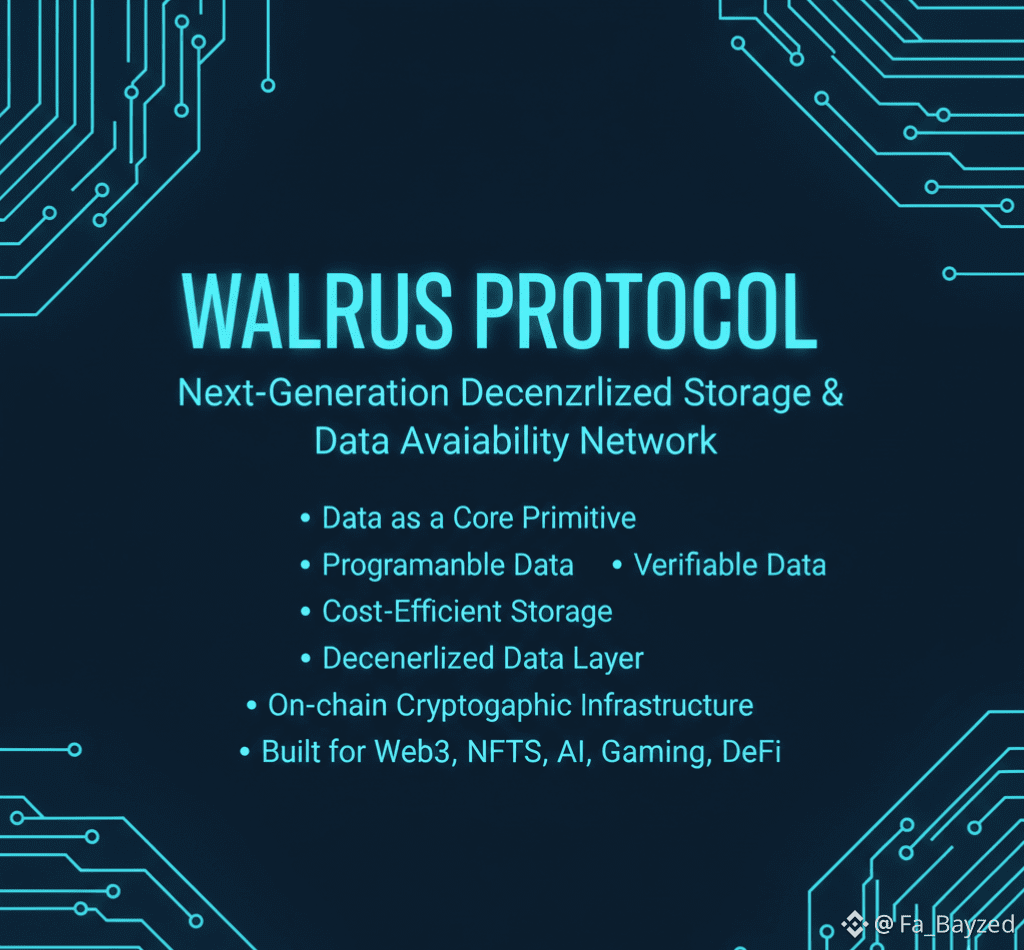
Walrus Protocol is designed as a next-generation decentralized storage and data availability network that treats data as a core primitive rather than a secondary feature. Its goal is to make data programmable, verifiable, and cost-efficient so that builders can create powerful applications without worrying about storage limitations.
The growing importance of data availability
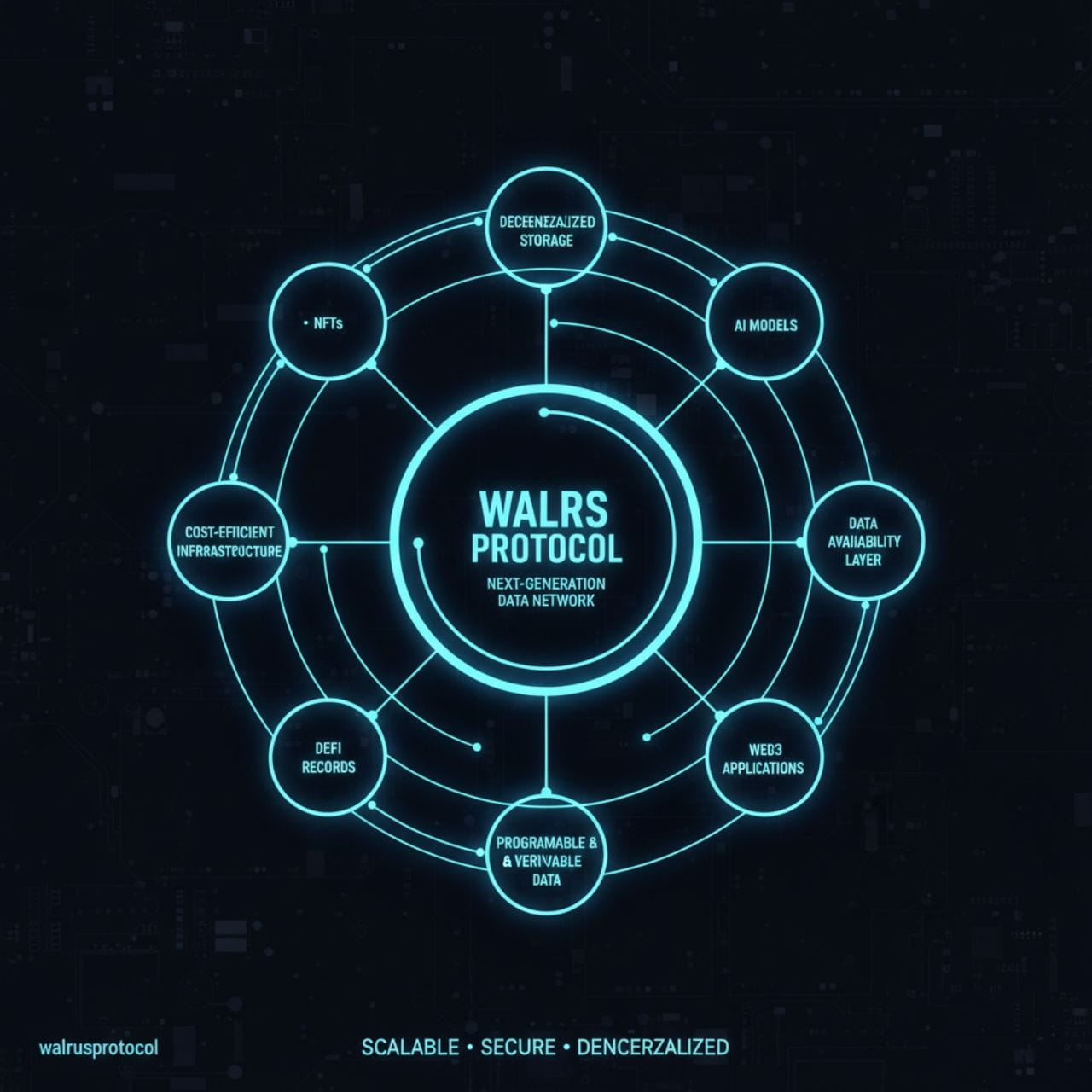
Every Web3 application depends on data. NFTs rely on permanent metadata, games require dynamic states, AI models need large training datasets, and DeFi protocols depend on historical records. Storing all of this directly on blockchains is expensive and inefficient. Walrus solves this problem by enabling data to be stored in a decentralized layer while anchoring cryptographic proofs on-chain, ensuring both scalability and security.
Programmable and composable data
Walrus introduces the idea that data should be programmable, just like smart contracts. Developers can define how data is created, updated, and accessed. Composability allows multiple applications to reuse and build on the same datasets, creating shared ecosystems of information. This unlocks use cases such as evolving NFT metadata, interoperable gaming assets, and collaborative AI datasets.
Cost-efficient architecture
Rather than pushing large files onto expensive blockchains, Walrus uses an optimized storage layer combined with verification mechanisms. This significantly reduces costs while preserving trust guarantees. Builders gain the freedom to design data-rich applications without being constrained by gas fees.
Built for high-growth sectors
Walrus is optimized for NFTs, AI, gaming, and complex Web3 applications. These sectors are among the fastest growing in crypto and demand infrastructure that can scale. By focusing on these verticals, Walrus positions itself at the center of future adoption.
Network economics and token utility
The Walrus ecosystem uses the $WAL token to support core functions such as paying for storage, incentivizing node operators, participating in governance, and helping secure the network. As more applications rely on Walrus, the utility of the token becomes increasingly important.
Walrus $WAL in the modular blockchain era
The blockchain industry is moving toward modular architectures, where different layers specialize in execution, settlement, and data availability. Walrus fits naturally into this model by serving as a dedicated data layer that complements existing blockchains and rollups instead of competing with them.

