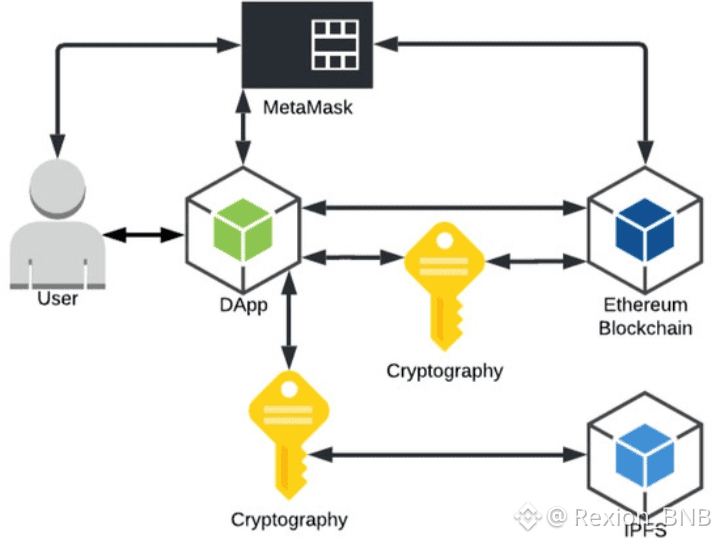
Walrus is created from a simple but powerful realization that decentralization cannot truly succeed unless people can trust where their data lives. For years blockchain technology has focused on moving value securely, yet the data behind applications files identities records and digital history has remained exposed to centralized control. Walrus exists to close that gap by offering a decentralized system where data privacy ownership and reliability are treated as core principles rather than optional features.
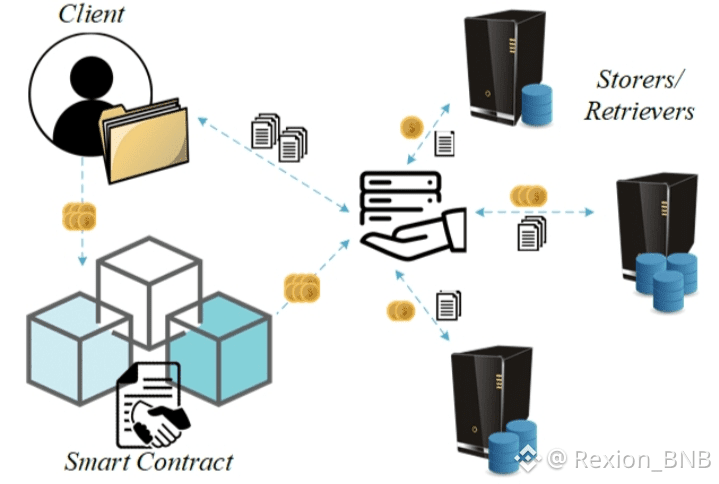
At its foundation Walrus is a protocol designed to support secure and private interactions across a decentralized environment. Instead of relying on centralized servers that can fail be censored or mismanaged Walrus distributes data across a network of independent participants. This design removes single points of failure and creates a system that remains available even during disruptions. For users this means their data is not tied to one company one location or one decision maker.
The WAL token plays a central role in maintaining this ecosystem. It acts as the economic engine that aligns incentives across the network. Users rely on WAL to pay for storage and services while node operators earn WAL by providing resources and maintaining data availability. Staking mechanisms encourage long term participation and responsible behavior strengthening the overall security of the protocol. Governance adds another layer of accountability by allowing those who hold and use WAL to shape the future direction of the network.
A defining feature of Walrus is its data first approach. Traditional blockchains struggle to handle large files due to high costs and limited capacity. Walrus overcomes this challenge by breaking data into smaller fragments and distributing them across the network with built in redundancy. Even if some participants go offline the original data remains recoverable. This approach ensures durability without sacrificing decentralization or efficiency making it suitable for real world use cases that involve large and persistent datasets.
Walrus operates on the Sui blockchain which provides the performance foundation needed for fast and efficient data interactions. This allows applications built on Walrus to remain responsive while keeping costs predictable. Developers benefit from an infrastructure that supports frequent access to data while users enjoy experiences that feel smooth and reliable. This balance between usability and decentralization is critical for broader adoption.
Privacy is not an afterthought within Walrus. Data is protected by design rather than added layers. Because information is fragmented and distributed no single participant has full visibility or control. This greatly reduces the risk of unauthorized access surveillance or data manipulation. For individuals enterprises and developers handling sensitive information this creates a level of trust that centralized systems often fail to deliver.
Beyond technology Walrus reflects a broader shift in the decentralized space. People want systems that respect ownership longevity and transparency. They want infrastructure that works quietly in the background without constant risk or uncertainty. Walrus responds to this demand with a focused and practical design that prioritizes stability over spectacle.
In essence Walrus is building more than a decentralized storage network. It is building confidence. By protecting data with the same care that blockchains protect value Walrus moves decentralized finance and applications closer to a future where users truly own their digital lives.