

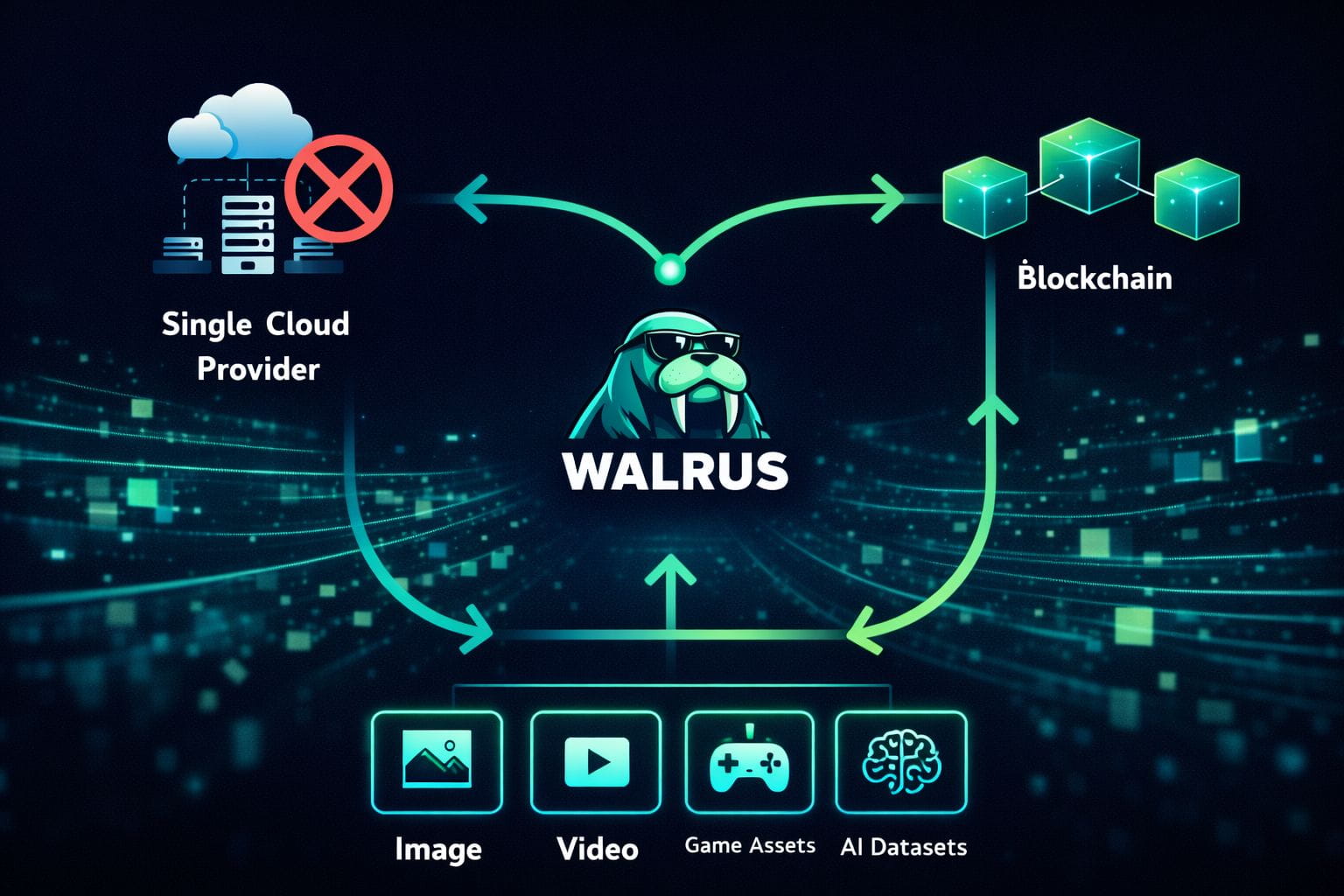
When traders talk about “decentralized storage,” it’s usually in the same breath as big promises and messy reality. Storing data off-chain sounds simple until you ask the uncomfortable questions: who’s actually holding the files, what happens when nodes disappear, and how much does it cost when you stop hand-waving and start counting bytes? Walrus is trending because it tackles those questions head-on with a design that’s built for scale, not just ideology. It started showing up on more radars after Mysten Labs announced it in June 2024 as a decentralized storage and data availability protocol, aimed at the kind of “blob” data blockchains don’t want to carry directly images, video, datasets, app front ends, proofs, you name it.
Let’s translate the jargon. A “blob” is just a big, unstructured file. The usual decentralized approach is replication: store full copies across many nodes. It’s robust, but expensive fast. Walrus leans into erasure coding instead. Think of it like shredding a file into many pieces (“slivers”) and spreading them across a network so you only need a subset of those pieces to reconstruct the original. The June 2024 announcement highlighted that reconstruction can still work even if a large portion of slivers are missing, which matters in a real-world network where nodes churn and connections lag.
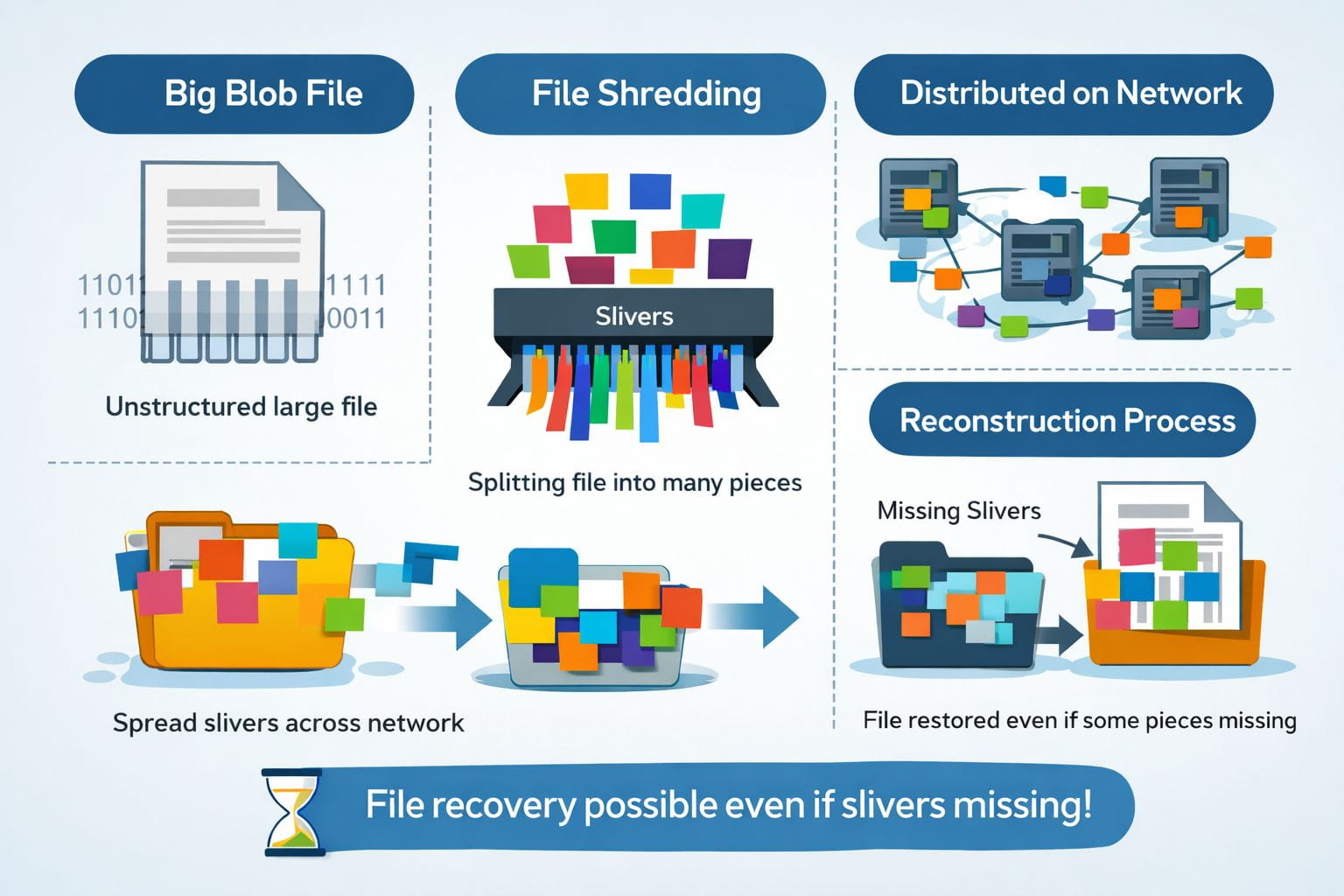
Where Walrus gets interesting especially if you’ve watched other storage networks struggle with incentives and verification is its core encoding and challenge machinery called Red Stuff. The Walrus whitepaper (v2.0 dated April 11, 2025) describes Red Stuff as a two-dimensional erasure coding protocol designed to hit a practical sweet spot: strong availability guarantees without the “store 20+ full copies forever” economics that make traders skeptical of long-term sustainability. The paper claims a 4.5x replication factor (in effect, the storage overhead relative to raw data) while also making recovery bandwidth proportional to what’s actually lost, rather than needing to move entire files around every time a node drops. That last point sounds academic until you’ve traded markets long enough to know that operational costs are what eventually show up in token narratives.
The other reason it’s been trending is that Walrus moved from concept to production in a very visible way. Mysten’s September 16, 2024 whitepaper announcement noted that the developer preview was already storing over 12 TiB of data, and that an event called Breaking the Ice pulled in over 200 developers building on top of decentralized storage. That kind of early usage doesn’t “prove” product-market fit, but it does reduce the usual vapor risk. Then came the big milestone: Walrus Mainnet went live in March 2025, with docs stating the production network was operated by over 100 storage nodes and that Epoch 1 began on March 25, 2025. In trader terms, that’s the difference between a storyline and an executable venue.
Progress hasn’t just been “we launched.” The Mainnet announcement also called out practical tooling changes: better expiry controls for stored blobs, support for TLS so web clients can interact more directly, and a notable switch in the underlying erasure code implementation (from RaptorQ to Reed Solomon) after benchmarking, in order to guarantee reconstruction given a threshold of slivers. That’s the kind of boring engineering decision I actually like seeing, because it signals the team is optimizing for reliability under stress, not just publishing pretty diagrams. And by July 3, 2025, the Walrus Foundation was publishing deeper explanations of how Red Stuff works, which is usually what happens when a protocol is past the “mystique” stage and is trying to win serious builders.
From my seat, Walrus is “practical” in the way markets care about: it acknowledges that decentralized systems fail at the edges network delays, node churn, incentive misalignment and builds around those realities instead of assuming them away. If you’re a developer, it’s a credible path to storing large app data with verifiable availability. If you’re a trader or investor, the signal is in the timeline and the shipped details: announced June 2024, whitepaper and ecosystem push in late 2024, mainnet March 2025, and ongoing technical refinements after launch. Whether that translates into durable value is a separate conversation, but as infrastructure, it’s one of the cleaner attempts to make decentralized storage feel less like a science project and more like something you can actually build and trade around.

