In the rapidly evolving landscape of decentralized technology, the VANRY token stands out as more than just a speculative digital asset — it is the functional core of the Vanar Chain ecosystem, a Layer-1 blockchain purpose-built to support real-world applications spanning gaming, entertainment, artificial intelligence, and broader Web3 services.
Originally emerging from the rebranded Virtua ecosystem, Vanar Chain represents a strategic pivot toward scalable blockchain infrastructure that meets the needs of both developers and mainstream users. The 1:1 token swap from $TVK to $VANRY marked not just a name change but a reorientation of the protocol toward utility and adoption at scale.
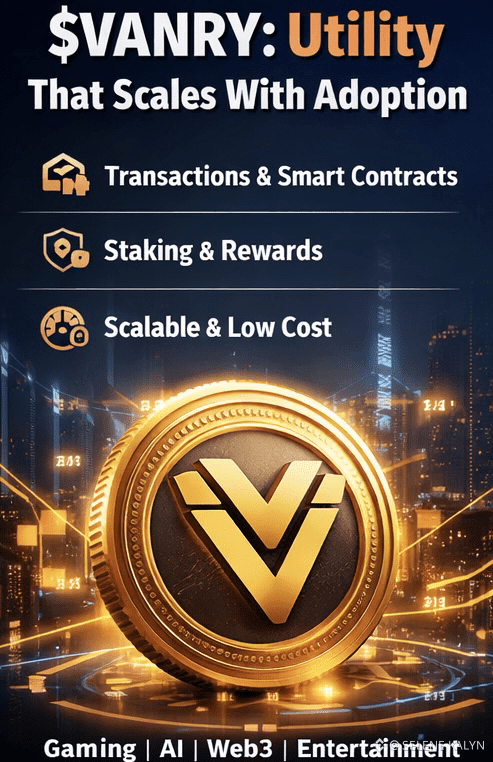
At its essence, VANRY is the native gas token of Vanar Chain, functioning as the currency that fuels transactions and smart contract interactions. Every operation on the network — from transferring value to interacting with decentralized applications — requires VANRY to cover the associated gas fees. This design embeds the token deeply into the daily economic activity of the ecosystem, ensuring sustained demand as usage grows.
Beyond covering transaction costs, VANRY plays several other critical roles. Through the network’s Delegated Proof of Stake (dPoS) mechanism, token holders can stake their VANRY to support network validators. These validators secure the chain, process transactions, and maintain system integrity — activities rewarded with additional VANRY tokens. By participating in staking, holders not only contribute to security but also receive a share of block rewards, aligning individual incentives with the long-term health of the network.
The tokenomics of VANRY have been intentionally structured to promote sustainability and gradual ecosystem growth. With a maximum supply capped at 2.4 billion tokens, the network initially issued half of this supply at genesis, mirroring the prior token supply to ensure continuity for existing users. The remaining supply is released progressively over a 20-year period as validator rewards, a mechanism that mitigates sharp inflation and supports predictable token distribution.
A notable feature of the VANRY allocation is its community-centric emphasis: the vast majority of future token issuance is dedicated to validator incentives (83 %), followed by development (13 %), and community programs such as airdrops and initiatives (4 %). Importantly, there are no team-reserved allocations, underscoring a commitment to decentralized participation and long-term ecosystem resilience.
Vanar Chain’s technological foundation is equally significant. The protocol integrates advanced features such as ultra-low transaction costs and high throughput, making it cost-effective for everyday usage and microtransactions — key criteria for mass adoption. It also aligns with sustainability goals, leveraging eco-friendly infrastructure while maintaining compatibility with widely-used standards like the Ethereum Virtual Machine (EVM).
Moreover, the token’s utility continues to expand as Vanar rolls out new ecosystem components and services. For example, future governance functions may empower $VANRY holders with voting rights on protocol upgrades and strategic decisions, reinforcing the democratic ethos of the network.
In summary, VANRY embodies real utility — from powering transactions and staking to enabling participation in a growing Web3 infrastructure. Its thoughtfully designed tokenomics, commitment to scalability, and integration of real-world applications position VANRY as a foundational asset within Vanar’s ecosystem, driving sustainable long-term growth rather than transient speculation.