Decentralized storage is not just a trend anymore it is becoming the quiet foundation of how the next internet will actually stay alive. When people say Web3 they usually talk about wallets tokens and smart contracts but the truth is simple. If your data still lives on one company server then your app can still be switched off censored slowed down or priced out overnight. Storage decides whether an application is truly independent or only pretending to be. That is why comparing Walrus Protocol with other decentralized storage solutions matters because every system makes different promises and those promises shape what kind of future developers can build.
Walrus is often discussed as a storage network but what makes it feel different is the way it treats data as something that should remain usable for real applications not just archived and forgotten. In the Walrus Sites experience this idea becomes very clear. Walrus Sites is live on mainnet and it is built around a simple message. The future of decentralized hosting should be fully decentralized cost efficient and globally available. It should work like the normal web where anyone can open a link in any browser and access the site with no wallet required. And it should remove the usual Web3 pain where teams end up using centralized pinning services or special gateways just to keep a website online. Walrus Sites pushes the idea that website resources can be stored as objects and those objects can be transferred at will which is a strong way of saying you own your website in a real sense not just the domain name.
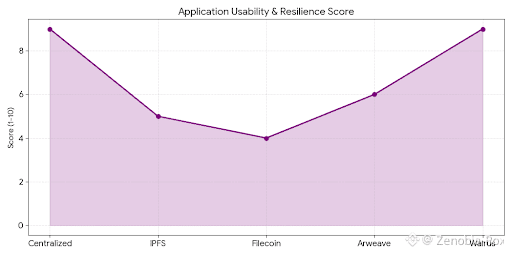
When you compare Walrus with IPFS you quickly see the difference in what each one guarantees. IPFS is legendary because it introduced content addressing to a wide audience. It made the internet feel more like a swarm where files can move around and still be found by their content hash. That is powerful for distribution and censorship resistance. But IPFS by itself is not a promise that your data will still be there tomorrow. If nobody pins the content it can disappear. In practice many projects rely on pinning services and those services often become a quiet central dependency. Developers may still feel like they need a provider behind the scenes to make sure their files remain available. Walrus leans in the opposite direction. The message behind Walrus Sites is that resources are stored as objects and the system is designed to keep sites available and secure even when nodes fail. That focus on resilience is not just marketing. It is the emotional difference between hoping your content stays online and knowing the network is built to survive failures.
Now compare Walrus with Filecoin. Filecoin is a giant in this space and it deserves respect because it created an economic engine around storage proofs and long term storage deals. Filecoin is strong for archival and backup mindsets where you want data stored for long durations and you want miners to prove that they keep it. But that strength comes with a different feel for application builders. Filecoin storage deals and retrieval flows can introduce more complexity and sometimes more friction. Many teams use Filecoin for cold storage and then build separate layers for fast access. Walrus is trying to feel more like infrastructure for active applications. In Walrus Sites the flow is simple. You create a site using any web framework then you publish it to Walrus and you receive the site object ID and a URL then users access it on any browser with no wallet required. That is an application first flow. It aims to reduce the distance between a developer shipping a product and a user experiencing it. This is where Walrus can feel more practical for teams that want their data to be part of a living app not a slow vault.
Then there is Arweave which is famous for its bold promise of permanence. Arweave is the place you go when you want something to be remembered forever and you want the economics of a one time payment for permanent storage. This is incredibly valuable for historical records publications and content that should never be removed. But permanence is not always the best fit for modern applications. Many apps evolve quickly. They update front ends they update assets they change metadata they iterate on user experience weekly. Permanent immutability can become heavy when you want flexibility or when you want cost control over time. Walrus gives a different vibe. It is about hosting that can be competitive with traditional web2 solutions and more reliable than web3 alternatives while still being fully decentralized. It is about building a decentralized web that feels normal to use. That does not mean Walrus cannot support strong integrity. It means the system is being shaped around usability and resilience for real world products.
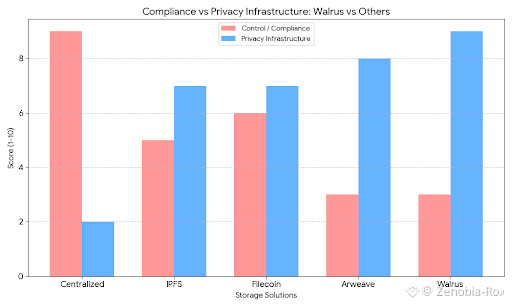
Another comparison that matters is with centralized cloud storage and traditional hosting providers. Web2 hosting is simple and fast and that is why it dominates. But it comes with a hidden tax. You must trust one company to keep your site online. You must accept their rules. You must accept that their pricing can change. You must accept that they can block content or lock an account. Even if they never do these things the possibility stays in the background and that possibility shapes the power relationship between builders and platforms. Walrus Sites is basically a response to that problem. It says hosting can be fully decentralized and still cost efficient. It says websites can be globally available and remain online even when nodes fail. It says anyone can access the site in a normal browser with no wallet required which is important because mass adoption dies the moment users need extra steps just to read a page.
What also makes Walrus interesting when comparing it to other solutions is the way it frames “objects” as the storage unit. In many decentralized storage networks you think in files and pinned hashes and gateways. In Walrus Sites the message is that resources are stored as objects and once you publish you get an object ID and a URL. That might sound like a small detail but it is actually huge for product builders. It means a site has a clear identity inside the network and that identity can be referenced transferred and used in a composable way. It means you can imagine smart contracts apps or ecosystems that treat data objects as first class citizens. In the long run that kind of model can make storage feel like part of the chain world rather than a separate world you glue on top.
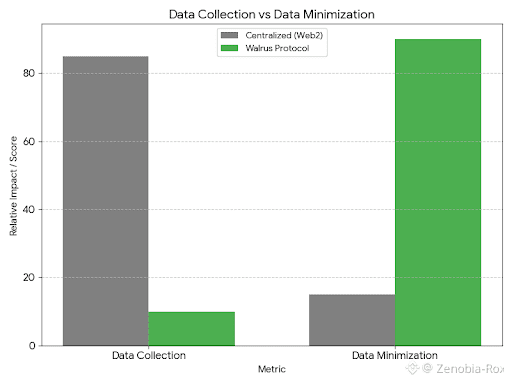
Use cases also reveal the difference. Walrus Sites clearly positions itself as valuable for dapps developers and web3 enthusiasts. That is a strong signal. It is not only about storing data it is about delivering experiences. Dapps want full decentralization across Sui Ethereum or Solana applications. Developers want to deploy websites with ease with no servers and no hosting headaches. Web3 enthusiasts want to experience a truly decentralized web with no barriers to access. Notice what is being emphasized. Ease. No headaches. No barriers. That is the language of adoption. Many storage systems are powerful but they feel like infrastructure that only specialists can handle. Walrus is pushing toward storage that feels simple enough to be normal.
The ecosystem examples also matter because they show that this is not an abstract idea. There are apps powered by Walrus such as Flatland Snowreads Walrus Staking and Walrus Docs. That suggests a real path where teams are already building products that live on top of the network. In comparisons this matters because many protocols look perfect on paper but have few visible applications. A storage network becomes more trustworthy when you see real sites and tools using it. It is also emotionally important for users because people trust what they can click and experience.
So where does Walrus fit in the broader decentralized storage landscape. It does not need to destroy IPFS Filecoin or Arweave to win. It can complement them by focusing on a specific promise. Active application data and decentralized hosting that feels like the normal web. IPFS is excellent for content addressing and distribution but weak on persistence without extra services. Filecoin is excellent for incentivized long term storage but can feel heavy for fast moving apps. Arweave is excellent for permanence but not always ideal for evolving application assets. Walrus pushes a more application friendly story where decentralized storage is not just a backend archive but a foundation for websites and user facing products.
If you are a developer the question becomes personal. Do you want storage that is mainly a long term vault or storage that helps your product ship and stay online in a way users can actually experience. Walrus Sites shows a clear direction. You build in any web framework. You publish. You get an object ID and a URL. Users open it in a browser. No wallet required. That is the kind of flow that can turn decentralized storage from an idea into a habit.
In the end the best storage solution depends on the job. If you need permanent historical publishing you might lean toward Arweave. If you need huge archival capacity with proofs you might lean toward Filecoin. If you want content addressed distribution and developer flexibility you might lean toward IPFS. But if your goal is to host and deliver real websites and application experiences in a way that is fully decentralized cost efficient and resilient then Walrus Protocol through the Walrus Sites vision becomes a very strong option. It is trying to make decentralization feel practical. And that is often what separates protocols that remain niche from protocols that become the backbone of the next internet