
As blockchain adoption expands beyond early experimentation, one constraint continues to surface across industries: execution performance. While most networks excel at decentralization and security, they often struggle with congestion, high fees, and slow confirmations when activity increases. Plasma is designed to confront these challenges directly by focusing on fast, reliable, and scalable execution creating infrastructure capable of supporting real-world, always-on decentralized applications.
Plasma is not positioned as a general-purpose blockchain that attempts to solve every problem at once. Instead, it is engineered as an execution-first network, optimized for low latency, high throughput, and predictable costs. This specialization makes Plasma particularly well suited for sectors that depend on continuous interaction and real-time feedback, such as decentralized finance platforms, gaming environments, AI-driven automation, algorithmic trading systems, and large-scale digital marketplaces.
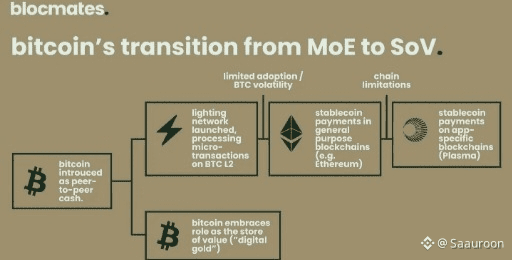
At the core of Plasma’s architecture lies parallel transaction processing. Traditional blockchains often serialize execution, handling transactions one after another and creating bottlenecks as demand grows. Plasma is built to execute multiple transactions simultaneously whenever dependencies allow. This horizontal scaling approach enables the network to maintain smooth performance even during peak usage, ensuring that users and applications experience consistent responsiveness.
Smart-contract efficiency is another defining principle of Plasma’s design. The platform minimizes unnecessary computation and reduces state conflicts, allowing applications to run continuously without network slowdowns. For users, this translates into faster interactions and stable transaction costs. For developers, it creates an environment where complex systems can scale naturally without constant performance tuning or costly workarounds.
Plasma is also designed to integrate into a modular Web3 ecosystem rather than operate in isolation. In such an architecture, different blockchains specialize in different roles. Plasma functions as a high-speed execution layer, while other networks can handle settlement, governance, or long-term security guarantees. Assets and data can move across these layers, with Plasma managing high-frequency and time-sensitive operations.
Security remains a fundamental priority. Plasma’s performance gains come from architectural efficiency rather than weakened validation or consensus assumptions. Transactions are executed deterministically and verified rigorously, ensuring correctness and reliability even at scale. This balance allows Plasma to deliver speed without compromising the trust that decentralized systems depend upon.
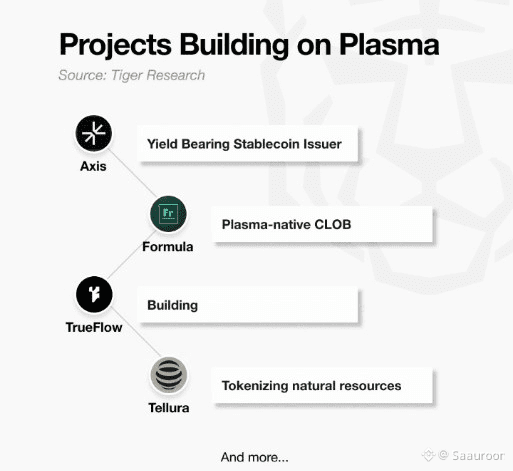
From a builder’s perspective, Plasma emphasizes accessibility and predictability. Support for familiar development tools and standard smart-contract patterns lowers the barrier for teams entering the ecosystem. Stable execution behavior and transparent fee structures simplify long-term planning, encouraging developers to deploy consumer-ready products rather than experimental prototypes.
Plasma is particularly effective for applications that struggle on slower networks. In decentralized finance, rapid execution improves price discovery and reduces slippage. In gaming and virtual environments, low latency enables immersive real-time interaction. For AI agents and automated strategies, Plasma provides an environment where decisions can be executed continuously without interruption or congestion.
The network is also built with future usage patterns in mind. As Web3 evolves toward automation and machine-driven activity, blockchains must handle constant flows of transactions rather than occasional bursts. Plasma is architected for this reality, allowing smart contracts to behave more like live digital services than static programs.
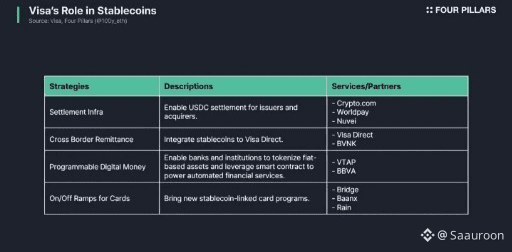
Economically, Plasma is structured to promote sustainable growth instead of speculative congestion. By optimizing execution efficiency and avoiding extreme fee volatility, it creates a healthier environment for users and developers alike. This stability is essential for platforms seeking mainstream adoption and long-term participation rather than short-term hype cycles.
Plasma aligns closely with the broader shift toward modular blockchain architecture. Instead of forcing a single network to manage execution, settlement, data availability, and governance, Plasma concentrates on doing execution exceptionally well. This focused specialization strengthens the overall Web3 stack by allowing each layer to evolve independently while remaining interoperable.
What ultimately defines Plasma is its clarity of purpose. It does not attempt to solve every challenge in decentralized systems. Instead, it dedicates itself to delivering fast, reliable execution at scale. This discipline enables Plasma to optimize deeply for performance, making it a strong foundation for next-generation decentralized applications.
As blockchain adoption accelerates, infrastructure quality will matter more than narratives or speculation. Applications serving millions of users or powering continuous automation require execution environments that are fast, predictable, and resilient. Plasma positions itself as the engine capable of supporting this next phase of decentralized growth.
In essence, Plasma represents a shift toward performance-aware blockchain design. By prioritizing parallel execution, low latency, interoperability, and developer usability, it provides the execution layer needed for real-time Web3 systems. Plasma is not simply increasing blockchain speed it is enabling decentralized technology to operate at the pace demanded by modern digital economies.

