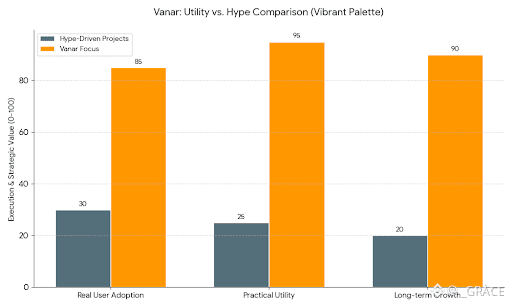
Vanar is not trying to be the loudest voice in the room.
In a space where attention is often mistaken for progress, Vanar takes a quieter, more deliberate path. It focuses on building real technology, solving real problems, and creating systems that can actually scale. This approach may not always dominate headlines, but it is often how meaningful ecosystems are built.
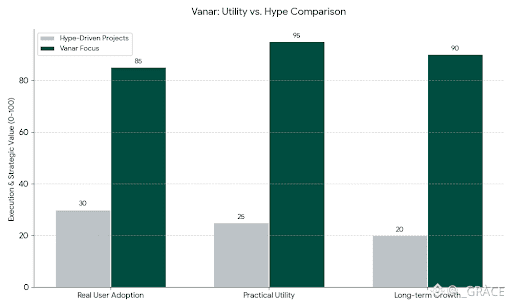
At its foundation, Vanar is designed around long-term utility rather than short-term narratives. The project understands that blockchain, AI, and gaming are not trends to be exploited they are tools that must be integrated thoughtfully to create lasting value. Instead of forcing these technologies together, Vanar connects them in ways that feel natural and practical.
The blockchain industry has matured significantly over the past few years. Users are more informed, builders are more experienced, and expectations are higher. Simply launching a token or announcing a roadmap is no longer enough. What matters now is execution. Vanar’s steady development reflects this shift. Progress is measured in shipped features, working integrations, and growing usage not promises.
One of Vanar’s most compelling strengths is its focus on usability. Many projects struggle because they prioritize complexity over clarity. Vanar approaches development with the opposite mindset. Systems are designed to be intuitive, efficient, and resilient. The goal is not to impress with technical jargon, but to deliver tools people can actually use.
Gaming plays a central role in Vanar’s ecosystem, but not in the way many Web3 projects approach it. Rather than building around speculative play-to-earn mechanics, Vanar emphasizes experience first. Games are meant to be engaging, fair, and enjoyable on their own. Blockchain enhances this experience by enabling true ownership, transparency, and interoperability without becoming a distraction.
This balance is critical. When incentives overshadow gameplay, ecosystems become fragile. Vanar avoids this trap by treating tokens as infrastructure rather than the product itself. Economic systems exist to support participation, not to replace fun or creativity.
Artificial intelligence is integrated with the same level of discipline. Instead of presenting AI as a buzzword, Vanar uses it where it delivers clear value. AI helps optimize performance, personalize user experiences, and improve decision-making across the platform. Much of this work happens quietly in the background, enhancing outcomes without demanding attention.
Beneath the surface, Vanar is built on a strong technical foundation. Scalability, security, and reliability are treated as core requirements. As the ecosystem grows, these elements become increasingly important. Infrastructure may not be glamorous, but it determines whether a project can survive real-world usage.
Security in particular is a priority. In decentralized systems, trust is everything. Vanar’s careful approach to development, testing, and iteration reflects an understanding that trust cannot be rushed. Each component is built with long-term resilience in mind.
Community plays an equally important role in Vanar’s growth. Rather than viewing users as passive participants, Vanar treats them as contributors to an evolving ecosystem. Feedback matters. Engagement is organic. Growth is driven by people who actually use the platform, not just those who speculate on it.
This user-first approach has shaped Vanar’s trajectory. Instead of sudden bursts of attention followed by decline, the project has grown steadily. This kind of growth is slower, but it is also more durable. Users who stay because they find value are far more important than fleeting interest.
From a broader market perspective, Vanar is aligned with where the industry is heading. As regulation increases and institutional interest grows, the market is becoming less tolerant of empty promises. Projects with real products, clear use cases, and disciplined execution are increasingly favored.
Vanar fits naturally into this environment. Its emphasis on fundamentals, real-world application, and sustainable economics positions it well for the next phase of blockchain adoption.
Token economics within Vanar are designed to support the ecosystem rather than distort it. Utility is prioritized over speculation. Incentives encourage participation, development, and long-term engagement. This creates healthier dynamics between users, builders, and the network as a whole.
Partnerships are approached with the same level of care. Vanar collaborates where there is genuine alignment and shared goals. Each partnership is meant to strengthen the ecosystem, not simply increase visibility.
Competition in blockchain, AI, and gaming is intense, but Vanar does not try to compete on hype. Its differentiation comes from integration and execution. By bringing multiple technologies together in a balanced way, Vanar builds defensibility that single-focus projects often lack.
Looking ahead, Vanar’s success will depend on consistency. Markets will fluctuate. Narratives will change. Technology will continue to evolve. The projects that endure are those that stay focused on their core principles while adapting to new conditions.
So far, Vanar has demonstrated this discipline. It builds steadily, listens closely, and prioritizes substance over noise.
Vanar is a reminder that real progress in Web3 does not always announce itself. Sometimes it grows quietly, through code, through users, and through systems designed to last. In a space often driven by speed, Vanar chooses direction. And over time, that choice can make all the difference.