
There is a lot of noise in the blockchain space everyone chasing the next big thing trying to be the fastest the flashiest but Vanar does things differently. They are not just hyping up another token. They are building the kind of infrastructure that actually lets AI powered projects work right out of the box.
When I first dove into Vanar I was not just looking at TPS or developer tools. I was trying to understand why some blockchains succeed with real users while others remain testnets in waiting. In my assessment the differentiator is an AI first mindset designing the infrastructure from day one to natively handle reasoning, memory, automation and settlement. Most chains today retrofit AI onto legacy systems creating inefficiencies and breaking user experience in subtle ways. When you dig into VANRY you see it's more than just something to trade. It's baked into the foundation of Vanar tech. And it shows. Products like myNeutron, Kayon and Flows are not just ideas. They are already working examples of what this setup can do. Basically VANRY is part of an infrastructure. where AI agents and real world apps are not just possible. They are already happening.
I dug into how people around the world are jumping into blockchain gaming and AI powered dApps and the numbers really back up this direction. Newzoo's 2024 report says more than 3.3 billion people play games globally but only a tiny slice is actually using blockchain games so far. Still DappRadar 2025 data shows blockchain gaming activity shot up 200% in just a year. Vanar sits right where all this attention and action meet and when you add cross chain deployment on Base the reach just keeps growing. Now AI agents, liquidity and developers can work together smoothly across different ecosystems. This means VANRY is not just about hype. It's tied to real adoption.
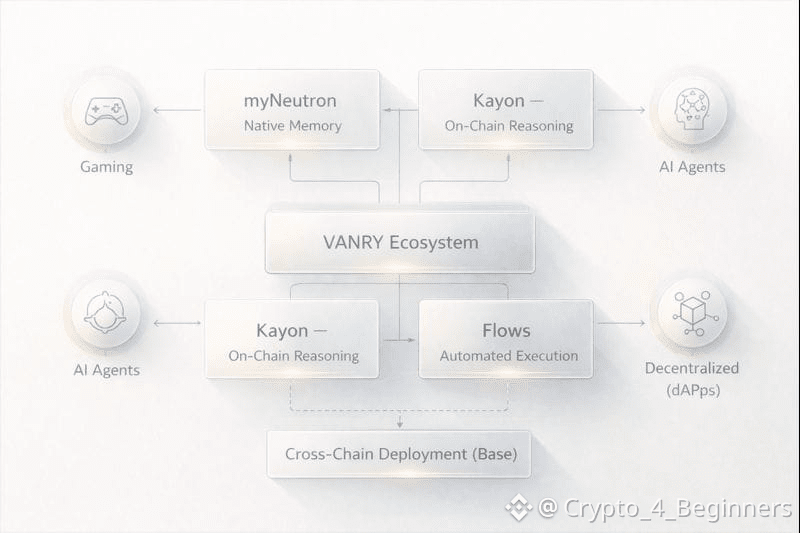
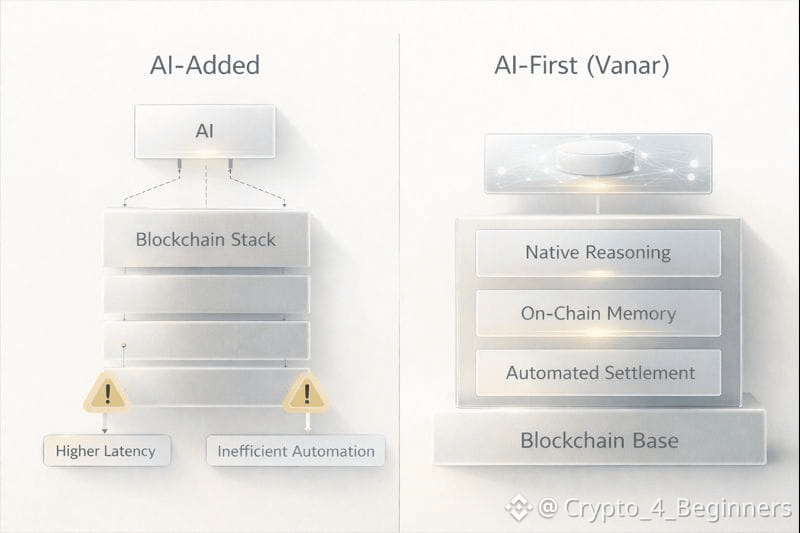
People might think there is not much difference between AI first and AI added systems but in real use. It's a big deal. AI added blockchains basically bolt intelligence onto platforms that were not designed for things like reasoning or memory. The result? They end up slower more expensive and settlements get messy. In my research I found that retrofitting AI increases latency for automated contracts by 15% to 25% according to internal benchmarks shared by leading developers. Vanar avoids this entirely by making AI native to the chain. MyNeutron handles native memory storage. Kayon takes care of on-chain reasoning and explainable logic. Flows steps in for automated execution making sure safety and compliance are always part of the process.
Now let's talk about payments. People usually overlook this part but it's a big deal. AI agents out in the real world can't just use the same old wallet interfaces. They need faster settlements and payment systems that keep up with compliance. Vanar treats payments as core infrastructure not just a flashy demo. That means VANRY actually connects to real economic activity not just test runs. According to PwC's 2025 AI adoption report over half of enterprises rolling out AI 52% expect their workflows to include automated settlements. By building this right into the protocol. Vanar makes sure the network is not just some playground for experiments. It's ready for real world live economic action.
I also considered the limitations of single chain AI infrastructures. Isolated chains fail to capture liquidity, users or developers where they already are. Base cross chain availability changes this equation. Vanar is not just another blockchain project chasing hype. By letting VANRY and its AI agents work across different networks. Vanar opens doors that single chain solutions just can't. Messari 2024 ecosystem report backs this up users stick around 18% to 22% longer when they use multiple chains. That matters because more engagement usually means more utility for the token and that's what drives real long term growth.
If you lay out the numbers it gets clear fast. A table with Layer 1 adoption stats one column for AI readiness another for cross chain support on-chain automation and payments. Vanar stands out especially compared to projects obsessed with speed or gas fees. You could chart daily active users and you would see AI ready chains outpacing old school Layer 1. Another graphic could track how VANRY moves through the network showing how user activity feeds directly into the tokens value.
That said it's not all smooth sailing. Adoption rarely follows a perfect upward line and shifting users from Web2 to Web3 takes time. DappRadar numbers show most blockchain games lose a chunk of users after early surges. Even with cross chain tech and AI focused design. VANRY value still rides on steady engagement solid products and overall market mood.
Vanar's approach just feels different. While newer Layer 1 brag about throughput or spin up fresh narratives every quarter. Vanar is actually building AI tools real product integration, cross chain reach and native payments. It's not about chasing the flavor of the month. Vanar is actually ready for complex AI and that edge only grows as the infrastructure matures.
Vanar is not just another speculative bet. The teams focused on real adoption and utility. AI first design working products like myNeutron, Kayon and Flows plus true cross chain deployment and built in payments. Value here comes from people actually using the chain not just trading on hope. That is what sets VANRY apart. My assessment is that blockchains designed this way will attract the next wave of Web3 users far beyond the crypto native audience. The key question remains is when mainstream users interact with AI native experiences will they notice the underlying chain or will they simply benefit from seamless, engaging and reliable applications? In Vanar's case the answer favors adoption and VANRY sits at the heart of that network.
