Walrus is a new kind of decentralized storage network made to store and manage large amounts of data in a safe, efficient, and programmable way. Instead of relying on one company or a few big servers, Walrus spreads data across many independent computers all around the world. This approach makes storage more secure, censorship‑resistant, and controlled by its users and developers rather than a central authority. 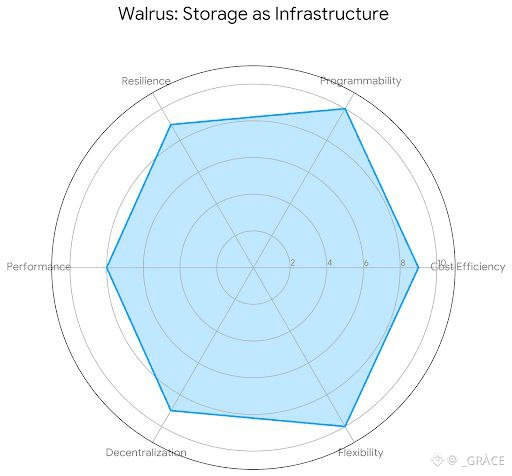
At its core, Walrus exists to handle big data files things like videos, images, large datasets used by artificial intelligence, and the kinds of files that traditional blockchains cannot easily store. It is built on the Sui blockchain, a high‑speed network that supports programmable storage through smart contracts written in the Move programming language. By tying storage to a real blockchain, Walrus makes it possible for applications to interact with data in a transparent and programmable way.
When someone uploads a file to Walrus, the protocol does something clever. It breaks the file into many small pieces using a special technique called RedStuff erasure coding. This process does more than just chop the file up it adds information that allows the original file to be rebuilt even if many pieces are missing. These pieces are then distributed to a network of independent storage nodes, and only a small amount of information about the file known as metadata is stored on the blockchain. This metadata includes proofs that the file is still available and where the pieces can be found. 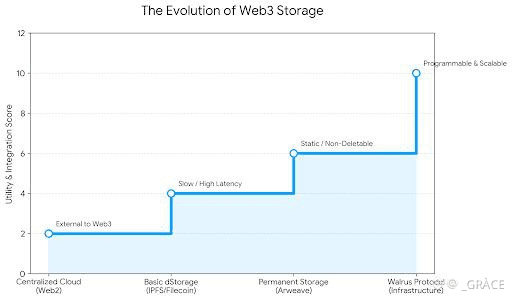
This method has several big advantages. First, because only coded fragments are stored across many nodes rather than complete copies on each one, Walrus keeps storage costs relatively low and uses space more efficiently than older decentralized systems. Storage remains robust and reliable even if many nodes become unavailable or offline. Second, by keeping metadata and proofs on the blockchain, the system ensures that any user or developer can verify data availability without needing to download the entire file.
One of the most important parts of Walrus is its native token, WAL. This token serves multiple purposes. Users pay WAL tokens to store data on the network. People who provide storage space known as storage nodes earn WAL tokens as a reward for holding and serving data. WAL tokens also support governance, meaning token holders can take part in decisions about how the network develops over time. The network operates on a delegated proof‑of‑stake (dPoS) system where token holders can delegate their tokens to trusted node operators and earn a share of rewards.
Walrus was developed with technical guidance from Mysten Labs, the creators of the Sui blockchain. Over time, the project became overseen by the Walrus Foundation, a nonprofit that helps guide the system’s growth and governance. The mainnet launch the point at which the network became fully operational occurred in March 2025, allowing developers and users to start storing real data and using the network for real applications.
A key reason Walrus is important is because traditional blockchains struggle with large data files. Blockchains like Bitcoin or Ethereum are designed primarily for transactions and small pieces of data. Trying to store a full video or large dataset on these chains would be extremely expensive and inefficient. Walrus solves this by keeping only essential information on the blockchain and managing the heavy data part in a decentralized storage layer, making it cost‑effective and scalable for modern applications.
Another special feature of Walrus is that storage becomes programmable. In most storage systems centralized or decentralized data simply sits there and is retrieved when needed. With Walrus, developers can write smart contracts that interact with stored data, apply conditions, automate cleanup, or even build marketplaces where storage capacity becomes tradable or usable as an on‑chain asset. This opens up new possibilities for applications that combine storage with logic and control.
Walrus is designed to work not just for applications on the Sui blockchain, but also potentially for apps on other chains. Because its storage layer is chain‑agnostic meaning it does not depend exclusively on one blockchain for its storage operations developers on Ethereum, Solana, or other ecosystems can use Walrus for off‑chain data storage. This cross‑chain capability makes it flexible and useful across the broader Web3 space.
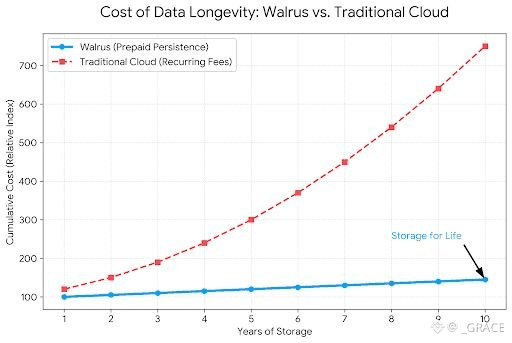
The network tries to keep storage affordable while still competitive with centralized services. Some estimates suggest Walrus can offer storage cost savings of up to 80% compared with other decentralized systems, thanks to its efficient coding and replica strategy, which keeps the overhead (extra storage needed for safety) low compared with older decentralized storage networks.
Walrus can be used for many real‑world purposes. For example, developers building decentralized applications (often called dApps) can store media files like images, videos, or sound in Walrus and link them securely to blockchain‑based apps. Web3 websites and interfaces can host their assets on Walrus so they remain available even if centralized servers go offline. It also serves AI applications that need reliable and verified access to large training datasets. Data archives, backups, and blockchain history storage are other examples of practical use cases.
Because it uses a distributed network of independent nodes, Walrus benefits from fault tolerance and resilience. If some storage nodes stop working or disconnect, the network can still reconstruct stored files from the remaining pieces, thanks to its erasure coding strategy. This makes storage highly reliable even in unstable network conditions.
Storage nodes participate in a system of epochs, which are fixed time periods in which network operations are coordinated. During each epoch, a committee of nodes handles data operations, verifies storage availability, and earns rewards based on performance. WAL tokens are paid out as incentives to ensure nodes remain honest and keep data available. Parties that stake tokens and support reliable nodes can earn rewards while contributing to network security and performance. 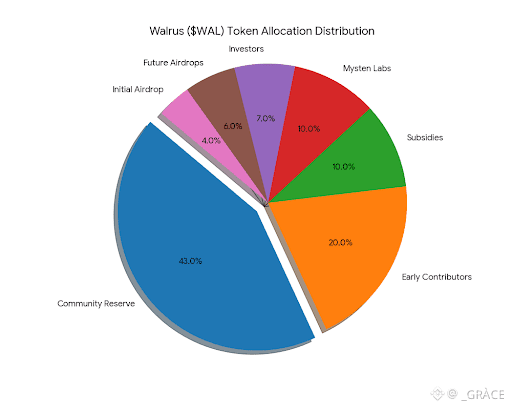
Another important aspect of Walrus is that it combines crypto‑economic incentives with technical guarantees. On‑chain verification and proofs let anyone check whether data is being stored as promised, and token incentives encourage participants to behave correctly. Nodes that fail to store or serve data properly can lose rewards, while those that perform well earn more.
Walrus also supports tools that make it easier for developers to integrate storage into their applications. These include command‑line interfaces (CLIs), software development kits (SDKs), and APIs that work with both decentralized and traditional web technologies. This flexibility helps both Web3 developers and those building hybrid applications that combine Web2 and Web3 elements.
Despite being a relatively new technology, Walrus has already attracted attention from developers and investors alike. The project raised a substantial amount of funding around $140 million led by major crypto investors which provides resources to scale the network, improve tooling, and grow the ecosystem. Challenging centralized storage providers and older decentralized networks, Walrus aims to make decentralized storage accessible, affordable, and programmable for a broad range of users.
In simple terms, Walrus is a decentralized storage network that turns data into something more than just files sitting on a server. It uses advanced coding and blockchain integration to make storage reliable and programmable. Users and developers pay with WAL tokens, and many independent participants help store and serve data, earning rewards while making the network stronger. This new system offers a practical alternative to traditional storage, giving people control over their data and letting applications build storage logic directly into the software stack.
Overall, Walrus represents a major step forward in decentralized web infrastructure. By solving core problems around cost, performance, scalability, and programmability of storage, it creates opportunities for new kinds of applications in Web3, AI, digital media, and beyond. As more developers and projects adopt this technology, decentralized storage could become a mainstream backbone of the next generation internet one where data is secure, verifiable, and controlled by users instead of centralized companies.
#walrus $WAL #Walrus @Walrus 🦭/acc