

Plasma introduces Custom Gas Tokens as a native protocol mechanism that enables the payment of transaction fees in whitelisted ERC-20 tokens such as USD₮ or BTC without ever having to hold the native token. Plasma does not consider this a wallet hack or an external relayer offering; instead, Plasma integrates gas abstraction as a first-class citizen of the execution layer via a protocol-managed paymaster. The Plasma solution maintains full EVM compatibility while eliminating one of the most annoying sources of friction in stablecoin-first applications.
Plasma solves a fundamental usability issue that still persists on most blockchains today: users must hold, manage, and maintain a native gas token even if their sole purpose is to move or spend stablecoins. Plasma understands that this requirement is a user flow breaker, particularly for payment, remittance, and commerce applications where users expect balances to act like money, not infrastructure.
Plasma achieves this via an ERC-20 paymaster that is managed by the protocol itself. Plasma does not require developers to deploy and manage gas abstraction contracts, nor does it rely on third-party relayers with opaque pricing and uncertain availability. Plasma centralizes gas abstraction at the protocol level so that there is consistency in behavior across applications, wallets, and transactions.
Plasma bases its Custom Gas Token system on existing EVM standards and does not require proprietary mechanics. Plasma utilizes an EIP-4337-compatible paymaster that is compatible with standard externally owned accounts and smart wallets. Plasma ensures that contracts and tools developed for Ethereum function as expected, and the paymaster takes care of gas pricing and sponsorship in the background.
Plasma enables users to choose an approved token such as USD₮ or bridged BTC as gas assets. Plasma uses trusted oracle pricing to calculate the gas cost equivalent in the chosen gas asset. Plasma requires users to pre-authorize the paymaster for the exact amount required. Plasma proceeds to execute the transaction by paying gas costs in $XPL internally and reducing the corresponding ERC-20 amount from the user's account.
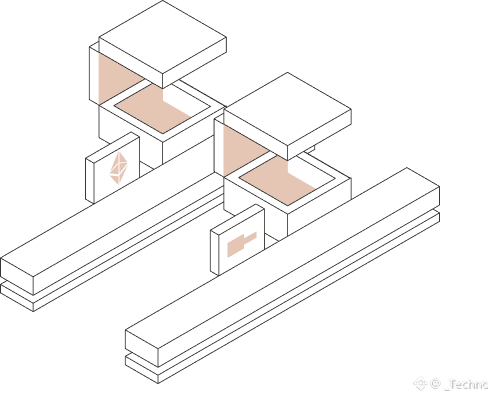
Plasma is designed not to reimburse gas costs after executing the transaction or provide credits and rewards. Plasma settles gas costs at the time of executing the transaction, which prevents any accounting ambiguities and abuse. The design of Plasma ensures that every transaction is economically accounted for, even though it seems gasless or gas-agnostic to the user.
Plasma supports Custom Gas Tokens for any transaction, not only for simple transfers. Plasma facilitates smart contract interactions, approvals, and application logic execution without requiring users to hold or manage $XPL. Plasma generalizes gas abstraction from limited use cases and makes it a generalized execution layer feature, while maintaining strict control over it via whitelisting and rate limiting.
Plasma distinguishes this model from external paymasters by maintaining pricing and enforcement within the protocol. Plasma does not impose hidden markups, dynamic premiums, or access charges. Plasma ensures predictable interactions with all supported applications because the paymaster is subject to the same rules as the rest of the execution layer. Plasma resolves the fragmentation problem that arises when each application maintains its own gas abstraction logic.
Plasma limits supported tokens on purpose to ensure execution safety and price stability. Plasma currently supports USD₮ on the network and BTC bridged via pBTC, with further assets to be considered based on liquidity, volatility, and usage patterns. Plasma deliberately keeps the execution layer out of unstable or illiquid assets that could introduce price risk or denial-of-service attacks.
Plasma maintains XPL's role even as gas is paid in other assets. Plasma employs $XPL to fuel execution, incentivize validator participation, and secure the long-term network. Plasma does not eliminate the native token from the economic framework; Plasma moves it from the user experience to the center of the protocol. Plasma ensures that gas abstraction does not degrade the security budget or introduce unpriced execution.
Plasma aligns Custom Gas Tokens with its overall execution strategy of deterministic behavior. Plasma ensures that oracle pricing, approvals, and settlements happen along well-defined execution channels. Plasma does not have any asynchronous reimbursements or off-chain accounting that may introduce any kind of uncertainties. The overall architecture of Plasma ensures that the ordering of transactions, gas usage, and finality are deterministic even at a high throughput.
Plasma makes it possible for developers to onboard Custom Gas Tokens without requiring any customized code. Plasma does not require any custom SDKs, proprietary APIs, or application-specific gas logic. Plasma makes it possible for developers to utilize the overall EVM toolset while the protocol takes care of gas abstraction transparently. Plasma makes it easier and faster for teams to deploy payment-centric applications.
Plasma enhances wallet UX by allowing balances to behave in a more intuitive manner. Plasma allows users to think in terms of the asset they are spending, rather than the infrastructure behind the spend. Plasma eliminates the cognitive overhead of acquiring gas tokens, calculating fees, and handling leftover balances. Plasma provides an experience that is much more similar to traditional digital payments, while still providing on-chain settlement finality.
Plasma enforces strong access controls and rate limiting to secure the network. Plasma does not enable unlimited sponsorship or unlimited gas consumption. Plasma limits Custom Gas Tokens to approved assets and requires verification at the protocol level. Plasma views gas abstraction as a fundamental execution feature that needs to be properly bounded in order to remain sustainable.
Plasma places Custom Gas Tokens as a long-term capability rather than a short-term reward. Plasma does not depend on promotional subsidies or short-term marketing campaigns to encourage usage. Plasma integrates gas abstraction into the protocol so that applications can depend on its existence without worrying about policy changes.
Plasma enhances its value proposition as a stablecoin-centric Layer-1 by ensuring execution is frictionless without compromising correctness. Plasma integrates EVM compatibility, protocol-controlled gas abstraction, and deterministic execution into a unified framework. Plasma sidesteps the trade-offs present in networks that layer gas abstraction on top of general-purpose execution without economic foundations.
Plasma ultimately proves that gas abstraction is possible without compromising the integrity of the protocol. Plasma makes it clear that users can pay fees in familiar assets while the network is executing in a disciplined manner. The Custom Gas Token design of Plasma makes it clear that the network is committed to real-world payments, programmable money, and on-chain finance without compromising the complexity of the protocol.