One thing I’ve learned from watching blockchains over the years is that “decentralization” gets thrown around a lot but rarely explained in a way that matches reality. Trust doesn’t magically appear just because code is open-source. Real networks are run by people and Vanry, through the Vanar blockchain, seems to understand that better than most.
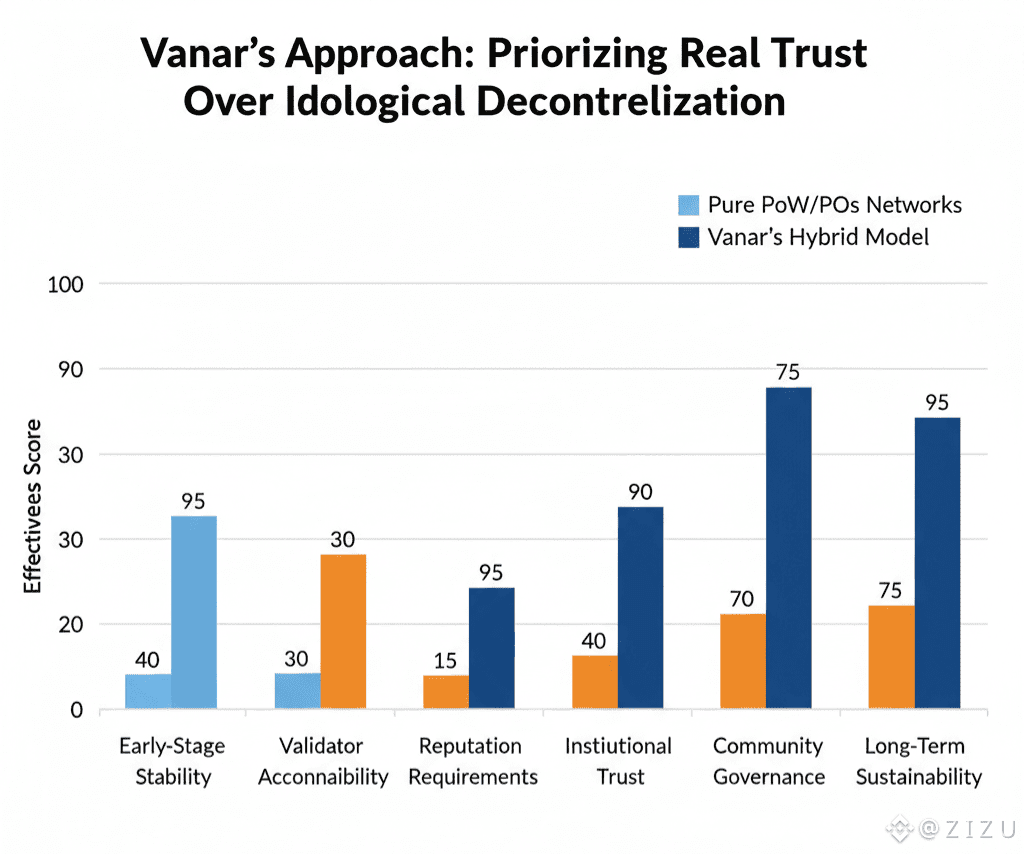
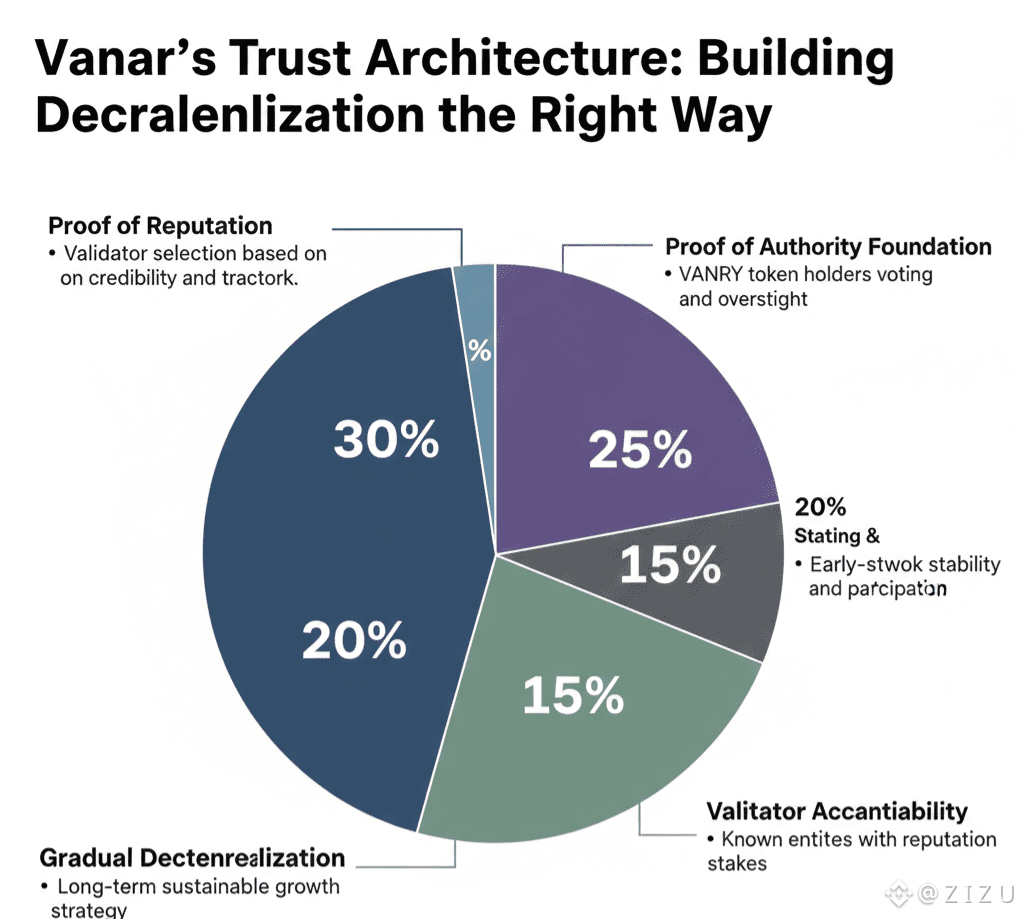
What immediately caught my attention is Vanar’s decision to use a hybrid consensus model. Instead of choosing extremes, it combines Proof of Authority with Proof of Reputation. To me, that feels honest. It’s not pretending the network can be perfectly decentralized on day one, it’s choosing to grow into decentralization the right way.
Starting With Control So the Network Doesn’t Break
In the early phase, the Vanar Foundation runs all validator nodes. Some people might raise eyebrows at that but personally, I see it as a responsible move. Early networks are fragile. Bugs, governance confusion or bad actors can do real damage if things are opened too fast.
By starting with Proof of Authority, Vanar ensures that validators are known, accountable and technically capable. It creates a stable environment where the network can mature safely. From my perspective, this is less about control and more about protecting the ecosystem while it finds its footing.
Proof of Reputation: Trust You Have to Earn
Where Vanar really stands out is Proof of Reputation. Instead of letting anyone become a validator just because they have money, Vanar evaluates who they are and what they’ve built before. Corporates and entities are assessed based on their reputation in both traditional and blockchain environments.
That matters to me because reputation isn’t easy to fake. If a validator has spent years building credibility, they have something to lose. That alone discourages bad behavior far more effectively than anonymous incentives.
This approach makes the network feel safer and more resilient. Validators aren’t just nodes, they’re real entities with real accountability.
Security Isn’t Just Code, It’s People
A lot of blockchain failures don’t happen because of broken cryptography. They happen because incentives were poorly designed or governance was reckless. Vanar’s model reduces that risk by ensuring validators are trusted participants with long-term interests in the network.
From my point of view, this is exactly the kind of setup institutions and serious builders look for. It creates confidence that the network won’t collapse because of one bad actor or short-term decision.
Sustainability Over Ideology
What I appreciate most about Vanry is that it prioritizes sustainability over ideology. Vanar isn’t trying to prove a philosophical point. It’s trying to build something that actually works and can last.
Decentralization here isn’t rushed. It’s earned gradually as more reputable validators join and the ecosystem grows. That feels far more realistic than flipping a switch and hoping everything holds together.
Giving the Community Real Skin in the Game
Vanar doesn’t leave governance only to validators. The community plays a role through staking VANRY tokens. By staking, holders gain voting rights and other benefits, which ties participation directly to commitment.
I like this approach because it filters out noise. People who vote have something at stake. It encourages thoughtful decision-making instead of hype-driven governance.
To me, this creates a healthy balance: validators keep the network secure and stable, while the community helps shape its future.
A Network Designed to Grow Up, Not Just Grow Fast
Vanar’s governance model feels like it was designed by people who understand long-term systems. Validators are onboarded carefully through reputation. Token holders contribute through staking and voting. Over time, the network becomes more decentralized, naturally, not artificially.
That’s important because real adoption doesn’t come from shortcuts. It comes from trust, consistency and reliability.
Vanry Coin isn’t just a token you hold and hope pumps. It’s a key part of how the network governs itself and stays secure. What makes it compelling to me is the maturity behind the design.
Vanar doesn’t assume the world is perfect. It builds for how people actually behave. It respects reputation, accountability and gradual decentralization. In a space full of rushed experiments, that approach feels refreshing.
If you ask me, Vanry isn’t trying to reinvent trust overnight. It’s building a system where trust grows naturally and that’s exactly what a serious blockchain should be doing.