I still remember the first time someone tried to explain blockchain to me. We were sitting on mismatched chairs at a friend’s place cold coffee on the table and after ten minutes of buzzwords my brain quietly tapped out. I nodded like I understood but honestly? It all felt miles away from real life. That’s why Vanar caught my attention later on not with flashy promises but with something much rarer in Web3 common sense.
Vanar feels like it was built by people who’ve actually watched how normal humans use technology. Not just developers staring at code all night but folks who’ve worked with games entertainment and brands. People who know that if something isn’t intuitive fun or useful most people won’t stick around. And that idea—quietly revolutionary in crypto—sits at the heart of everything Vanar does.
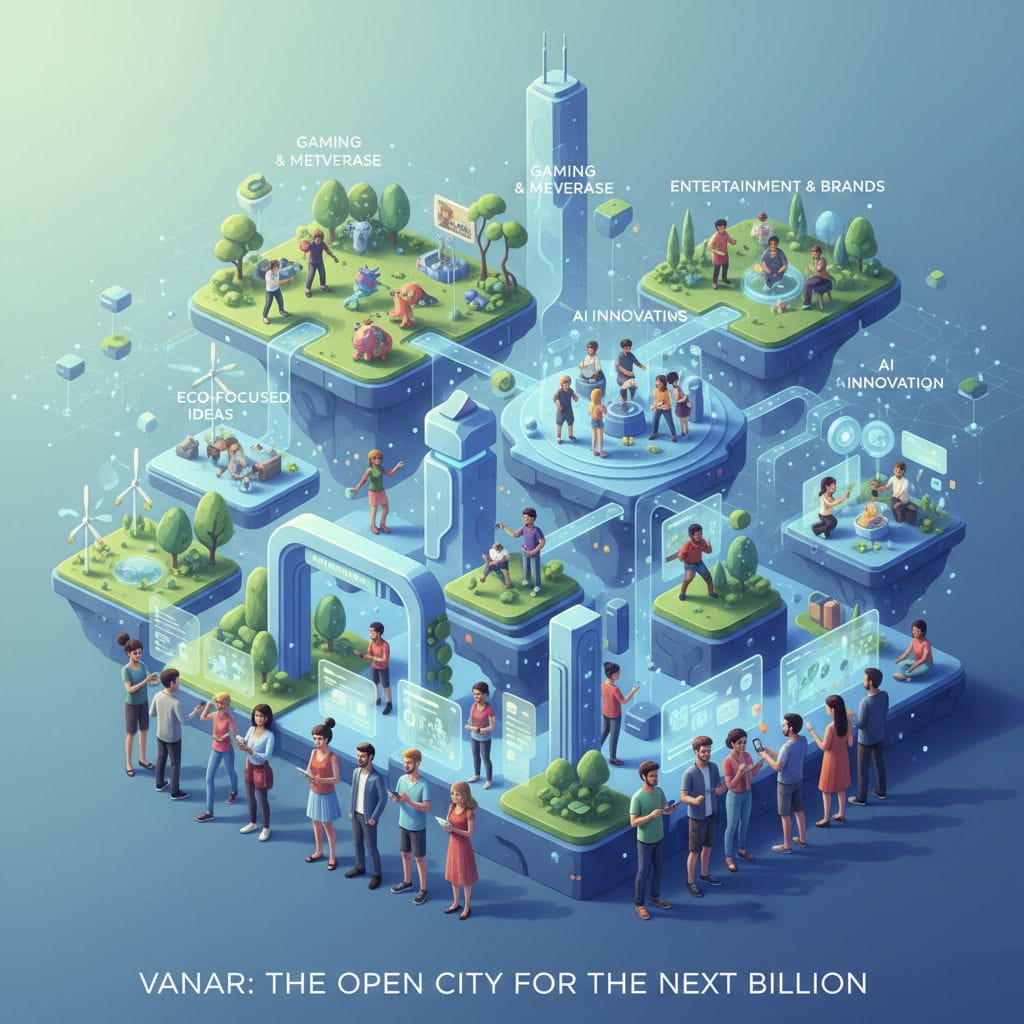
At its core Vanar is a Layer 1 blockchain but that label doesn’t really capture its personality. It’s more like an open city rather than a rigid machine. One where gaming digital worlds AI tools eco focused ideas and brand experiences all live side by side without tripping over each other. You can almost feel the intention behind it this isn’t built for a tiny circle of insiders. It’s built for the next wave. The next few billion people who don’t want to “learn blockchain” but are perfectly happy to use it if it fits naturally into their lives.
Gaming is probably the easiest place to see this philosophy in action. Anyone who’s ever lost track of time in a game knows how powerful immersive experiences can be. Vanar leans into that with projects like the Virtua Metaverse and the VGN games network. These aren’t abstract demos or tech flexes. They’re spaces meant to be explored played in and lived in. The blockchain part fades into the background the way good technology should. Like electricity—you don’t think about it while watching a movie but everything depends on it.
There’s also something refreshing about how Vanar doesn’t pretend the real world doesn’t exist. Brands matter. Entertainment matters. Sustainability matters. Instead of treating these as buzzwords Vanar weaves them into its ecosystem in a way that feels… practical. I once worked on a small digital campaign for a brand and the hardest part wasn’t creativity it was connecting tech audience and purpose without making it feel forced. Vanar seems to understand that balance. It’s not trying to replace the real world it’s trying to extend it.
Then there’s VANRY the token that quietly keeps the whole system moving. It’s easy to reduce tokens to price charts and speculation but VANRY feels more like fuel than a lottery ticket. It pays for transactions supports staking and powers the ecosystem behind the scenes. Nothing flashy. Just functional. And in a space that often confuses noise with value that simplicity is oddly comforting.
What really sticks with me though is Vanar’s bigger ambition. Bringing the next three billion users into Web3 isn’t just a marketing line—it’s a design challenge. It means smoother experiences lower friction and technology that adapts to people not the other way around. I think about how smartphones went from luxury gadgets to everyday extensions of our hands not because people suddenly became tech experts but because the experience got better. Vanar seems to be chasing that same quiet evolution.
There’s no dramatic finale here no over the top promise that Vanar will “change everything overnight.” And honestly that’s part of the appeal. It feels more like the early days of something steady and thoughtful. Like discovering a café that isn’t trying to be trendy but ends up becoming your favorite place anyway because it just feels right.
If Web3 is going to grow up and it really needs to projects like Vanar are probably what that adulthood looks like. Less shouting. More substance. Less theory. More lived experience. And maybe just maybe fewer conversations where we all pretend we understand what’s going on while our coffee gets cold.