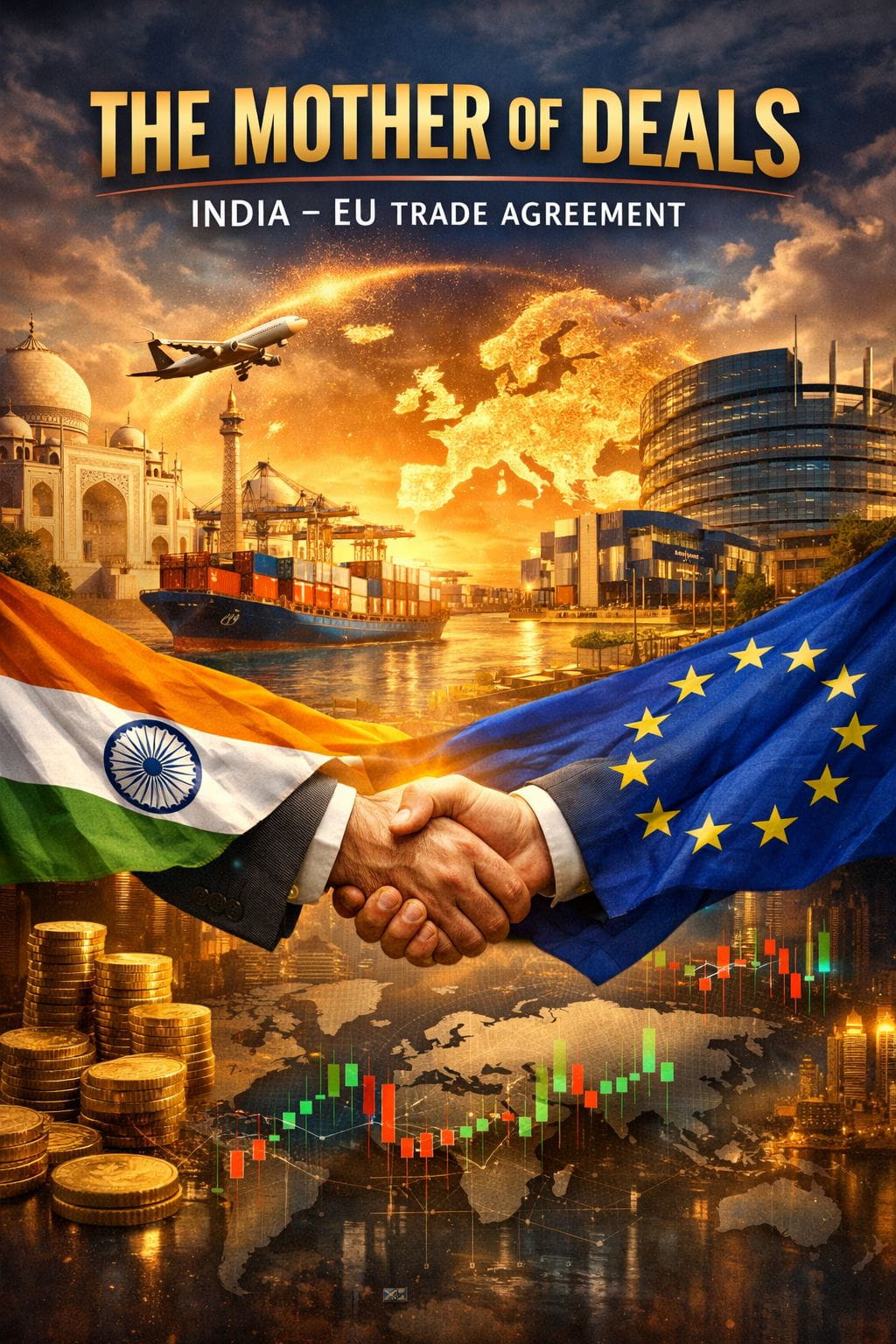
Markets don’t move on headlines alone — they move on deals.
And right now, one deal is quietly shaping the next decade of global trade: the trade agreement between India and the European Union.
Many are already calling it “the mother of deals.” As a trader and crypto investor, I don’t take labels like that lightly. So let’s break down why this agreement matters — and what it signals for markets, capital flows, and Web3 thinkers like us.
Why This Deal Is Bigger Than It Sounds
India and the EU together represent nearly a quarter of the world’s population and a massive share of global GDP. When two blocs of this size align on trade, it’s not incremental — it’s structural.
This agreement isn’t about one sector or one year. It’s about rewiring long-term economic relationships:
Lower tariffs
Easier market access
Stronger supply chains
Shared standards on tech, sustainability, and services
That’s why it’s earning the “mother of deals” tag. It sets the foundation for multiple future agreements to build on top of it.
The Strategic Timing Nobody Should Ignore
This deal isn’t happening in a vacuum.
Global supply chains are diversifying away from single-country dependence
Europe needs reliable growth partners
India wants manufacturing scale, capital, and export dominance
From a market perspective, this is macro positioning at its finest. When long-term capital starts reallocating, asset prices eventually follow.
As traders, we usually chase short-term volatility. But the biggest money is always placed before the narrative becomes obvious.
What This Signals to Global Investors
Here’s the part that matters to me as an investor:
Policy stability attracts capital
Trade clarity reduces risk premiums
Cross-border cooperation boosts confidence
This deal sends a clear message: India is open, scalable, and serious. Europe is looking outward for growth. That combination is powerful.
Historically, such agreements tend to:
Increase foreign direct investment
Strengthen local currencies over time
Support equity and infrastructure growth
These are slow-burn effects — but they’re exactly the kind that smart money tracks early.
The Crypto & Web3 Angle Most People Miss
Now let’s talk Web3.
Trade agreements aren’t just about physical goods anymore. They influence:
Digital services
Data frameworks
Fintech collaboration
Regulatory alignment
As blockchain adoption grows, clear international cooperation becomes a tailwind. Regions that integrate economically tend to integrate technologically next.
For crypto builders and investors, this means:
Larger addressable markets
Easier cross-border experimentation
More institutional comfort with emerging tech
No overnight pumps here — just strong foundations.
Why “Mother of Deals” Actually Makes Sense
This agreement is called the mother of deals because it:
Connects two massive economic engines
Unlocks multi-sector growth, not just trade
Sets precedents for future global agreements
Signals long-term geopolitical alignment
It’s not loud. It’s not flashy. But it’s deeply consequential.
And in markets, the quiet shifts often matter the most.
Final Thoughts
I’ve learned one thing over the years: real opportunities form at the intersection of policy, capital, and patience.
The India–EU trade deal is exactly that kind of intersection.
Whether you trade crypto, invest long-term, or build in Web3, this is a macro signal worth keeping on your radar. The effects won’t show up tomorrow — but they will show up.
Stay informed. Think in cycles. And don’t underestimate the power of well-timed global alignment.
If this perspective helped you think a little deeper, stay connected. The best trades start with understanding the bigger picture.
#IndiaEU #GlobalTrade #MacroEconomics #CryptoMacro #MarketInsights #LongTermInvesting #Web3