
Stablecoins already won. The market decided years ago that blockchain's first real product would be digital dollars moving faster and cheaper than traditional banking. Look at the volumes. Trillions circulate monthly while speculative tokens pump and dump in the background. Yet we still treat this monumental shift as an afterthought forcing stablecoins to compete for blockspace with JPEG mints and meme coin launches.
The friction is obvious but ignored. A merchant in Lagos waits three blocks to confirm a USDT payment while a trader in Bangkok pays volatile gas fees denominated in unpredictable native tokens. Remittances worth billions traverse rails designed for programmable speculation rather than reliable settlement. This mismatch between the product people actually use and the infrastructure they are forced to use creates unnecessary cost and delay at every touchpoint.
Plasma approaches this gap with singular focus. It is a Layer One blockchain designed specifically for stablecoin settlement rather than general purpose smart contracting retrofitted to handle payments. That distinction matters because specialization unlocks capabilities that generalist chains simply cannot offer without compromising their primary design goals.
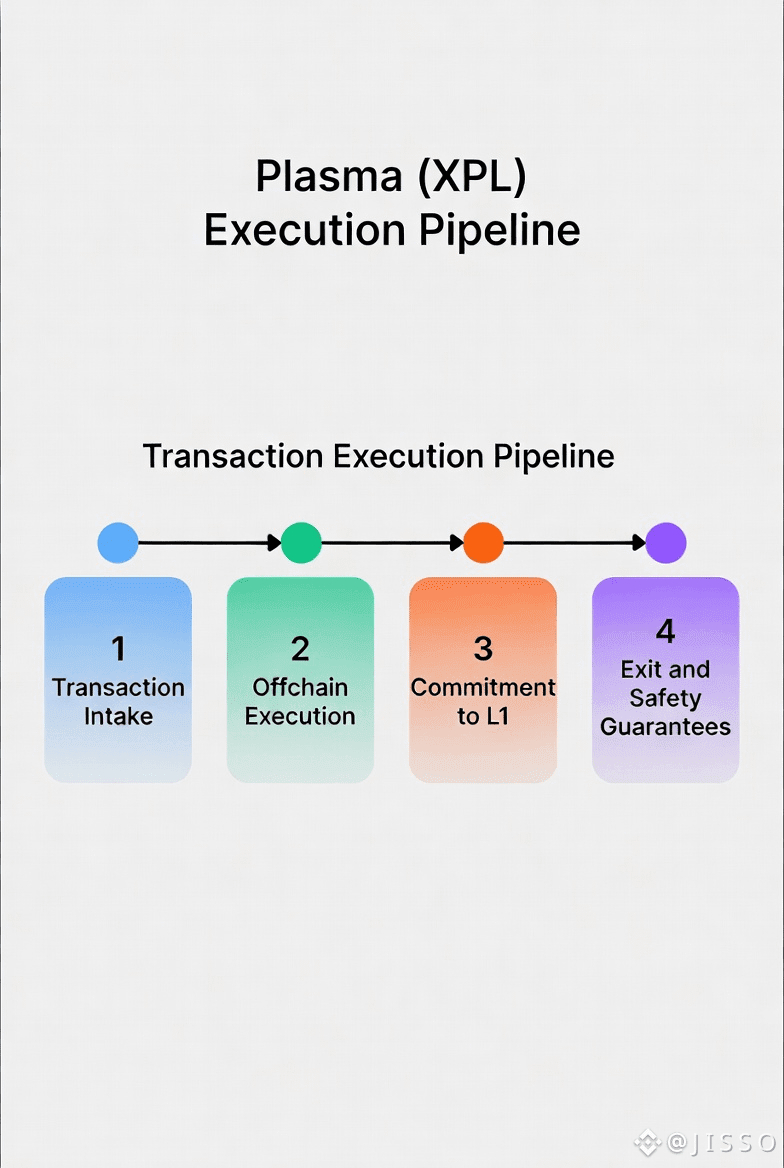
Full EVM compatibility ensures developers do not face unfamiliar territory. Built on Reth the Ethereum client implementation Plasma offers the exact environment thousands of engineers already understand. Smart contracts deploy without translation layers. Tooling works out of the box. Yet underneath this familiar surface lies a fundamentally different consensus mechanism optimized exclusively for the characteristics that matter in payment contexts.
PlasmaBFT delivers sub second finality. In practical terms this means a coffee shop owner sees payment confirmation before the customer finishes putting their phone away. Cross border remittances settle faster than a text message travels. When merchants accept card payments they rarely wait several minutes wondering if the transaction might reverse. Blockchain payments should exceed that standard not fall short of it.
The economic model dismantles barriers that prevent mainstream adoption. Gasless USDT transfers remove the onboarding friction that kills user retention. New users should not need to acquire obscure tokens just to move stablecoins they already hold. This feature recognizes that in high adoption markets across Southeast Asia Latin America and Africa users think in dollars not in platform specific cryptocurrencies. When every transfer incurs unpredictable fees denominated in volatile assets the utility of digital dollars diminishes rapidly.
Stablecoin first gas economics address the volatility problem at its root. Transaction fees settle in the same stable unit of account that users actually care about. Imagine calculating business expenses when your unit of account fluctuates ten percent weekly. Treasury departments reject such unpredictability. Retail users abandon applications that demand constant mental arithmetic to determine whether a transfer costs fifty cents or five dollars depending on token price swings.
Bitcoin anchored security introduces a critical layer of neutrality often missing from newer chains. By leveraging Bitcoin's proof of work as an anchor Plasma inherits censorship resistance properties that standalone proof of stake networks struggle to achieve. This matters enormously for settlement infrastructure. Payment rails must remain politically neutral infrastructure immune to capture by any single validator set or geographic jurisdiction. Institutions managing billions in treasury flows require guarantees that their transactions cannot be frozen arbitrarily by protocol governance whims.
The target user base splits naturally across two massive cohorts. Retail participants in high adoption emerging markets already use stablecoins for daily survival avoiding local currency devaluation and circumventing broken remittance corridors. These users need infrastructure that works on cheap Android devices with intermittent internet connectivity. They prioritize cost above all else because transaction fees directly reduce the food budget or school fees their families receive.
Institutional players occupy the other pole. Payment processors cryptocurrency treasuries and fintech applications managing corporate finance need regulatory clarity predictable latency and definable finality guarantees. They cannot tolerate the possibility that a transaction might revert due to chain reorganization or validator politics. PlasmaBFT provides the deterministic finality that chief financial officers demand before allocating operational capital to blockchain based settlement.
Both groups converge on the same requirement. They need infrastructure purpose built for moving value without the intellectual overhead of managing multiple volatile assets or interpreting complex gas markets. The token powering this ecosystem XPL facilitates network security and governance while the economic activity focuses entirely on stablecoin velocity. Unlike general purpose chains where native token speculation often overshadows utility XPL serves strictly as the coordination mechanism for validators staking and protocol upgrades while the actual commerce happens in stable units people actually spend.
Current infrastructure treats stablecoins as guests in someone else's house. They operate as smart contracts dependent on the priorities of the underlying chain. When network congestion hits stablecoin transfers compete with NFT launches and derivative trading for priority. Fees spike unpredictably. Confirmation times stretch. Users bear the cost of infrastructure not designed for their specific use case.
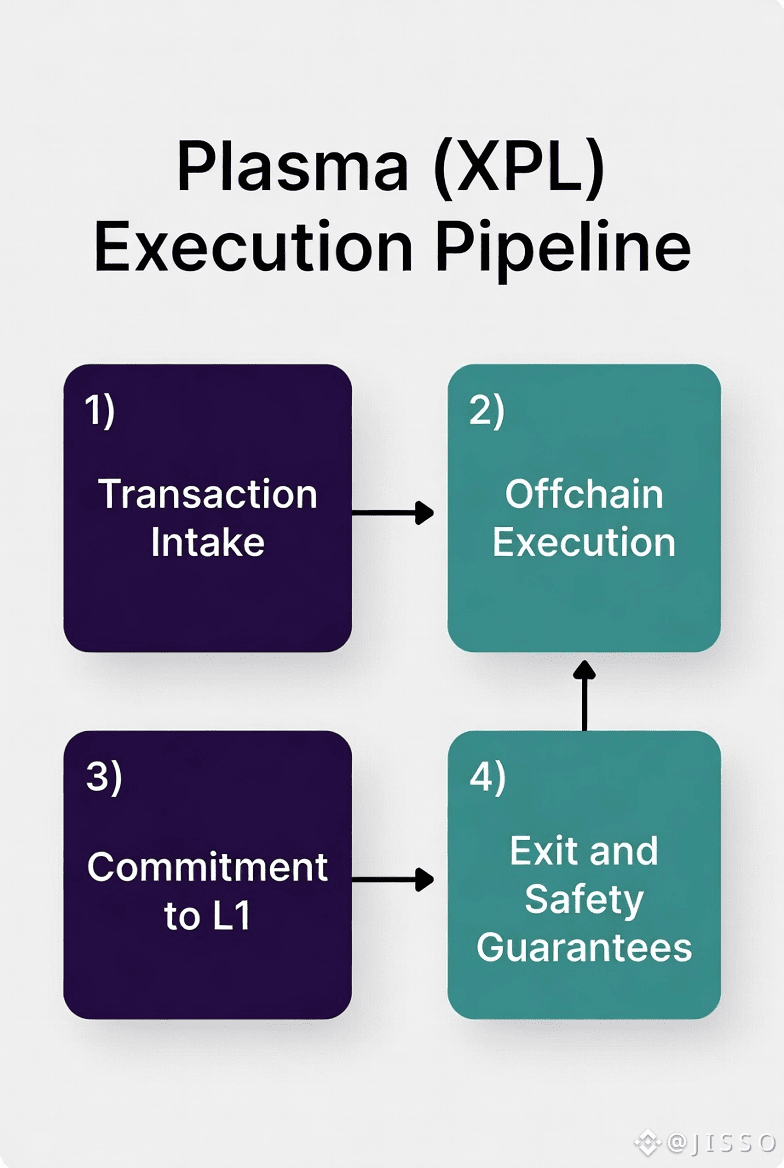 Plasma inverts this relationship. The entire protocol architecture prioritizes stablecoin settlement above all other activities. Blockspace allocation fee markets and consensus timing all optimize for the reality that digital dollars represent blockchain's first product market fit. Everything else remains possible but secondary.
The implications extend beyond mere efficiency. Purpose built settlement layers enable regulatory strategies that generalist chains cannot easily replicate. When the native asset and the settlement unit remain distinct regulators gain clarity about which activities constitute securities transmission versus pure utility functions. This separation helps institutional compliance officers navigate increasingly complex global frameworks.
We are witnessing the fragmentation of the monolithic blockchain thesis. Early internet protocols tried to handle everything on one layer before specialized systems emerged for streaming video secure messaging and financial settlement. Blockchain follows the same evolution. General computation belongs on generalist chains. But the specific task of global value transfer at internet speed demands dedicated hardware and software configurations.
The transition will accelerate as emerging market adoption deepens. Users who rely on stablecoins to protect purchasing power against inflation have zero tolerance for delays or fees that eat into essential funds. They will migrate to whichever infrastructure offers the path of least resistance without romantic attachment to legacy networks. Retail users vote with their wallets instantly.
Institutions follow more slowly but with exponentially larger capital flows. Treasury management departments conduct extensive vendor due diligence. They require proof of finality mechanisms institutional grade uptime and economic models that prevent fee volatility. As these requirements solidify into procurement standards only specialized infrastructure will qualify for enterprise integration.
Settlement quality determines whether crypto becomes the backend for global finance or remains a speculative sideshow. Speed cost predictability and censorship resistance define competitive advantage in payment infrastructure. Plasma builds exclusively around these variables recognizing that the future belongs to chains optimizing for the use case people already chose rather than the use case developers wish they would choose.
The infrastructure exists now. Developers can deploy familiar EVM contracts. Users can transfer USDT without gas overhead. Institutions can rely on Bitcoin anchored finality. The separation between speculative crypto and functional payment rails is complete.