
When a project enters a strong reward distribution phase, the market’s first reaction is usually excitement. Volume rises, volatility expands, discussions intensify. With FOGO, recent activities especially those connected to Binance have brought the token closer to a broader and more diverse user base.
What I focus on, however, is not the initial surge. What matters more is what happens after the early excitement fades.
Rewards mechanically increase circulating supply. When supply rises, the market must absorb the new tokens. If most recipients sell immediately, token velocity becomes high. High velocity often leads to unstable price structure, as sell pressure appears continuously.
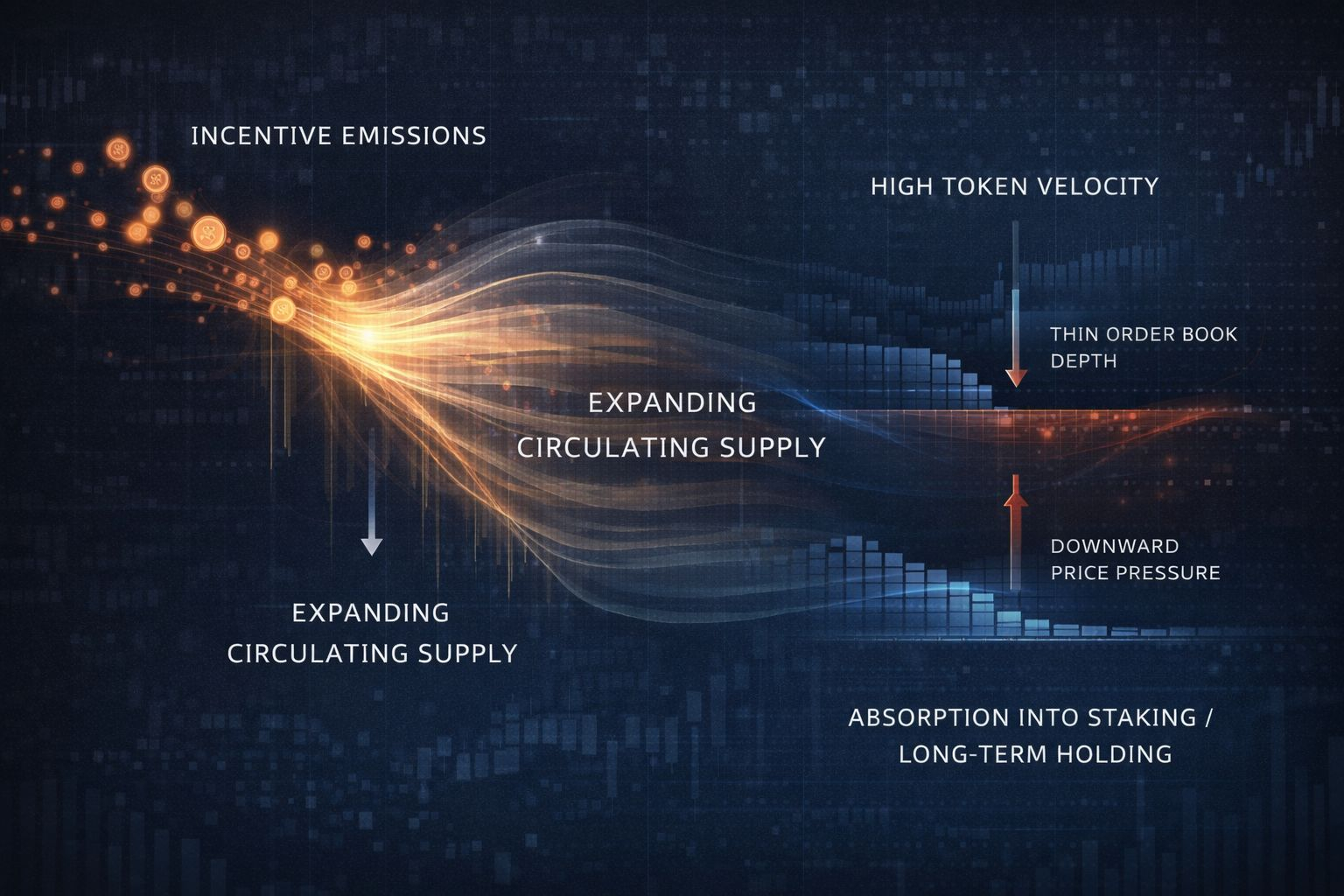
On the other hand, if a portion of tokens is held, staked, or reintegrated into the ecosystem, velocity decreases. In that case, effective selling pressure may be lower than nominal supply growth, giving the market time to form a more balanced structure.
These are the signals I pay attention to:
Does liquidity remain after incentives decline?
Does order book depth improve structurally or only temporarily?
Does volatility gradually compress over time?
If liquidity only exists during the incentive phase, it resembles “rented liquidity” attracted by rewards and quick to leave once they shrink. If liquidity remains and stabilizes, it may indicate “owned liquidity,” where participants accept longer-term exposure.
Inflation is another variable. Rewards increase circulating supply. If supply growth outpaces organic demand expansion, medium-term pressure can emerge. This becomes more visible during broader market weakness, when fresh capital is insufficient to absorb additional tokens.
In that scenario, price may face sustained pressure even if the narrative remains strong. That risk needs to be acknowledged clearly.
Conversely, if incentives attract builders, traders, and genuine long-term users, demand can gradually expand. When demand grows at the same pace or faster than supply, price structure becomes more stable.
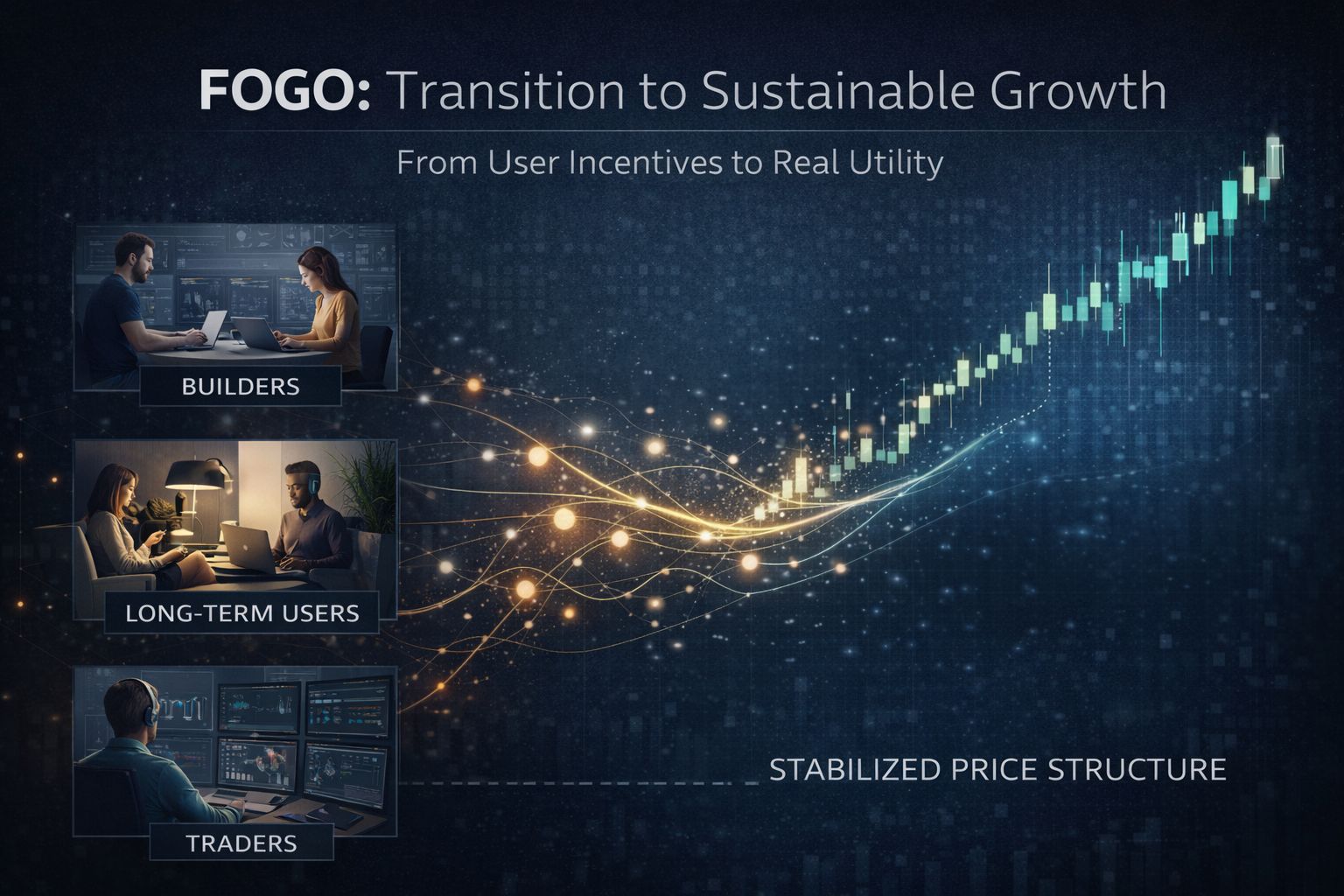
For FOGO, this phase feels like a transition test: shifting from attracting users through incentives to retaining them through real utility. If liquidity and usage can sustain themselves without relying entirely on rewards, that signals structural strength. If not, the market will reflect it quickly.
I do not see rewards as inherently positive or negative. I see them as a variable in the supply demand equation. Incentives create initial conditions. How the market absorbs new supply and how participants behave afterward will define the medium term trajectory.
Ultimately, structure matters more than emotion. And structure is confirmed by time, not by short term campaigns.
@Fogo Official $FOGO #FOGO