In every crypto cycle, narratives rotate — but infrastructure remains the constant foundation.
While Bitcoin continues to influence macro direction and #BNB supports one of the most active exchange-driven ecosystems, the real long-term value often emerges from chains optimizing execution itself. That’s where @Fogo Official enters the conversation.
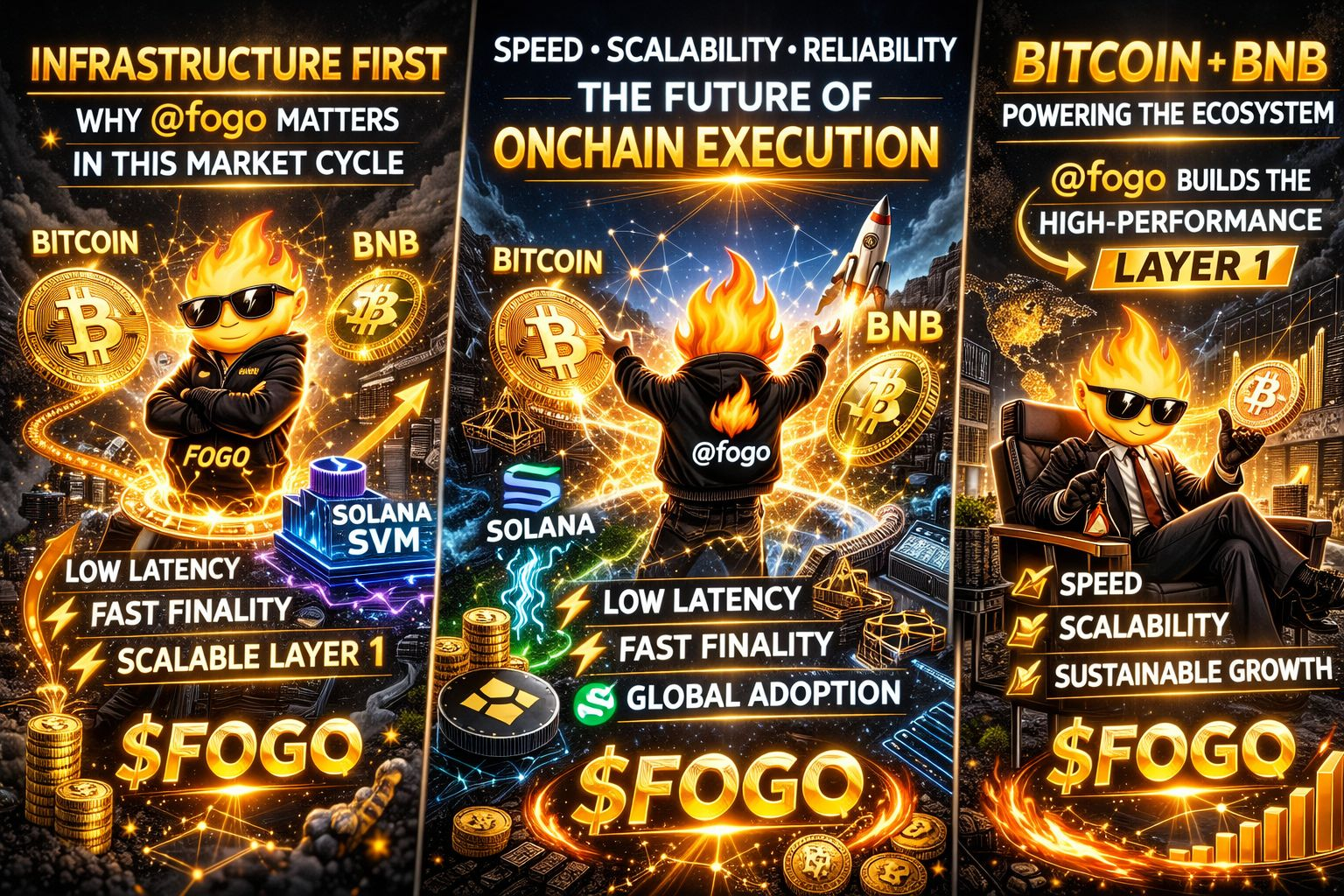
Fogo is designed as a high-performance Layer 1 leveraging the #Solana Virtual Machine (SVM). This architectural choice is not accidental. By aligning with Solana’s execution environment, Fogo positions itself to deliver low-latency transaction processing, fast finality, and scalable throughput — all critical components for modern onchain trading and decentralized applications.
One of the persistent inefficiencies in crypto markets is execution delay. In volatile conditions, milliseconds can determine entry quality, slippage exposure, and overall strategy performance.
FOGO infrastructure direction suggests a focus on minimizing those bottlenecks. Instead of relying on hype cycles, the emphasis appears to be on optimizing the base layer where transactions are validated and confirmed.
Another important factor is ecosystem maturity. Sustainable networks are not built purely on price momentum but on developer adoption, validator participation, and transaction consistency. If Fogo continues strengthening its validator set, tooling, and application ecosystem, it could carve out a niche as a specialized high-efficiency trading layer within the broader multi-chain landscape.
As Bitcoin drives capital flows and BNB maintains strong liquidity hubs, infrastructure-focused chains like Fogo aim to refine the execution layer beneath the surface. That strategic positioning may prove more significant over time than short-term volatility.