
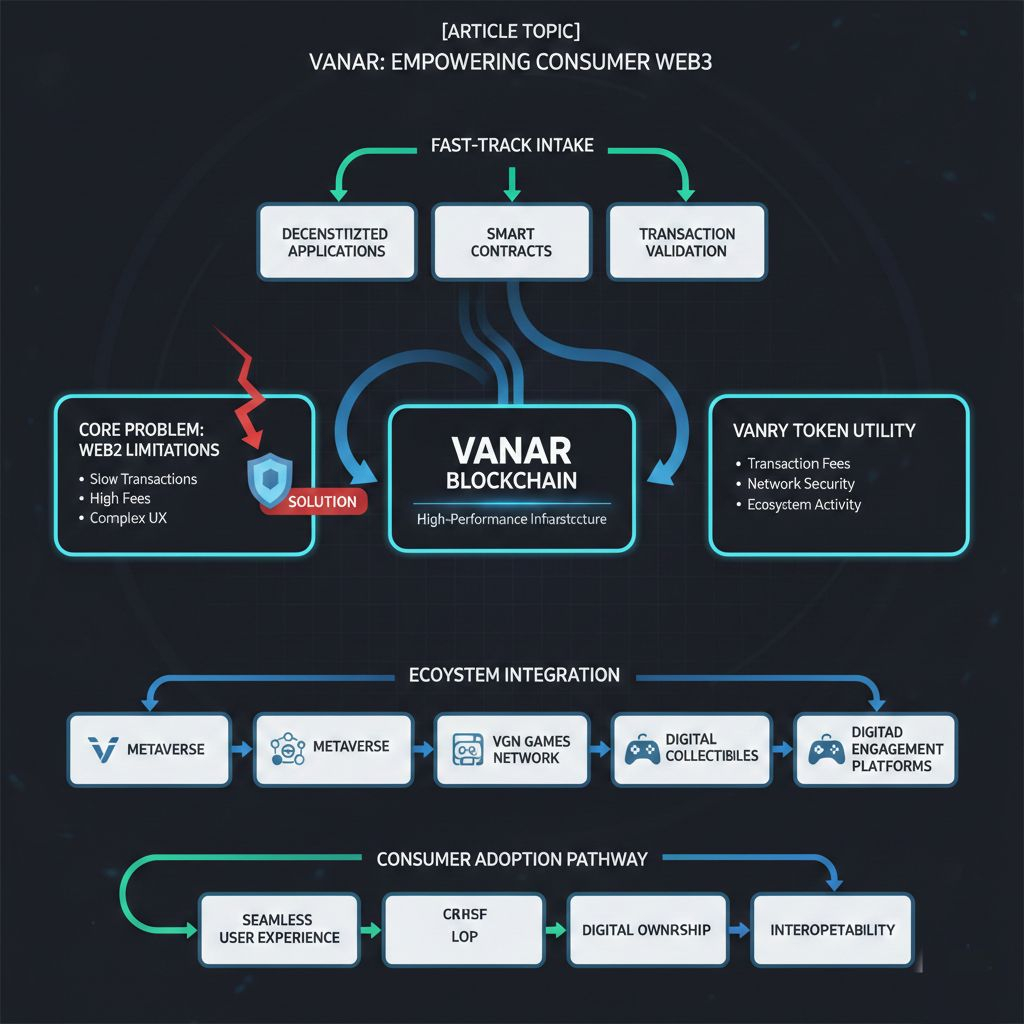
@Vanarchain Blockchain technology has introduced new ways to manage digital ownership, payments, and decentralized applications. However, many blockchain networks still struggle to support real-world adoption at scale. Common limitations include slow transaction speeds, high fees, complex user experiences, and lack of integration with mainstream industries such as gaming, entertainment, and brand ecosystems. Vanar is a Layer 1 blockchain designed to address these practical challenges by focusing on infrastructure that supports consumer-facing applications rather than purely financial use cases.
The core problem Vanar aims to solve is the gap between blockchain technology and everyday users. Most blockchain systems were originally built with finance and technical communities in mind. While they offer decentralization and transparency, they often lack the performance, simplicity, and integration needed for large-scale consumer platforms. This creates barriers for industries like gaming, digital media, and brand engagement, where users expect fast, seamless, and low-cost interactions. Vanar attempts to provide a foundation that makes blockchain usable behind the scenes, allowing applications to deliver Web3 functionality without exposing users to technical complexity.
At a high level, Vanar operates as a Layer 1 blockchain network, meaning it provides its own base infrastructure for validating transactions, securing data, and running decentralized applications. The network uses its native token, VANRY, to power core operations such as transaction processing, network security, and ecosystem activity. Like other Layer 1 systems, Vanar maintains a distributed ledger where transactions are recorded and verified by network participants. These participants help ensure that data remains consistent, tamper resistant, and transparent across the network.
Vanar’s design focuses on performance and usability. Transactions are processed through a consensus mechanism that allows the network to confirm activity efficiently while maintaining decentralization. This allows applications built on Vanar to operate with lower latency and reduced fees compared to traditional blockchain systems that may experience congestion. By optimizing transaction throughput and execution efficiency, Vanar supports environments where large numbers of users interact simultaneously, such as online games or virtual worlds.
One of the key aspects of Vanar is its ecosystem integration. The network supports products such as the Virtua Metaverse and the VGN games network, which use blockchain technology to manage digital ownership, assets, and interactions. In these environments, blockchain operates as an underlying infrastructure layer. For example, virtual items, characters, or digital collectibles can be stored securely and verified on chain, ensuring ownership remains with the user rather than a centralized platform. This approach enables interoperability and persistent ownership across different applications and environments.
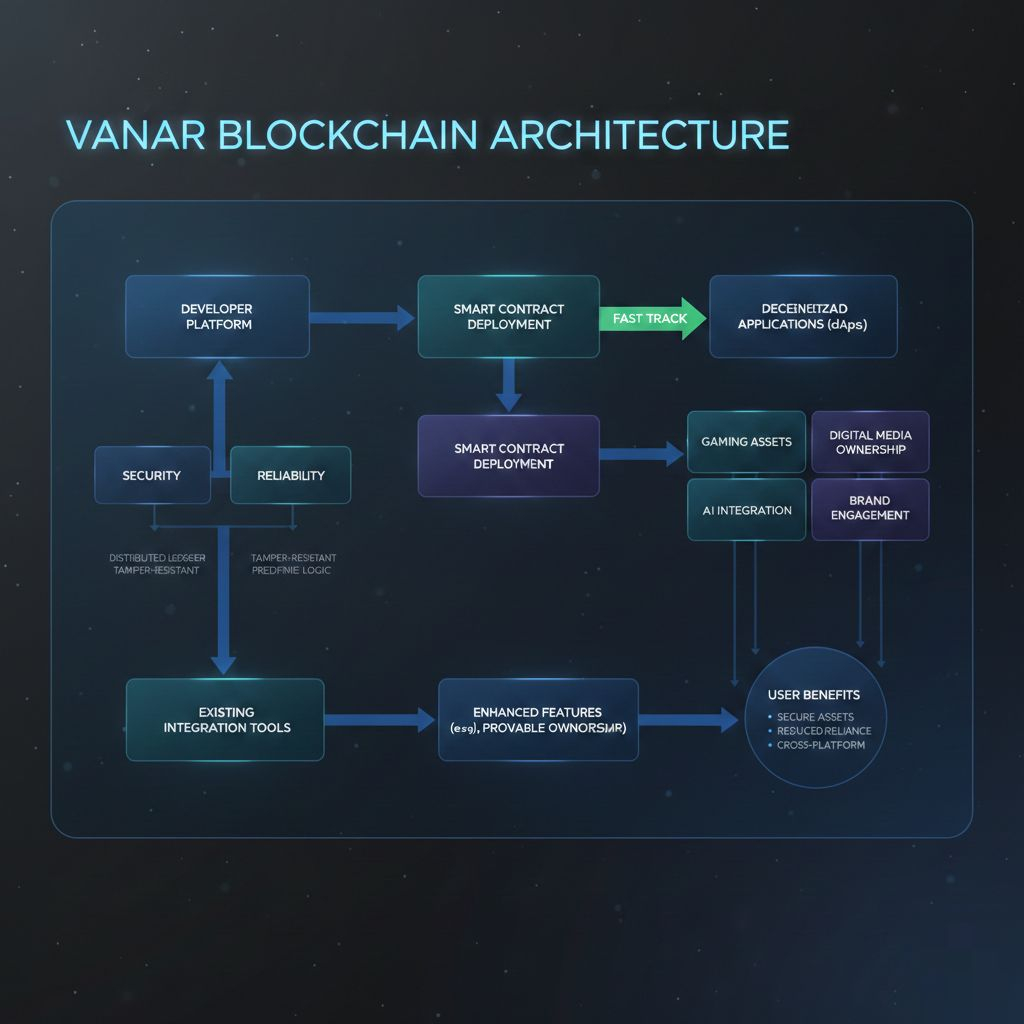
#vanar From an architectural perspective, Vanar functions as a programmable blockchain that allows developers to deploy smart contracts. Smart contracts are self executing programs that run on the blockchain and automate processes such as asset transfers, access control, or reward distribution. Developers can use these contracts to build applications that operate without centralized control. This allows for transparent logic execution and reduces reliance on intermediaries. The blockchain also provides tools and infrastructure that help developers integrate blockchain features into existing applications without requiring deep expertise in distributed systems.
Vanar’s system design supports multiple verticals, including gaming, digital media, artificial intelligence integration, and brand engagement platforms. In gaming, blockchain can manage digital assets such as skins, collectibles, and in game currency. In entertainment, it can provide secure digital ownership of media content. In brand applications, blockchain can enable loyalty programs, digital identity verification, and product authentication. These use cases depend on reliable infrastructure that can handle large user bases and frequent transactions.
From a developer perspective, Vanar provides a platform for building decentralized applications with predictable performance and infrastructure support. Developers benefit from having a dedicated Layer 1 network optimized for consumer applications rather than competing with high demand financial transactions. This improves reliability and allows applications to operate with consistent performance. Additionally, blockchain integration allows developers to offer new features such as provable ownership, transparent reward systems, and secure digital asset management.
From a user perspective, Vanar’s functionality is often invisible but still important. Users interacting with applications built on Vanar may not need to understand blockchain technology directly. Instead, they benefit from features such as secure asset ownership, reduced reliance on centralized servers, and the ability to move assets between compatible platforms. This improves user control while maintaining a familiar application experience.
Security and reliability are fundamental to Vanar’s infrastructure. As a distributed ledger, the network reduces reliance on a single central authority. Transactions and records are stored across multiple network participants, making the system more resistant to tampering or data loss. Smart contracts operate based on predefined logic, reducing the risk of manipulation once deployed. However, like all blockchain systems, security also depends on proper smart contract development and ongoing network maintenance.
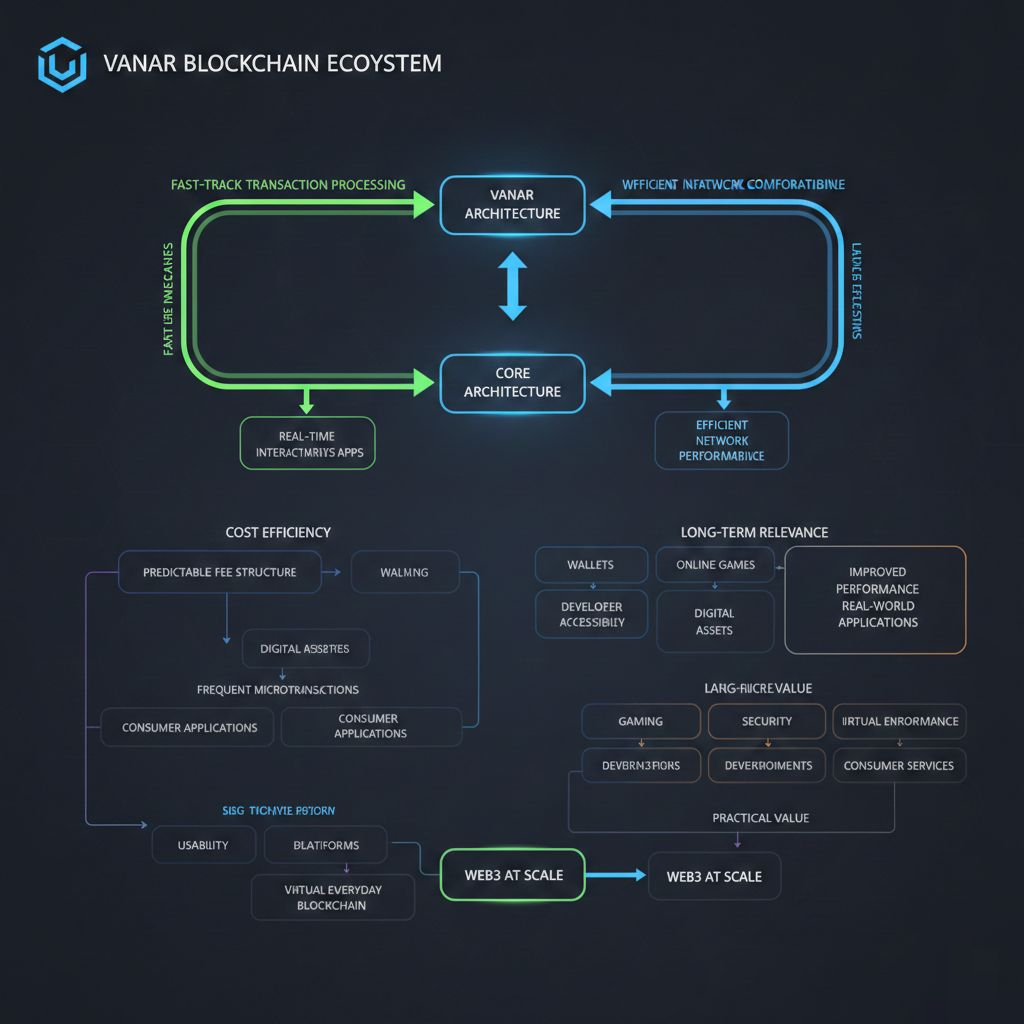
Scalability is a key focus of Vanar’s design. Many blockchain networks struggle to support millions of users due to technical limitations. Vanar addresses this by optimizing its core architecture for faster transaction processing and efficient network performance. This allows it to support applications that require real time interactions, such as online games and virtual environments. The network also supports compatibility with broader Web3 infrastructure, allowing integration with wallets, digital asset standards, and decentralized services.
Cost efficiency is another important aspect. Traditional blockchain networks can experience high transaction fees when demand increases. Vanar aims to provide a more predictable and affordable cost structure, which is essential for consumer applications that involve frequent microtransactions. Lower fees enable developers to build applications where users can interact regularly without facing significant costs, improving overall usability.
Vanar’s long term relevance depends on its ability to support real world applications and maintain a stable developer ecosystem. The blockchain industry is highly competitive, with many Layer 1 and Layer 2 networks offering similar capabilities. To remain relevant, Vanar must continue improving performance, security, and developer accessibility while ensuring its infrastructure can support large scale applications. Adoption by gaming platforms, virtual environments, and consumer focused services will play an important role in demonstrating its practical value.
At a broader level, Vanar represents a shift in blockchain development toward infrastructure designed for everyday applications rather than purely financial systems. By focusing on usability, performance, and integration with mainstream industries, it attempts to provide the technical foundation needed for Web3 functionality to operate at scale. Whether blockchain becomes widely used in consumer platforms depends on networks like Vanar that prioritize efficiency, accessibility, and real world compatibility.
