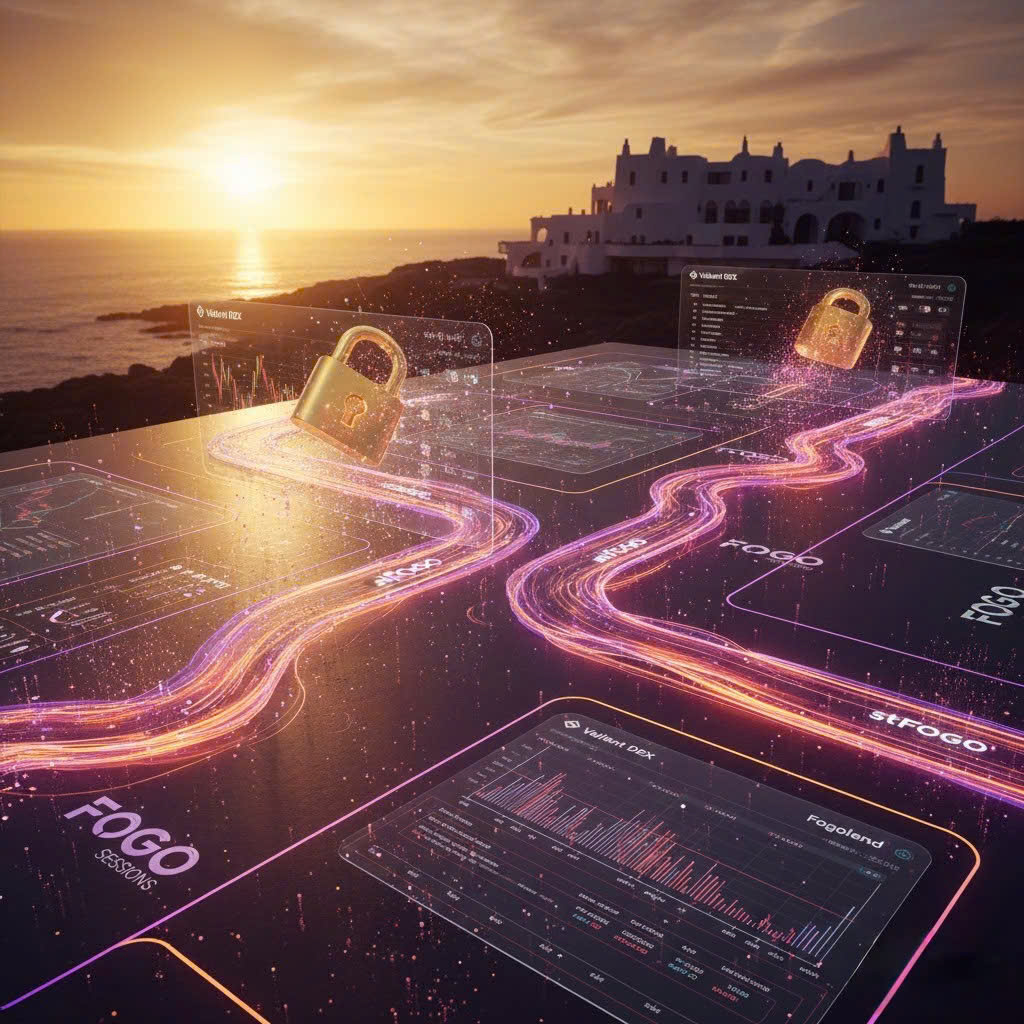
🔒 While everyone chases the next airdrop or hype narrative, the sharpest capital in crypto is doing something quieter but far more powerful on Fogo: locking in before the major unlocks and building position through liquid staking.
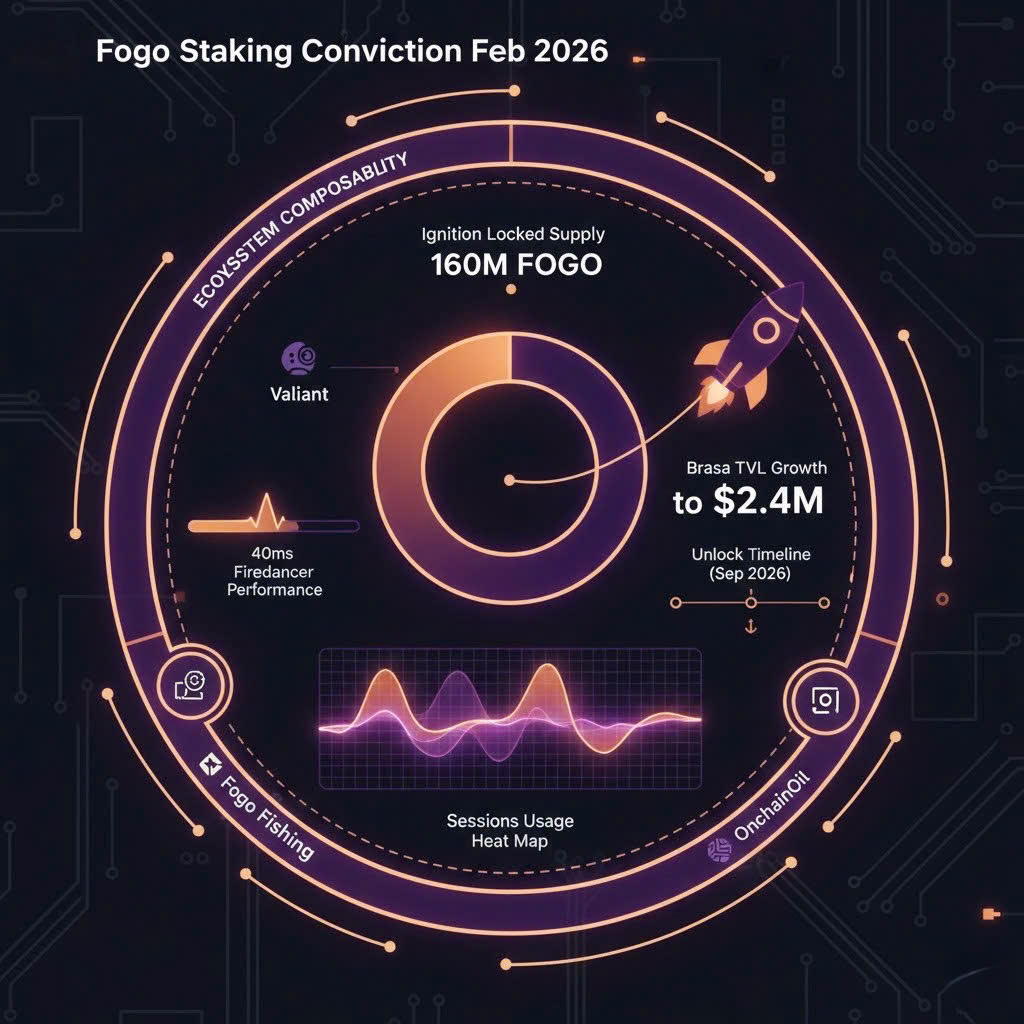
As of mid-February 2026, over 160 million FOGO — roughly 1.6% of genesis supply — has already been committed through Ignition's staking campaign. At the same time, Brasa's liquid staking protocol has seen its TVL rocket to over $2.4 million, becoming one of the fastest growing components on the chain.
I’ve been rotating a portion of my own allocation through Brasa. Deposit FOGO → receive stFOGO → deploy it across Valiant for perps, Fogolend for lending, and even experiment with OnchainOil strategies. Because of Fogo’s gasless Sessions, all of this happens with one initial approval. The composable real-time primitives shine here: my stFOGO keeps earning staking rewards while actively working in DeFi, all executing on native Firedancer’s consistent 40ms block times and SVM-optimized deterministic latency.
This is not your typical L1 staking game. This is a purpose-built capital efficiency machine.
Most high-performance chains force you to choose between security (staking) and utility (DeFi usage). Fogo removes that trade-off through deep integration of liquid staking with its core architecture. Brasa’s stFOGO isn’t just a receipt — it’s a fully composable asset that benefits from the chain’s low-latency design, allowing strategies that would be painful or impossible on chains with unpredictable fees or slower finality.
The timing is particularly interesting. With major token unlocks not starting until September 2026, the team has clear runway to focus on product and adoption. The current incentive programs (Binance’s $1M prize pool and Brasa’s 6-month diamond-hand campaign) are designed to reward exactly this kind of long-term alignment.
What’s happening is a behavioral transition. Gasless Sessions remove the friction that has kept sophisticated DeFi out of reach for many in emerging markets. When you combine that with sub-50ms execution and liquid staking that doesn’t sacrifice yield, you suddenly have infrastructure capable of supporting real institutional and retail trading flows in regions where every basis point and every millisecond counts.
The Uruguay Sunset event next week in Punta del Este isn’t just a networking party. It’s Fogo signaling that Latin America — a region with massive crypto adoption but historically underserved by performant infrastructure — is a core focus. Traders in Argentina, Brazil, and Mexico who have been burned by high fees and lag on other chains will find Fogo’s experience refreshingly native.
Philosophically, Fogo is proving that the next wave of blockchain adoption won’t come from faster marketing, but from removing the invisible taxes: gas, latency, and mental overhead. By making onchain actions feel as fluid as centralized apps while retaining full non-custodial composability, they’re building the rails for real-time finance in 2026 and beyond.
The staking numbers tell the real story. When users are willing to lock significant supply this early, especially with attractive liquid options available through Brasa, it shows conviction in the underlying technology: native Firedancer for speed, SVM for familiarity and optimization, Sessions for usability, and a roadmap that prioritizes sustainable growth over short-term pumps.
This quiet accumulation phase before the big unlocks and before the full ecosystem explosion could be one of the most important signals for Fogo’s trajectory.
How much of your portfolio are you comfortable putting into gasless, low-latency plays like Fogo right now? Do you see liquid staking + Sessions as the new standard for L1 participation in 2026? Which emerging market region do you think will adopt Fogo the fastest after Uruguay Sunset?