
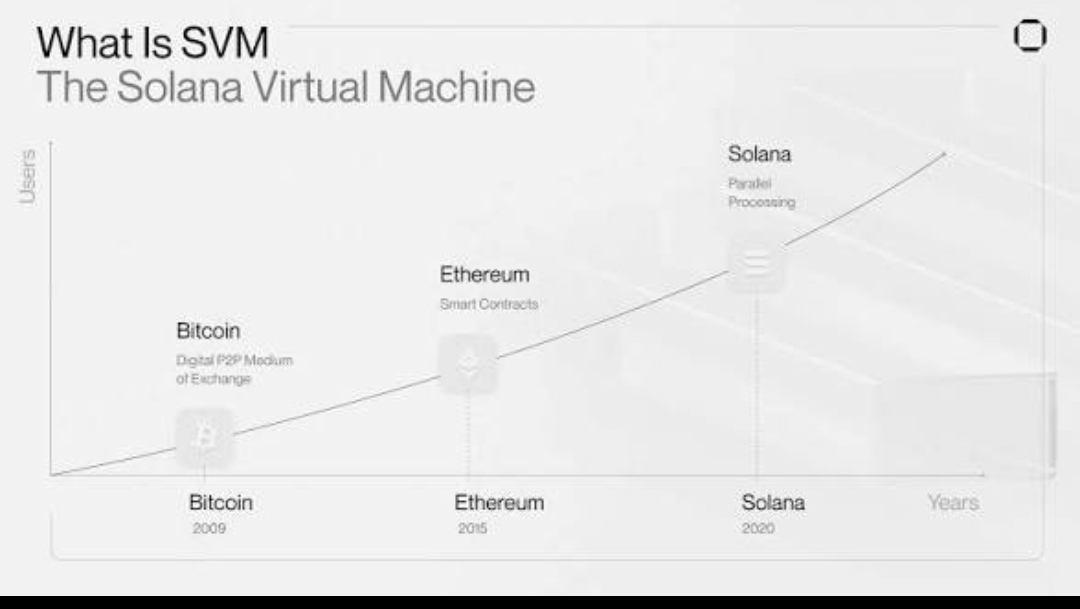
Over the past few years of actively trading, providing liquidity, and testing early-stage infrastructure, I’ve learned that most Layer 1 blockchains fail for predictable reasons. They either optimize too heavily for throughput and neglect market structure, or they focus on decentralization narratives without solving execution reality. When I started digging into Fogo, what stood out was not just speed claims or marketing language, but the deliberate way it approaches performance, liquidity behavior, and developer ergonomics through its use of the Solana Virtual Machine.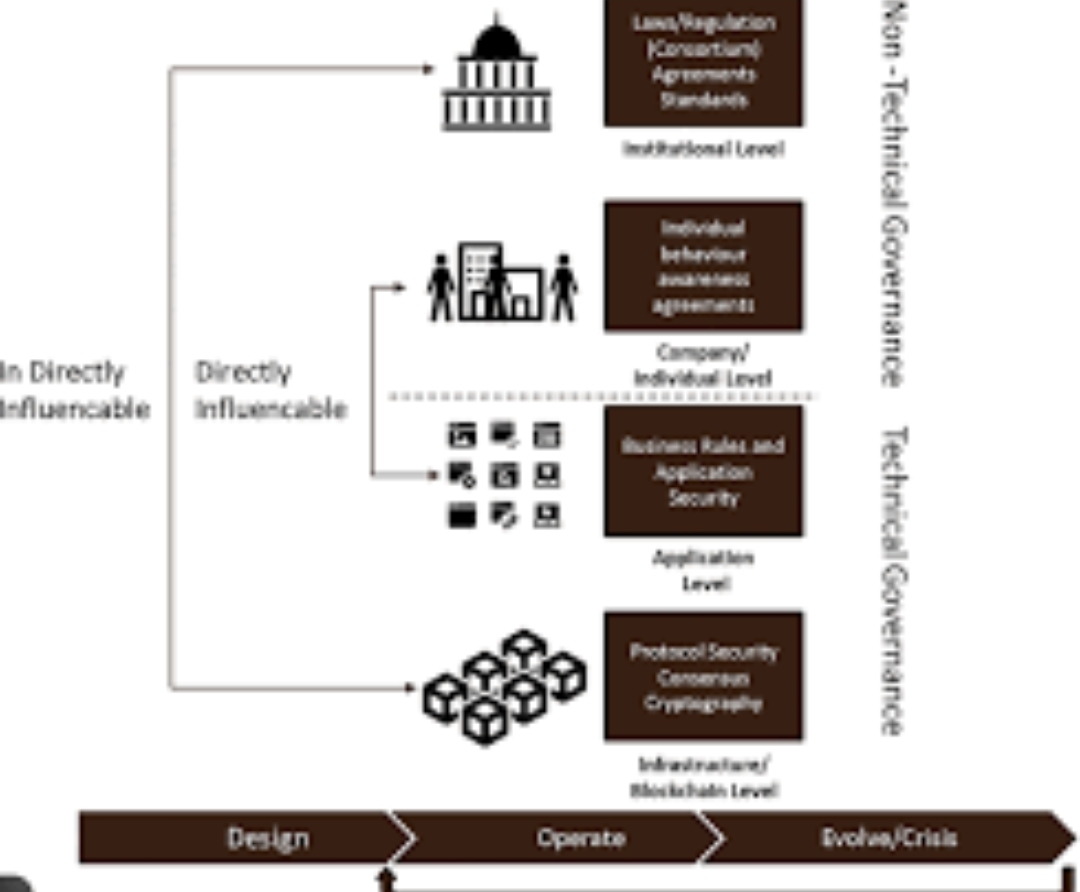
Fogo positions itself as a high-performance Layer 1 that leverages the Solana VM to deliver deterministic execution, parallelism, and low-latency finality. On paper, that sounds familiar. In practice, the implications are much deeper, especially for traders, liquidity providers, infra-aware developers, and serious market participants who actually feel network design decisions in PnL, slippage, and system reliability.
From a trader’s perspective, execution quality is everything. I’ve traded through congested EVM chains during volatility spikes and watched perfectly correct strategies lose money due to delayed inclusion, priority gas auctions, and unpredictable reordering. Systems built around sequential execution simply cannot handle modern market behavior without hidden costs. Fogo’s choice to build around the Solana VM model is an explicit rejection of that bottleneck. Parallel transaction processing isn’t just a performance trick; it directly impacts how markets behave under stress.
In my own testing and simulation research, parallel execution environments consistently reduce tail latency during high-volume periods. This matters because most losses don’t occur during normal conditions, they occur during spikes. A network that maintains execution consistency during volatility becomes more than infrastructure; it becomes part of a trader’s risk management toolkit. Fogo’s architecture aims to preserve predictable execution even when demand surges, which is something I consider table stakes for any serious trading venue.
Liquidity providers face a different but related problem. Impermanent loss, adverse selection, and fee unpredictability are amplified by network inefficiencies. When blocks are congested or reordered, LPs are often the ones paying the hidden tax. What’s compelling about Fogo is how its execution environment can support more precise state access and parallel updates, allowing AMMs, order books, and hybrid liquidity designs to operate without fighting the base layer.
Based on my research into SVM-style execution, one underappreciated benefit is reduced cross-application contention. On many chains, unrelated applications still compete for block space in ways that distort fees and execution timing. With Fogo’s approach, well-designed programs can operate concurrently without stepping on each other’s state. For LPs, this translates into more stable fee generation and less exposure to chain-level noise that has nothing to do with market demand.
For infra-aware developers, Fogo feels like a network built by people who understand systems rather than slogans. Using the Solana VM means developers can reason about compute, memory access, and transaction dependencies in a way that is explicit rather than abstracted behind gas heuristics. In my experience, this clarity is what separates scalable applications from fragile ones.
One thing I’ve personally seen when reviewing smart contract designs is how often developers unknowingly create global state locks. On sequential VMs, this might not be obvious until the system is live and congested. The SVM model used by Fogo forces developers to think upfront about account access patterns. While this raises the initial learning curve slightly, it dramatically improves long-term system health. Networks that reward correct architecture early tend to age better.
Serious market participants, especially those running automated strategies or cross-venue arbitrage, care deeply about determinism. If the same inputs don’t reliably produce the same outputs, risk models break down. Fogo’s design emphasizes deterministic execution paths, which aligns with the needs of professional participants rather than retail speculation. In my trading research, determinism correlates strongly with tighter spreads and deeper liquidity over time, because participants can price risk more accurately.
What also deserves attention is how Fogo positions itself relative to existing ecosystems. By leveraging the Solana VM, it aligns with the broader Solana tooling and developer mindset without being constrained to the Solana network itself. This is an important distinction. It means developers familiar with SVM concepts can migrate or deploy with less friction, while Fogo retains flexibility at the protocol level to optimize for its own goals.
For general crypto readers and newer developers, the relevance of Fogo lies in what it signals about the next phase of Layer 1 evolution. The industry is quietly moving away from generalized, one-size-fits-all execution models toward specialized, performance-aware systems. Fogo is part of that shift. It doesn’t promise infinite TPS in isolation; it focuses on usable performance under real conditions.
From an investor’s standpoint, this matters because sustainable value accrual comes from networks that people actually build on and trade on, not just ones that benchmark well in controlled environments. In my own portfolio analysis, I’ve found that ecosystems with strong infra primitives tend to attract higher-quality applications, which in turn drive organic demand rather than incentive-driven activity.
Another point worth highlighting is how Fogo’s design can support more advanced market structures over time. High-performance execution opens the door for on-chain order books, sophisticated derivatives, and real-time risk engines that are simply impractical on slower chains. These are the kinds of applications that generate consistent fees and attract institutional interest, which is often missing from retail-focused ecosystems.
For new developers, Fogo represents an opportunity to learn modern blockchain engineering patterns without inheriting legacy constraints. While EVM familiarity is widespread, it also carries years of accumulated technical debt. Learning to build in an SVM-style environment teaches developers to think in terms of concurrency, explicit state management, and performance budgets. These skills translate well beyond crypto.
From a broader market perspective, Fogo also reflects a maturing understanding of what decentralization actually requires. Performance and decentralization are often framed as opposites, but in reality, inefficient systems centralize participation by excluding anyone who can’t afford the costs or latency. By lowering execution friction, Fogo potentially broadens the set of viable participants, from small LPs to independent developers.
In my own experience, the chains that survive multiple market cycles are the ones that quietly improve fundamentals while others chase narratives. Fogo’s focus on execution quality, deterministic behavior, and developer clarity places it firmly in that category. It may not appeal to everyone immediately, but it aligns strongly with the needs of participants who stay active through both bull and bear markets.
What ultimately matters is whether a network reduces friction for real economic activity. Based on my research and practical exposure to high-performance systems, Fogo’s use of the Solana VM is not a cosmetic choice; it is a foundational decision that shapes everything built on top of it. Traders get better execution, liquidity providers get more predictable environments, developers get clearer abstractions, and investors get a system designed for longevity rather than hype.
The key lesson here is simple but often ignored: infrastructure design determines market behavior. Fogo demonstrates that by prioritizing execution architecture and performance realism, a Layer 1 can create conditions where serious participants actually want to operate. If crypto is going to support global-scale markets, networks like Fogo are pointing in the right direction.