
Web3 didn’t evolve in a straight line.
It moved in phases — each louder than the last.
But maturity doesn’t follow hype. It follows structure.
The real question isn’t who’s fastest.
It’s who’s built to last.
Phase 1: Experimentation
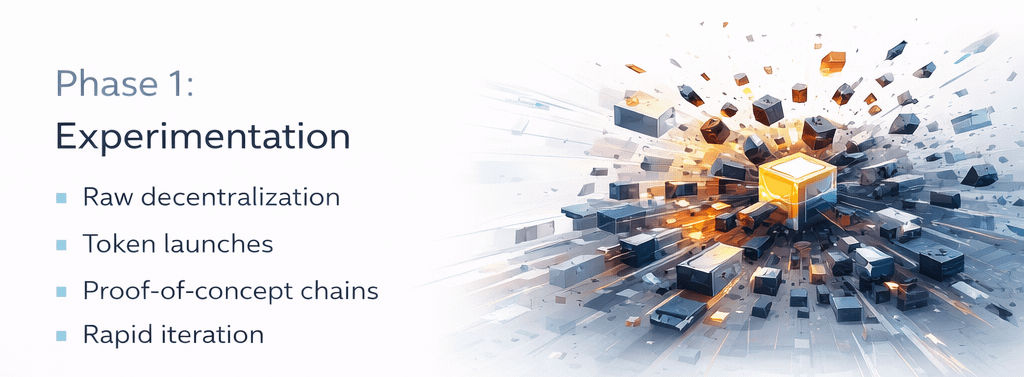
The early era was defined by:
• Raw decentralization
• Token launches
• Proof-of-concept chains
• Rapid iteration
Innovation was explosive — but infrastructure was fragile.
Speed mattered more than discipline.
Phase 2: Scaling Activity
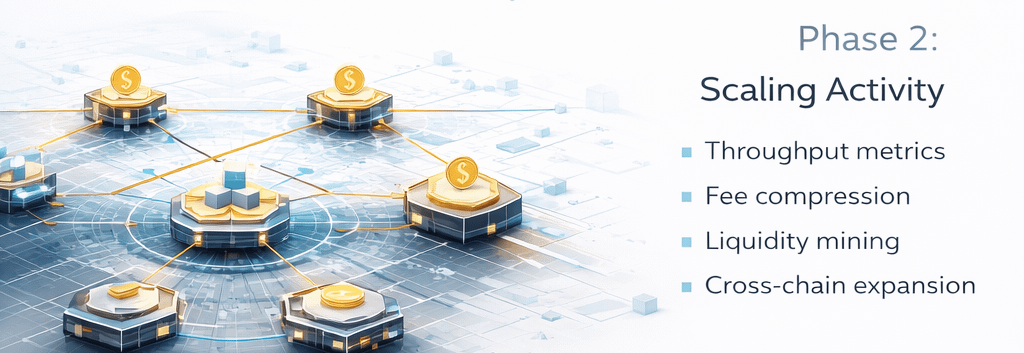
The next wave focused on:
• Throughput metrics
• Fee compression
• Liquidity mining
• Cross-chain expansion
Activity grew.
But fragmentation followed.
Validator strain, governance drift, and coordination gaps began to surface.
The ecosystem scaled transactions.
It didn’t always scale alignment.
Phase 3: Structural Intelligence
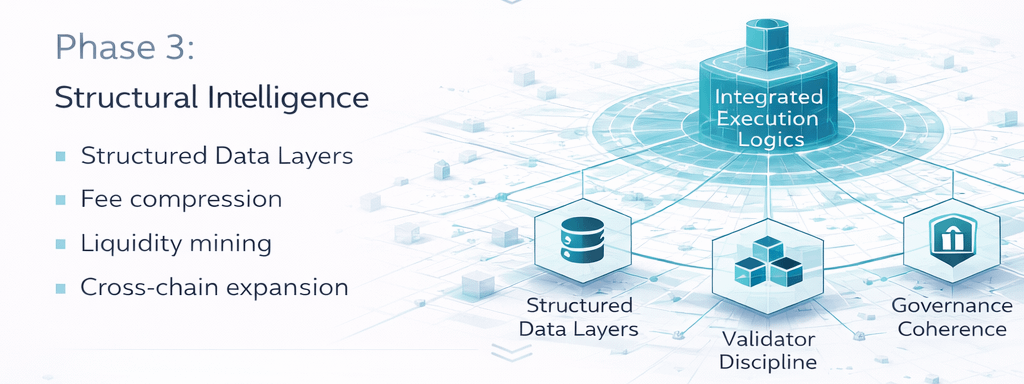
This is where Web3 begins to mature.
Mature systems require:
• Structured data layers
• Integrated execution logic
• Incentive-aligned validator sets
• Governance coherence
This isn’t about louder ecosystems.
It’s about stronger ones.
Where Vanar Fits
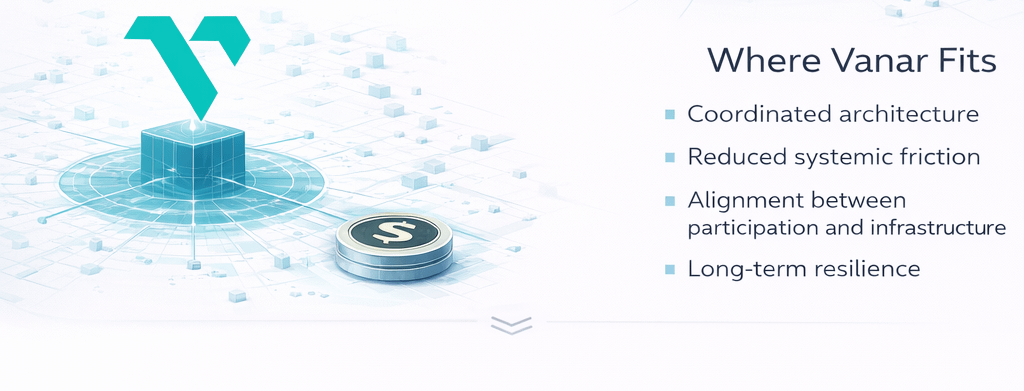
Vanar appears to be positioning itself in this third phase.
Instead of competing purely on raw throughput, vanar emphasizes:
• Coordinated architecture
• Reduced systemic friction
• Alignment between participation and infrastructure
• Long-term resilience
With $VANRY reinforcing governance and sustained engagement, the network isn’t just expanding.
It’s compounding structurally.
The Next Era
The next era of Web3 won’t be defined by spikes in volume.
It will be defined by:
• Stability under pressure
• Intelligent coordination
• Ecosystem durability
If Web3 is entering its structural maturity phase, Vanar is building for that horizon — not the noise cycle.
The loudest chains aren’t always the most durable.
The mature ones are.