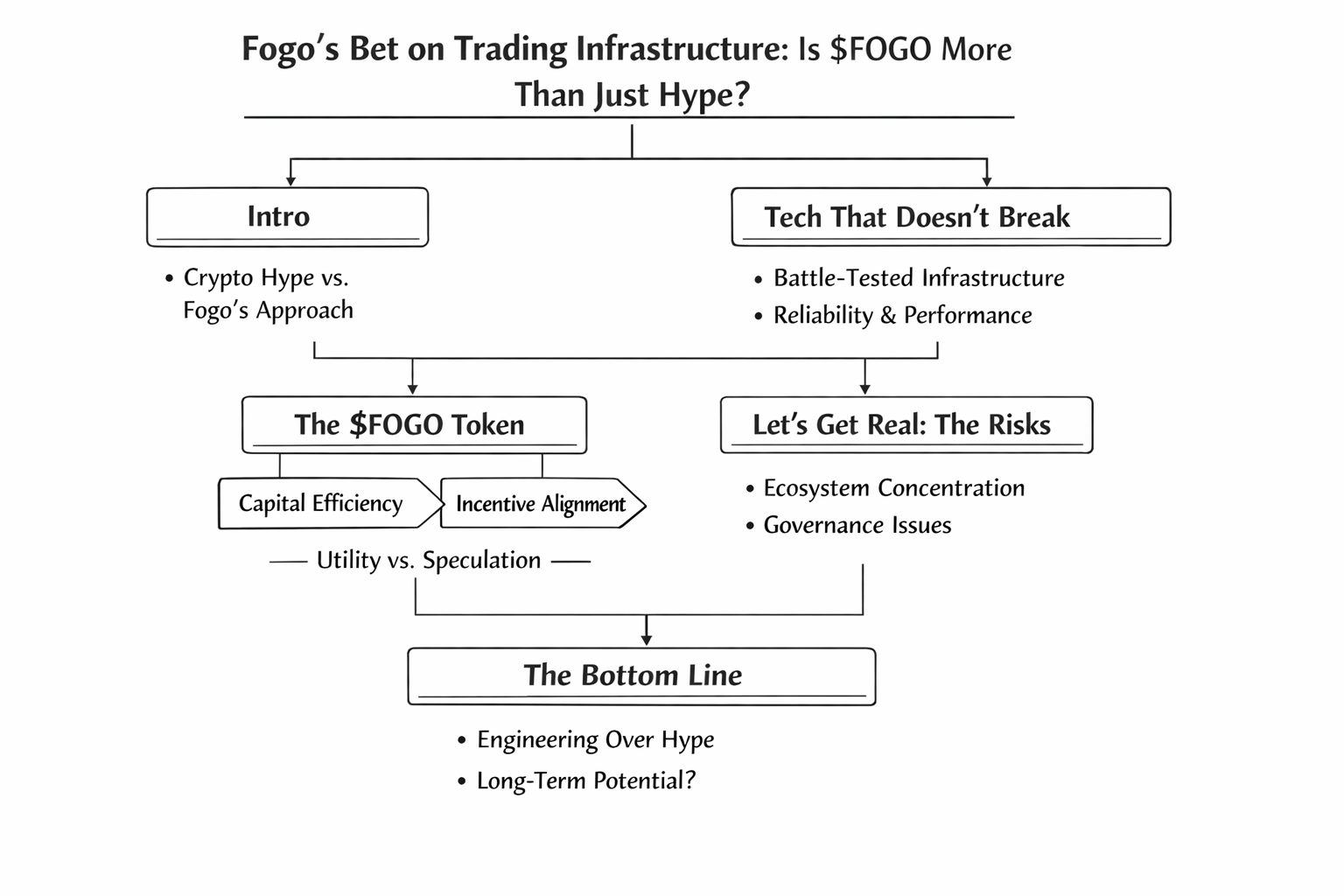
The crypto world is notorious for selling dreams. Every week, a new project pops up promising to "revolutionize" DeFi, usually backed by nothing but a fancy website and a lot of buzzwords. Fogo, however, seems to be taking a quieter, more technical route. By focusing on boring—but essential—things like infrastructure and stress-testing, they’re trying to solve the one thing that actually kills trading platforms: crashing when things get volatile.
But the real question is, can the $FOGO token actually sustain a long-term ecosystem, or is it just another asset waiting for a pump?
Tech That Doesn't Break When You Need It
Most new protocols jump on the latest "modular" or "ultra-fast" trends just to look cool to VCs. Fogo did something different. They stuck with mature, battle-tested tech stacks. Why? Because when the market goes into a frenzy and everyone is trying to exit at once, you don't want "experimental" tech. You want something that works under pressure.
Low latency and parallel processing are great on paper, but for a trader, it boils down to one thing: Reliability. If the platform chokes during a massive spike in volume, all that "innovation" means nothing. Fogo’s focus on high-throughput execution suggests they’re building for the professional trader, not just the casual retail shiller.
The $FOGO Token: Utility vs. Speculation
In a sea of useless governance tokens, Fogo is trying to make FOGO the actual heartbeat of their platform. It’s not just there to be traded; it’s there to keep the gears turning.
Capital Velocity: One of the biggest headaches in DeFi is over-collateralization—basically having to lock up way too much money to do anything. Fogo is pushing for better capital efficiency, allowing users to move more value with less friction.
Incentive Alignment: They aren't just handing out tokens to anyone who clicks a button. The model seems designed to reward people who actually contribute to the platform’s liquidity and long-term stability.
Let’s Get Real: The Risks
No project is a "sure thing," and Fogo has its own hurdles. The biggest worry? Ecosystem Concentration. If too many high-performance projects lean on the same underlying infrastructure, you create a massive single point of failure. If the base layer hiccups, does Fogo go down with it?
Then there’s the issue of Governance. It’s easy to be "decentralized" when you’re small. But as FOGO grows and big players (whales) move in, will the community actually have a say, or will the project become a playground for a few large holders?
The Bottom Line
Fogo is making a massive bet that engineering matters more than hype. It’s a refreshing change in an industry that usually does the opposite. If they can manage to scale without losing their decentralized edge, FOGO could actually become a staple in the next generation of DeFi.
Time will tell if they can stay the course, but for now, they’ve at least got the foundations right.