
There is a tiny moment that decides whether Web3 becomes normal for billions of people. It is not the moment a token pumps. It is not the moment a developer ships a demo. It is the quiet second after a real person presses confirm and waits to find out if they made a mistake. That wait has a feeling. It feels like risk. It feels like exposure. It feels like you are alone with irreversible consequences.
Vanar is built around that human problem. It positions itself as an AI native Layer 1 with an integrated data and reasoning stack. The core idea is simple to say and difficult to execute. If blockchains are going to host consumer life and enterprise workflows then the chain must do more than settle transactions. It must store usable information in a form that software can understand. It must support logic that can act on that information. It must help applications reduce the parts that usually create fear. Wallet friction. Confusing prompts. Blind signing. Offchain data that disappears. Hidden rules that only experts can read.
To understand why Vanar exists you have to start with what the market learned the hard way. For years many projects tried to win adoption by being faster than the last chain. They measured victory in block time and throughput. That mattered. But consumer adoption still stalled. The real barrier was not only performance. It was comprehension. A blockchain can be fast and still feel unsafe. It can be cheap and still feel hostile. It can be decentralized and still be unusable for someone who just wants to play a game or redeem a loyalty perk without reading a manual.
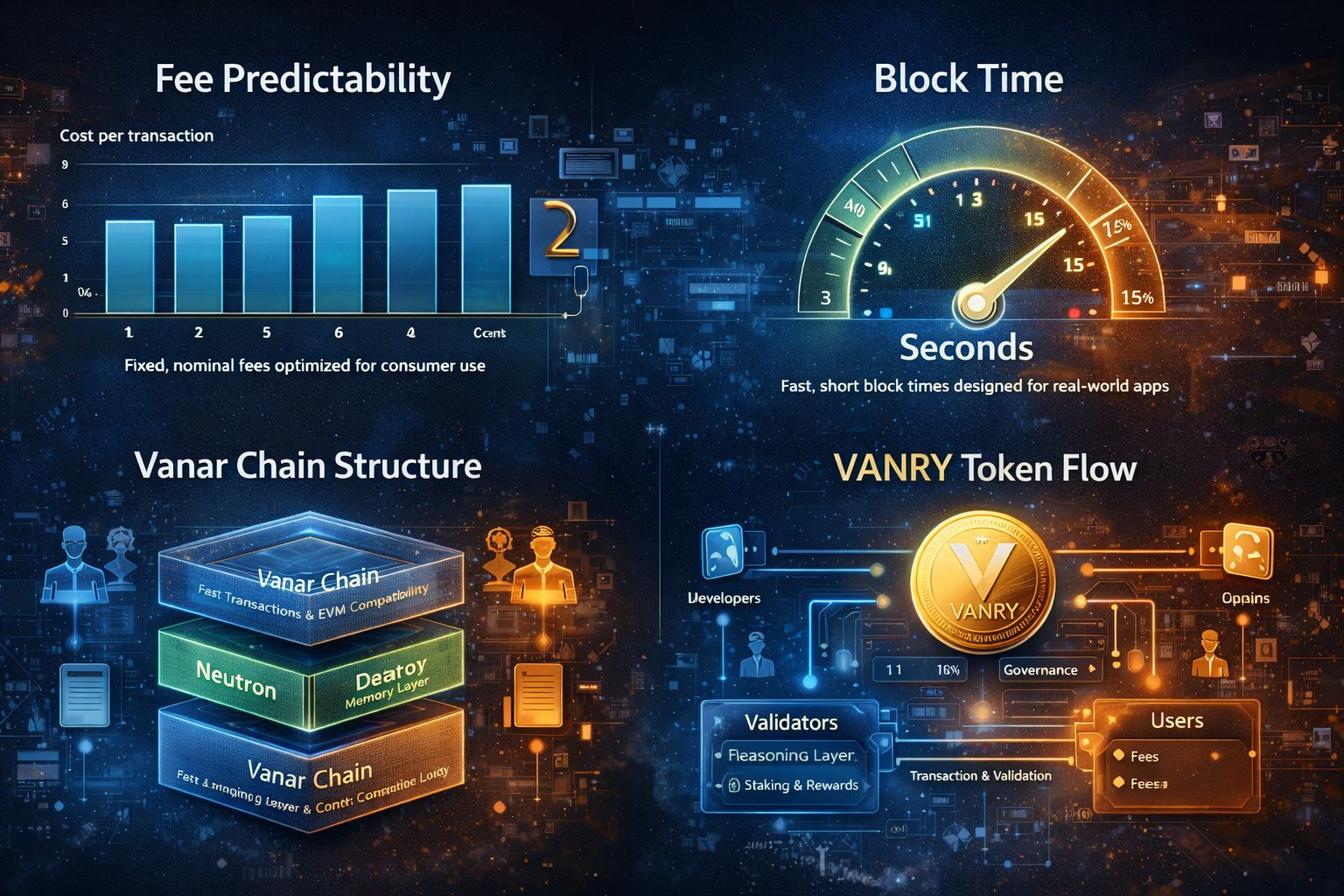
Vanar did not appear from a purely academic infrastructure origin. Its story is tied to Virtua and the earlier TVK token. In late 2023 major exchanges completed the Virtua TVK token swap and rebranding to Vanar VANRY at a 1 to 1 ratio. That shift is not just a cosmetic event. It signals an ecosystem identity change from a consumer focused brand into a broader network narrative that includes a chain and a multi product stack. When an ecosystem changes its name it is usually trying to change its destiny.
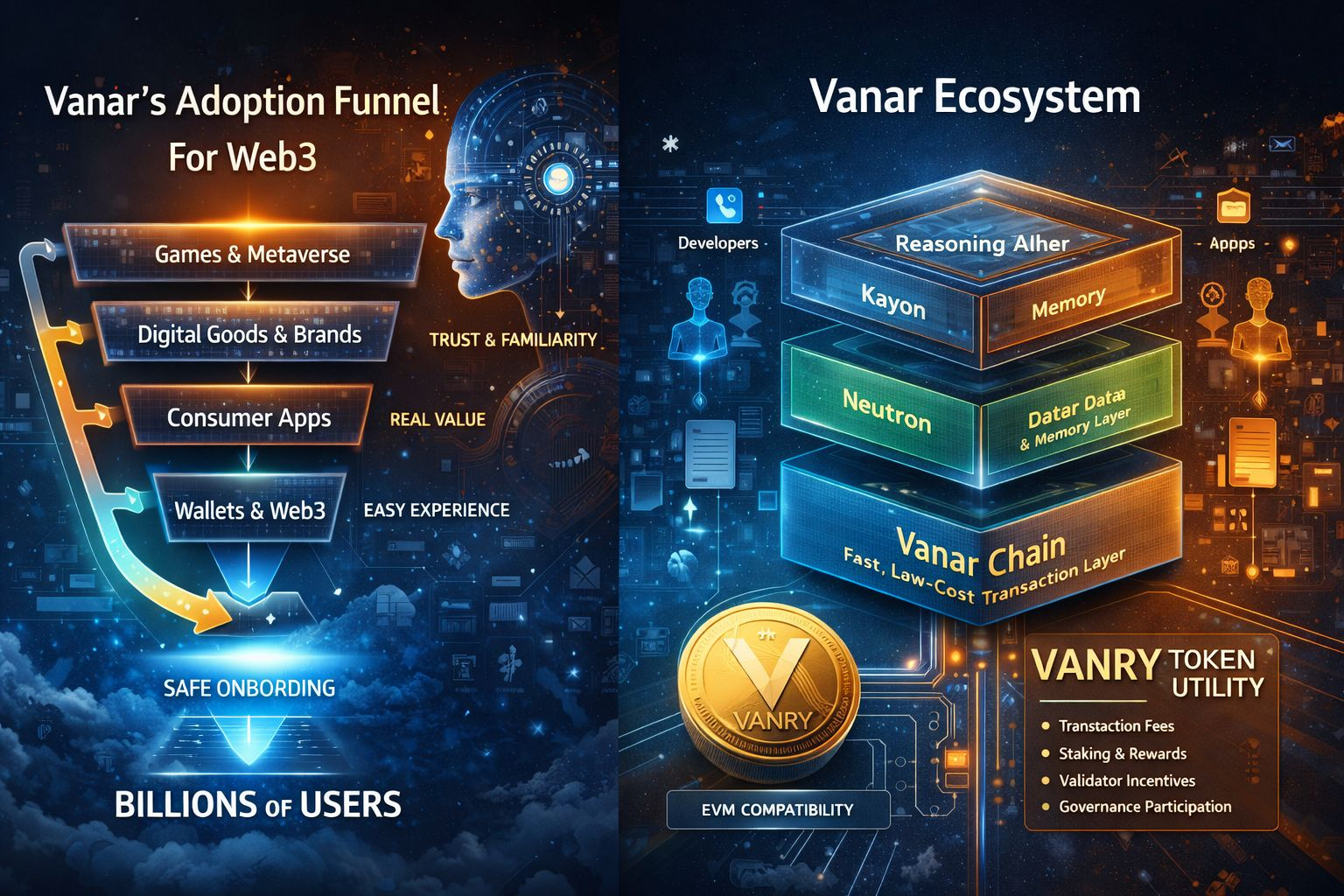
The best way to read Vanar is as a bet on where the next wave of users actually comes from. Many people in crypto assume adoption is a finance story first. Vanar leans into a different onramp. Games. Entertainment. Digital goods. Brand experiences. In those worlds users already understand value that is not purely monetary. A rare skin. A collectible. A badge. Access. Status. Community. Those are emotional assets. They are understood instantly. If you can attach real ownership and portability to those assets without making the user feel like they are stepping onto a cliff then Web3 becomes a feature inside culture rather than a separate lifestyle.
That is why Vanar keeps orbiting gaming as a serious strategy rather than a marketing skin. In its own ecosystem writing Vanar describes a games direction that includes VGN and highlights an SSO approach intended to let players enter from existing Web2 games and experience Web3 without realizing it at the start. This matters because onboarding is not a technical step. It is a psychological step. People do not abandon onboarding because they are lazy. They abandon it because uncertainty spikes. SSO is a trust bridge. If the first interaction feels familiar then the user keeps moving.
Now look at the architectural claim behind the narrative. Vanar presents its stack as more than a transaction layer. It introduces Neutron as a data layer that compresses and restructures information into what it calls Seeds. The promise is that data becomes smaller and more programmable. It is meant to be verifiable and usable by agents and applications. That detail is critical because much of the real world is not smart contract state. It is documents and media and records. Receipts. Deeds. Certificates. Agreements. Game assets. Brand content. In most systems that data lives offchain and the chain only stores a hash pointer. The pointer proves something existed. It does not help the app understand what it means. Vanar is trying to make meaning closer to the chain.
Then it adds Kayon as a reasoning layer. Vanar describes Kayon as an onchain reasoning engine and also frames it as an enterprise reasoning layer with natural language intelligence and compliance automation. Whether you call it reasoning or contextual logic the intent is the same. Kayon is designed to query and reason over compressed verifiable data and trigger actions based on logic that can be expressed in a more human way. This is the emotional hinge of the entire project. It is chasing a world where the system can check rules before money moves. Where compliance can be validated before a payment flow. Where an app can ask questions about a record without needing a bespoke offchain pipeline.
If this design works it changes the shape of trust. The hidden fear in Web3 is not only theft. It is ambiguity. Users often sign things they cannot interpret. Brands worry about user harm and reputational damage. Enterprises worry about auditability and policy. A reasoning layer tied to verifiable data is an attempt to move safety checks earlier in the user journey. Not after the mistake. Before the mistake. That is a meaningful shift. It is also difficult. It requires reliable data representation. It requires predictable semantics. It requires constraints so that logic is not a black box. Vanar is stepping into that challenge by making data compression and contextual reasoning first class parts of the stack rather than optional add ons.
The token VANRY sits underneath all of this as the network fuel and incentive mechanism. Vanar documentation describes a maximum supply cap of 2.4 billion tokens and explains that beyond the genesis supply additional tokens are generated as block rewards. The same documentation frames block rewards as validator incentives to secure the network. This is not unique in crypto but it matters for long term credibility. A chain with consumer ambitions needs predictable economics because consumer apps cannot build on surprise.
The more interesting question is what VANRY becomes inside the Vanar worldview. In a finance first chain a token often becomes the main product. In a consumer experience chain a token is supposed to become background infrastructure. A billing meter. A permission key. A security budget. A way to align validators and builders. A tool that supports usage rather than replacing it. If Vanar succeeds then VANRY should feel less like a trophy and more like oxygen. Present. Necessary. Not the point.
A project like Vanar lives or dies on execution across multiple fronts at the same time. It needs developer adoption because consumer apps require iteration. It needs seamless onboarding because that is where users drop off. It needs brand trust because mainstream partnerships depend on reputational safety. It needs tooling that hides complexity without hiding ownership. It needs proof that the AI and reasoning story produces better outcomes rather than new failure modes.
The future implications are bigger than one chain. Vanar is part of a broader movement in Web3 that is trying to fuse blockchain with intelligence and memory. If data can be stored in a way that is both verifiable and machine usable then agents can operate with less fragility. If reasoning layers can enforce rules before actions then consumer products can feel safer. If brands can ship Web3 experiences without dragging users through crypto ceremony then adoption can happen quietly at scale. The end state is not a world where everyone becomes a crypto expert. The end state is a world where ownership and programmability become normal parts of apps people already use.
But there is also a sharp edge. The moment you bring AI language and reasoning into the core narrative you raise the standard of accountability. Users will ask how the system decides. Regulators will ask what rules are enforced. Enterprises will ask what is auditable. Developers will ask what is deterministic. In other words intelligence inside the stack is not only an opportunity. It is a responsibility. Vanar is attempting to build toward that responsibility with a design that emphasizes verifiable data and onchain queryable logic rather than pure offchain inference.
So what is the real story of Vanar in one emotional line. It is not a story about speed. It is a story about relief.
Vanar is aiming for the day when a normal user clicks confirm and feels nothing dramatic. No dread. No second guessing. No fear that the system will punish them for being human. Just a clean completion and a sense that the digital world is finally trustworthy enough to live in.
