

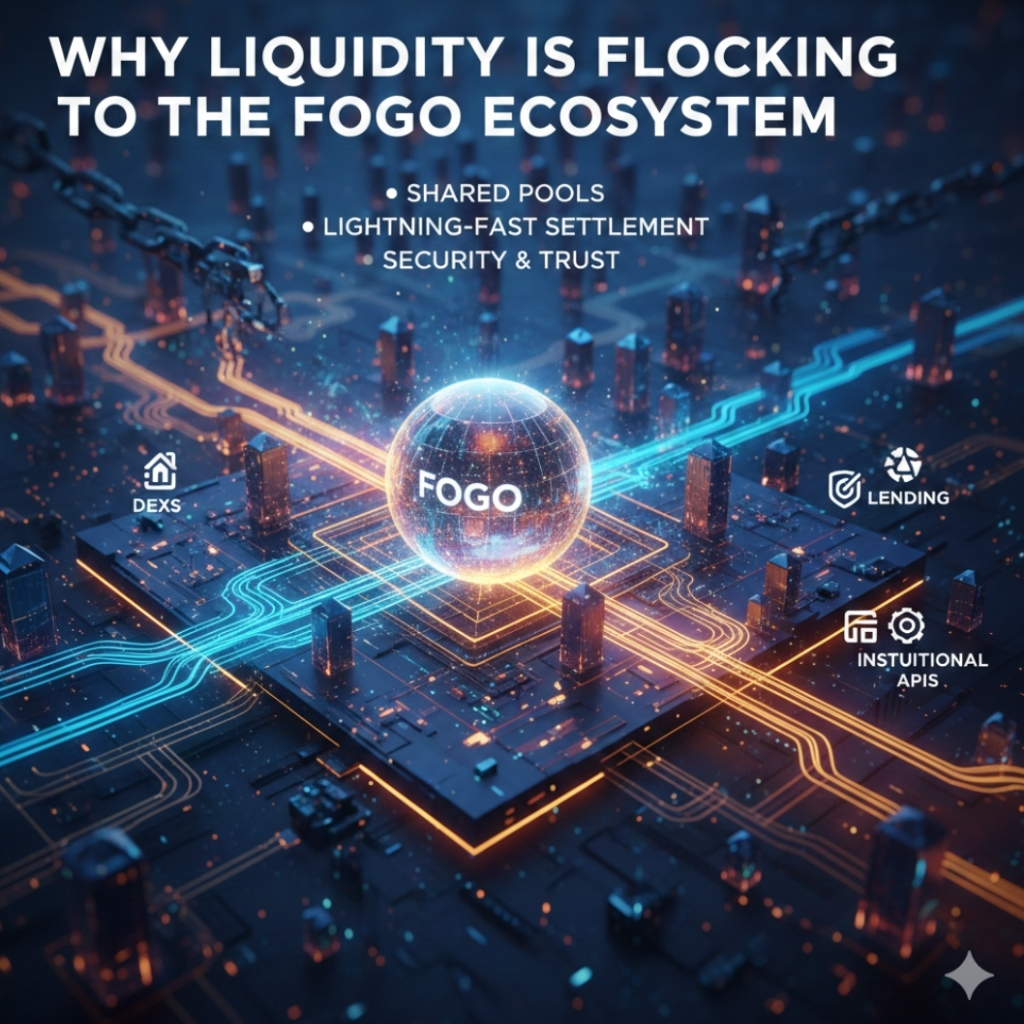
 Liquidity is more than just an ingredient in crypto—it’s the engine that keeps the entire ecosystem running. Without it, even the most innovative protocols get lost in the noise, unable to deliver on their promises. The current state of crypto is a web of isolated islands: capital is scattered across dozens of blockchains, bridges are clunky and insecure, and DeFi applications often operate in silos, limiting users’ options and reducing overall efficiency.
As the digital asset landscape matures, both retail participants and institutional players are demanding a new standard: a place where assets move seamlessly, where liquidity isn’t locked or fragmented, and where trading is smooth and reliable. This is the gap Fogo aims to fill—not by being just another chain, but by fundamentally reimagining how liquidity should flow in Web3.
What Puts Fogo Ahead
It’s tempting to think the next big chain just needs to be faster or cheaper, but those are yesterday’s battles. Fogo’s real innovation is liquidity efficiency—a systemic approach to reducing capital friction. Rather than letting funds sit idle on disparate chains or get bogged down in risky cross-chain bridges, Fogo is engineered to keep assets moving, productive, and accessible. If Fogo truly delivers on this promise, it can become more than just another DeFi playground. It could set the standard for capital efficiency in crypto, attracting not only everyday DeFi users but also institutional investors seeking scale and reliability.
Liquidity Fragmentation
Right now, liquidity fragmentation is arguably the biggest drag on DeFi’s potential. Billions of dollars in value are stuck on underused chains, or caught in slow, risky bridges that expose users to hacks and delays. For traders, this means thin order books, unpredictable slippage, and a constant hunt for better markets. Fragmentation doesn’t just inconvenience users—it actively stifles innovation. Developers are forced to build workarounds, and capital providers are wary of committing assets to platforms where liquidity may not be deep or resilient.
Existing solutions—like cross-chain messaging protocols or centralized liquidity hubs—help to some extent, but they often introduce new risks or costs. These are band-aids, not cures. The fundamental problem is that liquidity remains sliced up, isolated, and inefficient.
How Fogo Is Solving This
Fogo’s architecture takes a multi-pronged approach to unify and maximize liquidity:
Shared Liquidity Pools: Instead of each protocol creating its own isolated liquidity pool, Fogo enables protocols to tap into a unified pool. This design dramatically deepens order books, leading to tighter spreads and better pricing for all participants. When liquidity is pooled, every trade benefits, and the market as a whole becomes more robust.
Lightning-Fast Settlement: Fogo’s consensus and execution layers are built for speed. Transactions finalize almost instantly, reducing the window for volatility and slippage. This isn’t just a nice-to-have—it’s a magnet for professional traders and market makers, who rely on rapid execution to deploy sophisticated strategies.
Composable DeFi Infrastructure: Fogo’s smart contracts are designed to be modular and interoperable. Developers can build new products and plug into existing liquidity with minimal friction, all without risky, slow bridges. This makes launching innovative DeFi apps faster, safer, and more attractive, further concentrating liquidity and talent on the network.
Maximized Capital Efficiency: Every asset on Fogo is designed to stay active, not locked away in redundant pools or bridges. By supporting native, multi-asset collateral and efficient lending/borrowing mechanisms, Fogo ensures that capital is always put to work. This higher velocity attracts more liquidity, creating a virtuous cycle.
Security: The Non-Negotiable Foundation
No matter how efficient or fast a system is, none of it matters if users don’t trust the underlying security. Fogo recognizes that capital only flows to ecosystems where security is transparent and robust. That’s why Fogo emphasizes:
Transparent Validator Operations: Clear, publicly-auditable validator procedures, including mechanisms for accountability and slashing misbehaving actors.
Rigorous, Ongoing Security Audits: Not just one-off audits, but a culture of continuous security testing and external review. This is especially critical as Fogo’s protocol stack evolves and scales.
Commitment to Decentralization: Fogo’s roadmap includes clear milestones for increasing protocol decentralization and reducing single points of failure. This isn’t just about ideology—it’s about making the network resilient against both technical and governance attacks.
By making security a first-class citizen, Fogo lowers the trust barrier that so often keeps liquidity on the sidelines.
How Fogo Plans to Attract and Grow Liquidity
Liquidity doesn’t just appear because a chain exists—it has to be earned. Fogo’s strategy is multilayered:
Incentivized Testnets and Early-Stage Rewards: By offering meaningful rewards through testnets and liquidity mining programs, Fogo brings in early adopters and liquidity providers, jumpstarting activity and building network effects.
Strategic Partnerships: Fogo is actively pursuing integrations with leading DEXs, lending protocols, and other DeFi primitives. These partnerships create critical “hooks” for liquidity to flow in and stay engaged.
Institutional-Grade Tools: Fogo is building APIs, analytics, and compliance-ready infrastructure to make it easy for institutions to participate. This is essential for attracting large-scale liquidity, which demands both transparency and operational simplicity.
Developer Support and Grants: Targeted grants and technical support lower the barrier for new projects to launch on Fogo, multiplying the network’s utility and drawing in even more liquidity.
Learning from Web3’s Past
The past decade has shown that no network gets it right on day one. The winners are those that listen to their communities, iterate rapidly, and stay vigilant on security. Fogo’s long-term prospects hinge on its willingness to adjust as conditions change—whether that means enhancing its tech stack, pivoting on incentives, or doubling down on decentralization. A culture of adaptability is often the difference between a fleeting trend and a foundational layer of DeFi.
A New Reality for Liquidity
At the end of the day, liquidity doesn’t flock to the loudest marketing or the wildest promises. It follows efficiency, reliability, and the path of least resistance. If Fogo makes it easier for capital to move, trade, and earn across protocols—with less risk and more upside—then liquidity will follow naturally, reinforcing network effects and inviting new waves of builders and users.
Key Signals to Watch in the Coming Months
The next 3–6 months will be critical for Fogo. Here’s what to monitor:
Rising Total Value Locked (TVL): Increasing TVL is a clear sign that users and protocols trust Fogo enough to commit capital.
New DeFi Launches: The pace and quality of new projects deploying on Fogo signal the network’s attractiveness to builders.
Ecosystem Integrations: Partnerships and bridges to other major chains grow Fogo’s reach and utility.
Utilization of Developer Grants: Active grant programs and fast uptake indicate a thriving builder community.
On-Chain Activity: Sustained growth in transaction volume and unique active wallets shows real user engagement, not just hype.
Why It All Matters
Every crypto cycle, the protocols and chains that succeed are the ones that concentrate liquidity. These networks become the foundation for a new wave of innovation, adoption, and growth. If Fogo can deliver on its vision—reducing fragmentation, offering rapid and reliable execution, and securing capital—then it stands a real chance at being one of the winning platforms in the next era of DeFi. This isn’t about speculative hype; it’s about building the infrastructure that will power decentralized finance for years to come.
What’s Next
Start exploring Fogo’s analytics dashboards. Test the network for yourself. Watch where liquidity is moving—not just in the headlines, but in the data.
FAQs
Does liquidity move quickly in crypto markets?
Typically, liquidity is deliberate in its movement. It follows strong incentives, robust security, and clear signs of developer engagement. Shifts can happen, but they’re grounded in fundamentals, not just hype.
What do liquidity providers prioritize?
They want deep markets with low risk, reliable infrastructure, and transparent operations. Efficiency and trust are non-negotiables.
Can emerging chains overtake incumbents?
Absolutely—especially if they offer true step-change improvements in efficiency, user experience, and security. History shows that agility and innovation can easily outpace legacy systems.
Is liquidity synonymous with adoption?
Not quite. Liquidity is a precondition for adoption—it enables trading, building, and experimentation. Once liquidity arrives, usage and adoption often follow.
What’s the biggest threat to new ecosystems?
The greatest risks are security failures or erosion of developer trust. Either can rapidly drain liquidity, stall growth, and damage a network’s reputation.
Fogo’s challenge is clear: deliver unmatched liquidity efficiency and security, and the ecosystem will thrive. The next chapter of DeFi is being written by those who solve fragmentation and unlock the true power of capital in Web3.