
When I first used FOGO, I thought I would hear another talk about "fast blockchains." But I didn't expect it to treat validator performance as a fundamental principle, not just a suggestion.
FOGO is built on the Solana virtual machine, optimizing not only the code path but also the efficiency of the maintenance team. This difference changes everything.
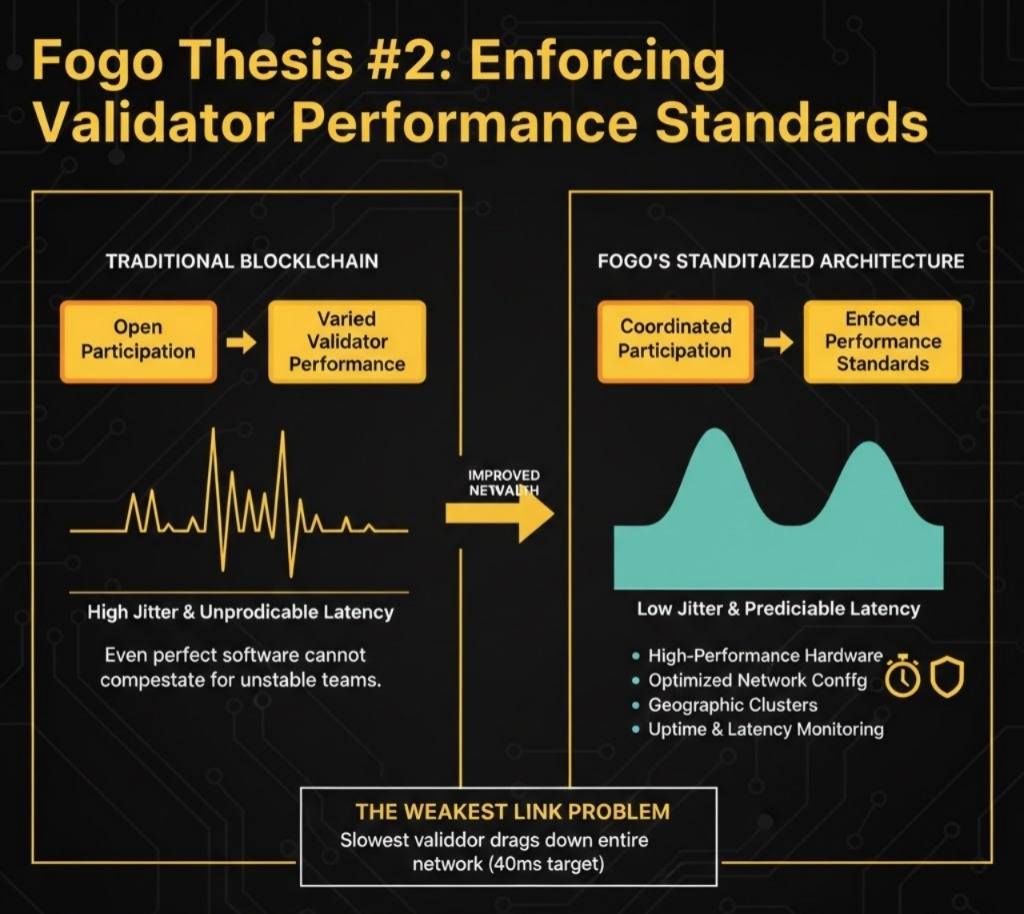
Performance is More Than Just Software
Most blockchains talk about optimizing virtual machines, modifying block parameters, or reducing network overload. But after carefully studying the FOGO model, I realized a worrying problem:
Even perfect software cannot compensate for the instability of maintenance team performance.
In a system with extremely low latency, where the target block creation time is around 40 milliseconds, weaker validators are not an isolated problem; they slow down the entire network. The slowest, most trusted participant determines the maximum consensus speed. This is not unfounded; it's simply a methodological issue.
The Importance of Standards
In studying Fogo's validation methodology, I noticed it establishes stricter operational standards:
High-performance hardware requirements
Optimized network configuration
Controllable geographical clusters
Effective monitoring of latency and uptime
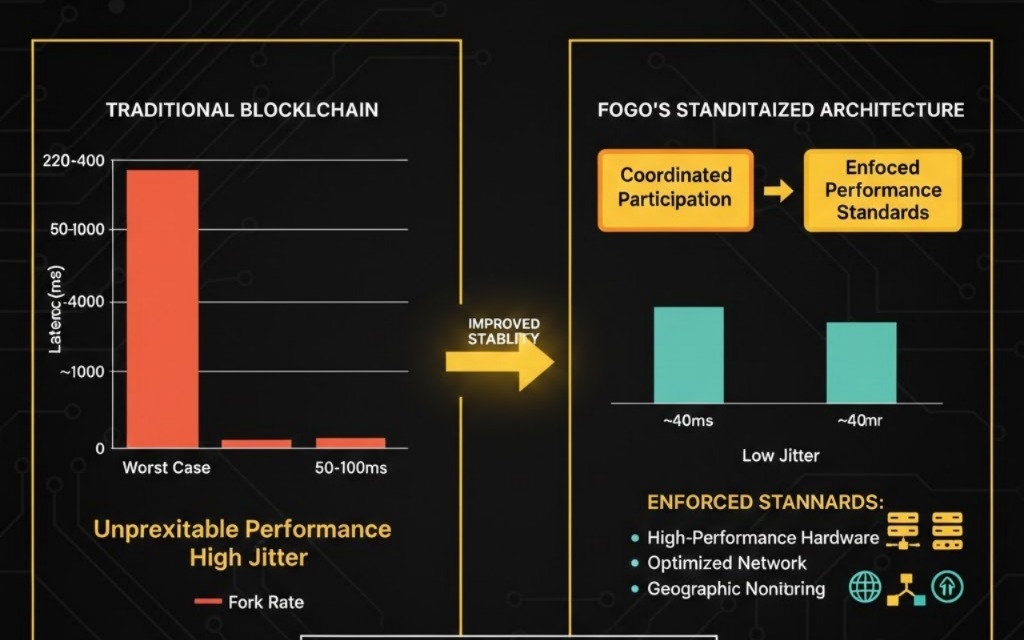
This isn't about exclusivity for its own sake, but about minimizing volatility. In decentralized systems, volatility is often more detrimental than average latency. A chain that runs fast most of the time but crashes occasionally is unreliable for serious financial applications.
Fogo also seems to recognize that if block creation is measured in milliseconds, participation cannot be random.
Trade-offs: Openness vs. Determinism
I understand why some people worry about selective validation pools. The concept of "decentralization" has significant ideological implications in the cryptocurrency space. But after using Fogo and analyzing its premises, I understand the engineering logic behind it.
If the goal is inevitably to achieve a latency-sensitive decentralized finance (DeFi) system, then:
The quality of validators must be predictable.
Hardware and network standards must be enforced.
Inefficient nodes cannot unknowingly undermine consensus.
This shifts decentralization from a node-based model to a performance-based model. This doesn't eliminate risk; instead, it raises concerns about governance and attention. But it highlights trade-offs, not ignoring them.
Side Effects of Inefficient Validators
One point I always keep in mind is:
In high-speed consensus, inefficient validators not only harm themselves but also produce side effects.
Delayed vote deployment
Inconsistent block confirmations
Increased probability of forks
Increased latency
All these effects have a ripple effect. For trading systems, filtering engines, and order matching protocols, these effects will alter the final outcome.
Discipline as Infrastructure
What impressed me most was that Fogo treats validator discipline as an integral part of the product, not a secondary feature.
Performance standards are integrated into the network's characteristics, marking Fogo's shift from "open participation at all costs" to "coordinated participation with specific expectations."
In traditional finance, trading platforms have stringent requirements for the infrastructure of their members. Fogo seems closer to this model than an amateur consensus network.
My Key Insights
After experiencing Fogo firsthand, I no longer evaluate it based on the common debate between decentralization and speed, but rather as a form of infrastructure.
Fogo's second argument is clear: if you want low latency and predictable execution, you must implement validator performance standards.
This implementation presents some challenges because it requires transparency and reliable governance. But without these, the promise of guaranteed execution collapses due to its inherent instability.
Speed attracts attention; standards maintain the sustainability of speed.
