


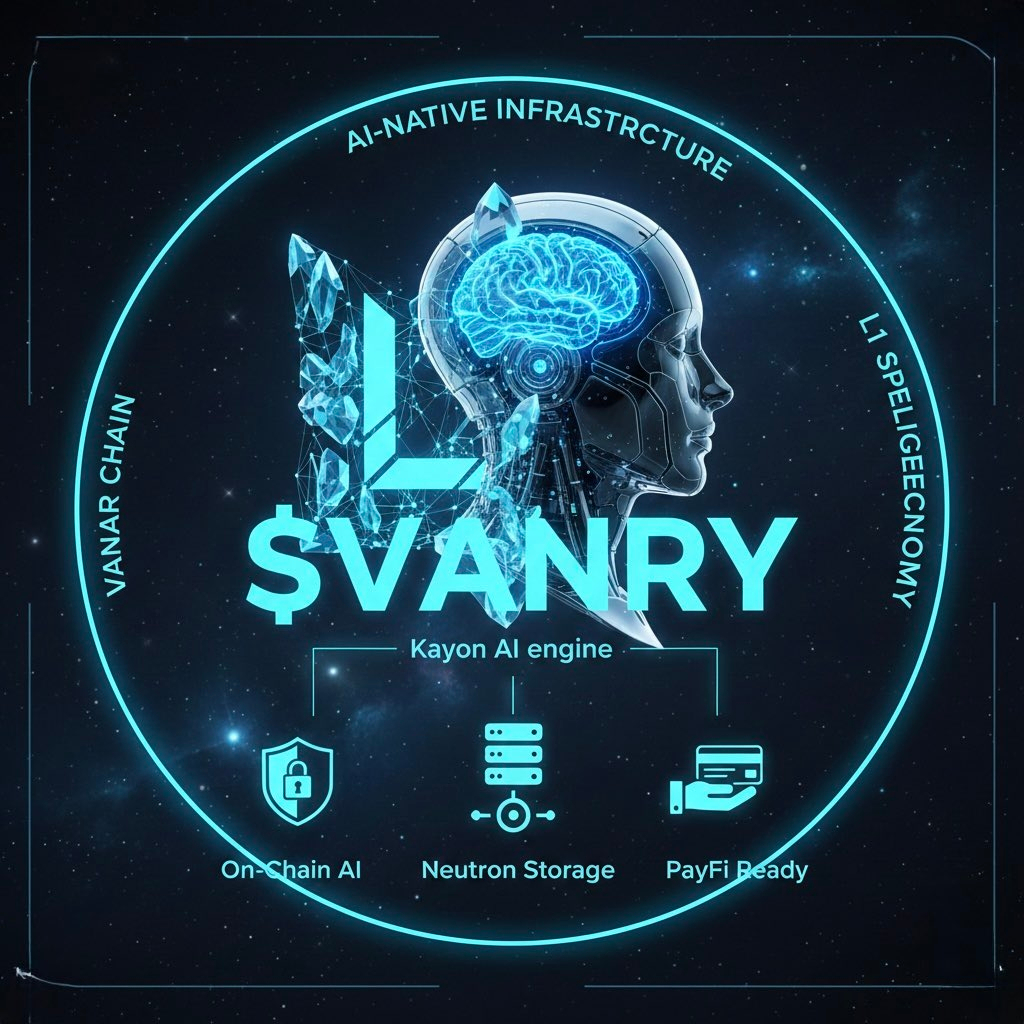
In every emerging blockchain ecosystem, tokenomics, the economic design of a network’s native token plays a foundational role in long-term sustainability, user incentives, and price discovery. For the Vanarchain ecosystem, that native token is $VANRY .
Understanding how this utility token $VANRY is minted, circulated, and burned offers essential insight into how Vanarchain secures demand, controls inflation, and aligns stakeholder incentives. 
What Is $VANRY ?
VANRY is the native utility and governance token of Vanarchain, a high-performance blockchain designed for scalable decentralized applications, DeFi, and AI integrations. It serves different purposes therein, such as gas fees for transactions, staking to secure the network, governance participation and incentives for ecosystem contributions.
Supply Dynamics;
Unlike fixed-supply tokens such as Bitcoin, BNB, many modern smart contract platforms use a hybrid supply model that includes: a maximum mintable supply cap, a scheduled release to ecosystem users and burn mechanics to control inflation.
In Vanarchain’s design: A portion of VANRY is pre-minted for ecosystem growth, incentives, and early stakeholders. Another portion to be minted over time through rewards for validators and stakers and burn mechanism integrated to handle excess supply.
Burning Mechanism:
@Vanarchain uses multiple burn mechanisms, each activating under specific conditions such as; Transaction fee burn, Protocol level trigger burn, Validator penalty burn and lastly community driven burn.
What do you think about this mechanism?