

I do not judge Vanar as just another L1 in a long list I see it as a product decision from day one as if the team accepted a simple truth mainstream users do not love blockchain they only want things to work fast and without cost surprises That mindset shapes Vanar into a chain built for games entertainment and brands where the user experience is not hostage to crypto mood swings
Most L1 conversations begin with numbers TPS gas finality Vanar begins with feel If a user taps a button inside an app and gets three things fast response clean confirmation and predictable cost then the chain fades into the background And that is the real adoption goal not to make the chain the hero but to make it the invisible engine
That is why the fixed USD style fee idea matters It is not just a catchy claim it is a hard stance In Web3 the most frustrating moment is watching a new user ask the same question every time what is gas and why is it higher today Vanar is trying to make that question unnecessary by keeping costs stable in USD like terms and translating that into VANRY at the protocol level So product teams can design pricing with confidence and users do not face a different experience every day
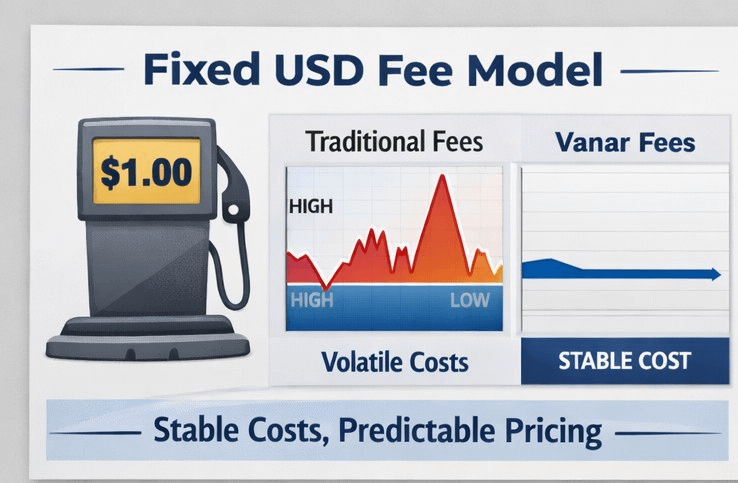
I tested this in the simplest way not with a crypto native friend but with a normal user Wallet setup a small amount of VANRY and one basic on chain action The best part was what did not happen there was no demand for a technical lecture The reaction was basically is that it And that moment matters because real adoption happens when users remember the experience not the chain name or fee math
Of course stability is not free If fees are predictable and low the network must be smart about spam and heavy transactions Vanar responds with a tiered fee logic light actions stay cheap while heavier actions move into higher tiers That is a practical compromise because consumer flows and gaming economies are built on micro actions claim mint small trades in game item moves reward collection If cost jumps or confirmations drag people leave And this is where Vanar feels grounded the chain is being designed to behave politely inside micro economies
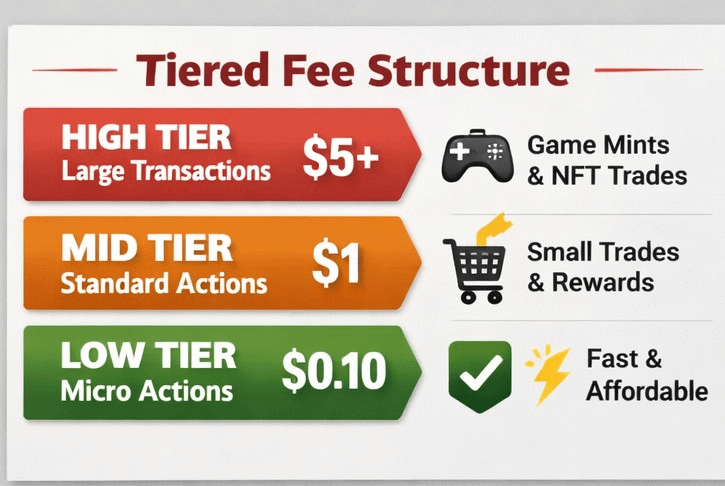
One night I sat and pictured a typical marketplace style flow The usual Web3 loop came to mind approve confirm then a fee spike and the user gets annoyed You can educate them as much as you want but the final question is always why is this so complicated Vanar is built as an antidote to that loop at least in intention When chain behavior is consistent designers spend energy on great UX not on gas management And when that happens demand for VANRY can grow from actual usage not just speculation
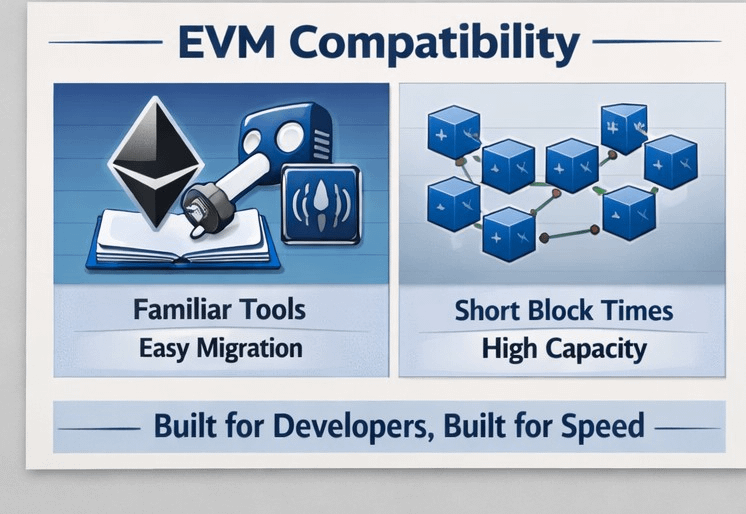
On architecture Vanar makes a boring but smart choice EVM alignment New chains rarely fail because of technology they fail because of distribution If developers must learn a new stack adoption slows EVM compatibility lets teams ship with familiar tools Short blocks and higher gas capacity serve the same goal make the experience interactive so the user does not feel blockchain delay
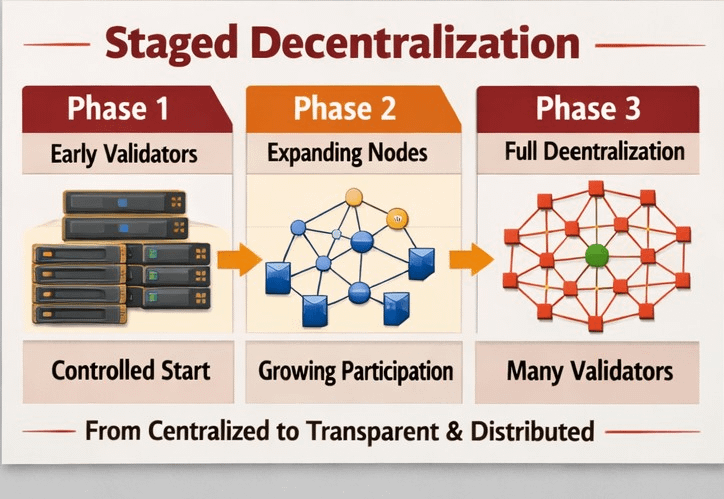
On consensus and decentralization I am not romantic Vanar follows a staged model start controlled then widen This is common when reliability and partner delivery come first But the rule is simple decentralization must become evidence not direction More validators clear criteria accountability and transparent governance must be visible over time Otherwise even a great UX hits a trust ceiling
This is where VANRY becomes more than gas It is the fuel of the predictability machine and the coordination layer Transactions run on it staking and delegation align incentives through it and ecosystem activity gives it utility demand In a fixed USD fee model the relationship between token economics and user promises becomes even more sensitive because the system must reflect market price responsibly Over the long run VANRY credibility will depend not only on charts but on transparency and robustness
Ecosystem is another advantage Vanar is not only promising future apps it is tied to real consumer categories gaming metaverse and brand commerce Names like Virtua and VGN signal that the target journeys are known microtransactions digital ownership interactive economies And these are the environments where chains fail first when fees are unpredictable or confirmations are slow If Vanar delivers smoothness in these loops it can create real usage that survives beyond incentives
The AI native stack positioning is ambitious and it could be meaningful but only if it becomes real tools and workflows for builders AI narratives are easy delivery is hard For Vanar this is a clear checkpoint turning the chain from fast and cheap into a genuinely smarter developer and product platform
For me Vanar comes down to one idea if you want blockchain to go mainstream you must make it predictable fees timing and flow stable enough for products to scale confidently If Vanar can prove that predictability with transparent mechanisms and turn decentralization into measurable progress then VANRY shifts from a token people watch to a token people rely on because at consumer scale the winning asset is not the one that grabs attention it is the one that earns reliability
