
@FOGO Reliability in early blockchains was defined as the permanent presence of every validator. That definition turned coordination into a fear of absence.
Satoshi’s architecture did not merely introduce distributed consensus. It introduced a psychological baseline for system design: a node that disappears is a node that weakens the whole. Liveness became moralized. Availability became synonymous with honesty. Later protocols did not question this inheritance. They encoded it.
Ethereum translated absence into slashing. Cosmos translated it into jailing. Polkadot translated it into era-based forfeiture. Different mechanisms. Same premise. The validator must always be there.
This was not a technical necessity. It was an imported assumption from industrial infrastructure, where continuity of service depends on uninterrupted operation. Power grids cannot sleep. Water systems cannot rotate. Their reliability is the absence of downtime.
Blockchains are not grids. They are coordination systems.
Fogo begins by rejecting the moral status of uptime.
When Is a Validator Supposed to Exist?
The conventional model treats time as homogeneous. A validator is expected to be equally present at every moment because the network is assumed to require uniform attention.
Fogo introduces temporal locality into consensus.
Validators do not exist everywhere at all times. They exist where activity concentrates. They move with demand. They coordinate their presence through on-chain agreement. A zone becomes active because it has been selected, not because it is permanently available.
This is not load balancing. This is a redefinition of participation.
Design philosophy becomes explicit: presence is scheduled, not enforced.
Systems behavior follows: infrastructure is deployed with precision instead of redundancy.
Second-order effect emerges: absence is no longer interpreted as failure.
A validator that is not in the active zone has not disappeared. It has yielded.
This is not downtime. This is structured non-participation.
What If Reliability Is a Function of Pacing?
Industrial reliability measures continuity. Distributed reliability measures recoverability.
The traditional metric—99.9% uptime—comes from environments where interruption destroys the service. In a distributed consensus system, interruption triggers reconfiguration. The network does not need every participant. It needs enough coordinated participants.
Fogo makes this explicit through its fallback mode.
When zone coordination fails, the system slows. It does not halt. It does not punish. It expands to a global consensus configuration that is less efficient but always reachable.
This is not degradation. This is a change in tempo.
Design philosophy becomes visible: speed is conditional, safety is continuous.
Systems behavior adapts: performance becomes elastic rather than binary.
Second-order effect appears: reliability shifts from constant throughput to guaranteed continuity.
The network no longer optimizes for permanent peak operation. It optimizes for uninterrupted existence.
This is not maximum performance. This is survivable performance.
Absence as a Coordination Signal
In traditional staking systems, inactivity is indistinguishable from misbehavior. Both reduce the active validator set. Both trigger punishment.
Fogo separates the two.
Scheduled absence becomes information. Unscheduled absence remains risk.
This distinction converts a negative condition into a coordination primitive. Validators know when others will not be present. Infrastructure can be hardened around that knowledge. Failure becomes the only true anomaly.
Design philosophy clarifies: predictability is stronger than forced participation.
Systems behavior stabilizes: the active set becomes intentionally dense rather than accidentally sparse.
Second-order effect follows: security is derived from alignment of presence, not its total quantity.
This is not tolerance of inactivity. This is orchestration of activity.
Antifragility and the End of Permanent Presence
Taleb’s antifragility is not resilience. It is improvement through variation.
A system that requires constant participation is fragile to synchronized stress. Every validator must withstand every condition at every moment. The cost of operation rises toward uniform overprovisioning.
A system that schedules participation distributes stress across time and space. Load becomes migratory. Infrastructure becomes specialized. Failure becomes local.
Fogo does not eliminate volatility in participation. It regularizes it.
Design philosophy becomes temporal modularity.
Systems behavior becomes cyclical concentration of security.
Second-order effect becomes structural antifragility: the network expects change and absorbs it without redefining it as error.
This is not flexibility. This is time-aware security.
Industrial Continuity vs Distributed Presence
Industrial systems are reliable when nothing changes. Distributed systems are reliable when change is non-fatal.
The first demands redundancy everywhere.
The second demands coordination somewhere.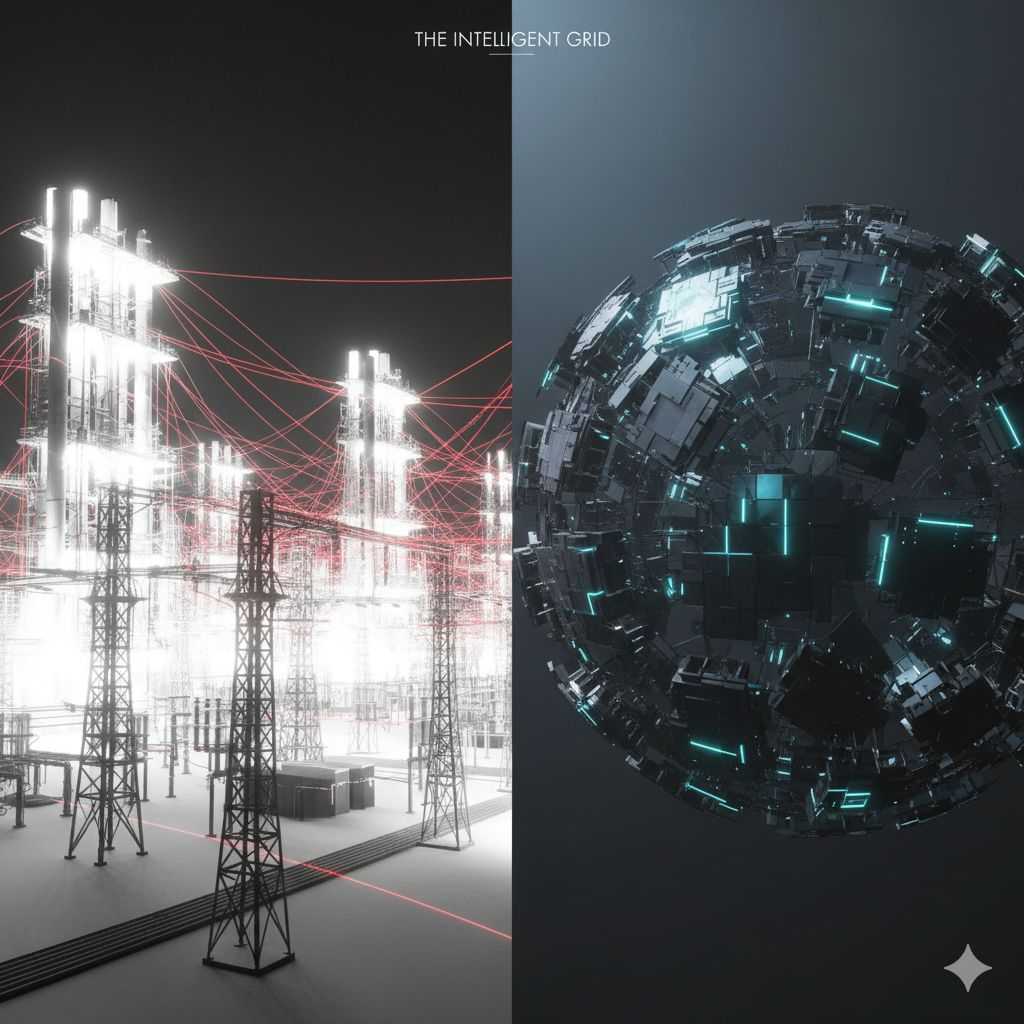
Fogo aligns consensus with the second.
Validators prepare environments in advance. Jurisdictional, physical, and latency constraints are treated as variables to be scheduled, not obstacles to be masked. Infrastructure becomes intentional rather than permanently overextended.
This is not geographic optimization. This is spatial governance.
What Was the Fear?
The original fear was that a silent node was a broken node.
That fear produced punishment-driven liveness. It produced global overextension. It produced the equation of honesty with uninterrupted presence.
Fogo dissolves that equation.
A validator can be absent without being faulty.
A network can slow without being weak.
A fallback state can be normal without being a failure.
The system does not measure trust by how long a machine stays online. It measures trust by whether coordination persists through changing conditions.
The inherited definition of reliability collapses under this model because it was built for machines that serve continuously, not for participants that coordinate intermittently.
Permanent presence was never the requirement. It was a historical assumption.
Under a time-structured validator set, absence is no longer the opposite of security.
It is one of its inputs.
