

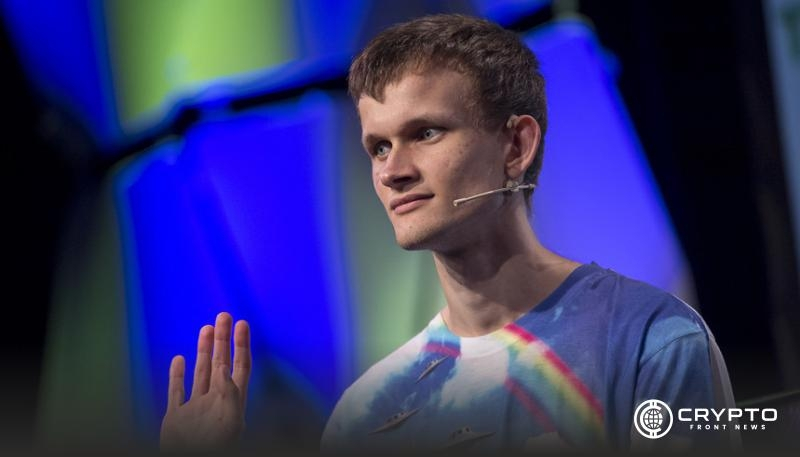
Buterin says AI without close human guidance can produce useless or harmful results.
Web 4.0 AIs claiming "self-sovereignty" still rely on centralized models like OpenAI.
Experts stress AI must earn value responsibly or risk failure, speculation, or irrelevance.
A heated debate is stirring in the tech world after Ethereum cofounder Vitalik Buterin raised concerns about AI moving too far from human guidance. The discussion started when Sigil shared a tweet claiming to have created the first AI that can survive, improve itself, and replicate—all without humans controlling it.
Sigil promoted the technology as part of Web 4.0, describing it as "the birth of superintelligent life." However, Buterin responded sharply, warning that lengthening human-AI feedback distance generates low-quality outputs and could create irreversible risks for humanity.
Buterin emphasized that this approach does not optimize AI for solving meaningful human problems. He stated, "Today, it means you're generating slop instead of solving useful problems for people. It's not even well-optimized for helping people have fun."
Moreover, he pointed out that the claim of AI being self-sovereign is misleading because the underlying models are operated by OpenAI and Anthropic. Hence, the technology inadvertently reinforces centralized trust systems, directly opposing Ethereum's foundational principles.
Risks of Exponential AI Autonomy
The Ethereum cofounder warned that the fast progress of AI could maximize the risk of an irreversible anti-human outcome. “Once AI becomes powerful enough to be truly dangerous, it's maximizing the risk of an irreversible anti-human outcome that even you will deeply regret,” he said.
Additionally, Buterin stressed that accelerating AI development should not be the era's primary goal. Instead, society must focus on guiding its trajectory and avoiding collapse into undesirable scenarios.
Feedback Gaps and Human Oversight
Experts argue that widening the gap between AI actions and human feedback reduces accountability. Consequently, AI may prioritize speculative gains or irrelevant outputs over meaningful problem-solving.
Mert, a technology commentator, observed, "The only way it won’t die is if it can make money by getting paid… it either builds something people pay for, gets money through speculation, or dies." Hence, the alignment of AI incentives with human needs is still important.
The post Vitalik Buterin Warns Against Exponential AI Autonomy appears on Crypto Front News. Visit our website to read more interesting articles about cryptocurrency, blockchain technology, and digital assets.